Turning 55 years old can change how Canadians think about money, given that the traditional retirement age is only a decade around the corner. Many Canadians might be at a point where they can pay off big expenses and free up the cash they will need to live a comfortable retirement. Freeing up your finances is an important part of any solid retirement plan.
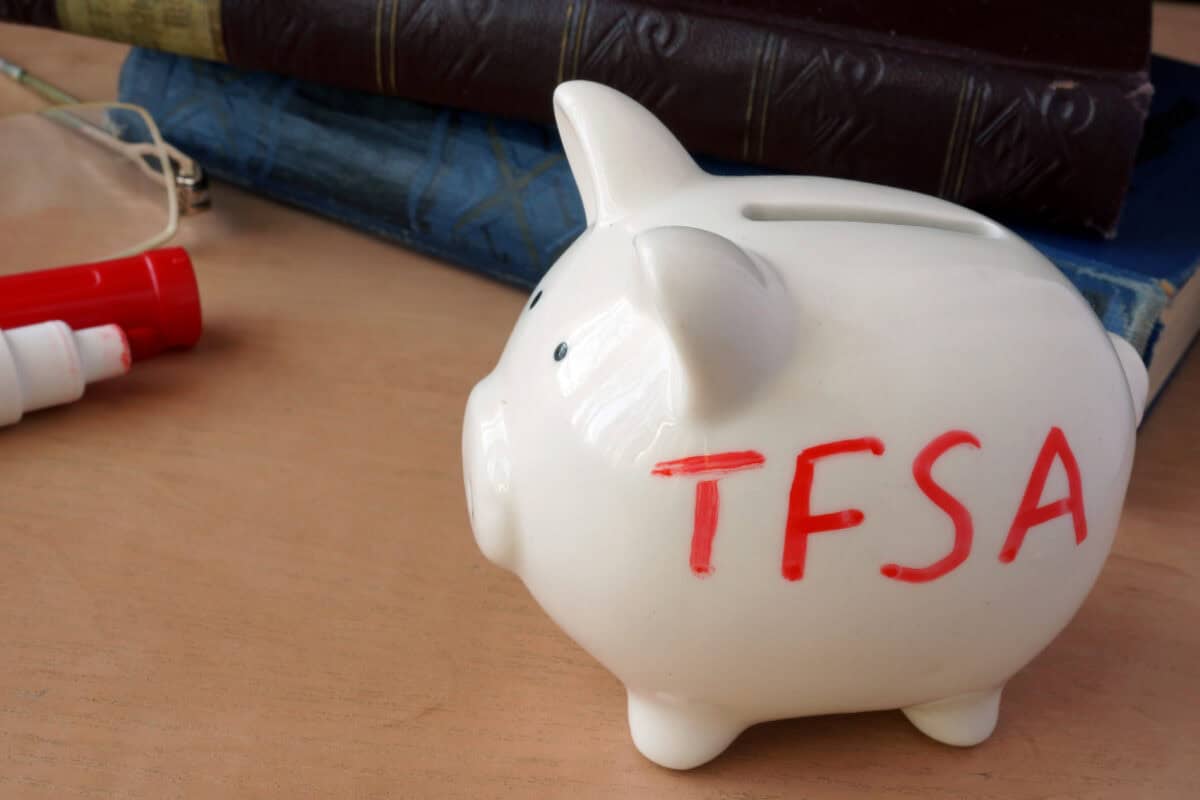
Speaking of planning for your retirement, retirement accounts like the Tax-Free Savings Account (TFSA) can be one of the most useful tools to help you enjoy your golden years worry-free about your finances.
Source: Getty Images
The average TFSA balance for Canadians aged 55
According to the Canada Revenue Agency’s (CRA) latest data, the average TFSA balance for Canadians aged 55–59 is around $43,500. Based on the cumulative TFSA contribution room after the 2026 update, that means Canadians in this age bracket are leaving an average of over $57,600 of unused contribution room.
For context, the account was introduced in 2009. Any qualifying Canadian who has been eligible to contribute to a TFSA since its inception has $109,000 worth of cumulative contribution room available. According to the CRA figures, most people in this age band are using less than half of their TFSAs.
It is possible that many Canadians are contributing actively to their TFSAs but also using the account as a savings account. Since withdrawals are tax-free, it makes sense for people to use the account as a savings account to fund big purchases. However, making a retirement nest egg using a TFSA requires a change in tact.
Instead of using the TFSA as a savings account, consider using it as an investment vehicle to hold a portfolio of blue-chip stocks that offer far more long-term returns than what you can get from interest income for cash held in a TFSA.
High-quality TSX stocks
If you are 55 and have a significant gap to cover in the actual contribution room you have used and what is available to you, you are not alone. You should also know that it is possible to cover the gap and maximize the potential a TFSA offers. At 55, you have around a decade or so before retiring. It is enough time to change how your TFSA can work for you in your golden years.
One of the best ways to achieve more from your TFSA is to invest in high-quality dividend stocks like Bank of Montreal (TSX: BMO).
BMO is one of the Big Six Canadian Banks, and one of the most popular long-term investments for Canadians seeking income and capital appreciation. The bank stock has paid out dividends to investors without fail for the last 197 years, which is the longest streak among its peers and the overall Canadian stock market. Besides an almost two-century-long dividend-paying streak, BMO has also increased its payouts at a 5.7% compound annual growth rate for the last 15 years.
Foolish takeaway
The bank’s latest second-quarter results showed solid earnings momentum, and its adjusted earnings increased by 40% year over year. As of this writing, BMO stock trades for $253.39 per share and pays investors $1.71 per share each quarter, translating to a 2.7% dividend yield. Allocating some of the unused contribution room to hold BMO stock and reinvest dividends can help you accelerate your wealth growth and build a sizeable nest egg for when you retire.