If you want to double your money in a decade, you don’t need a lottery ticket. You need a portfolio of quality stocks that are well-positioned to outpace inflation.
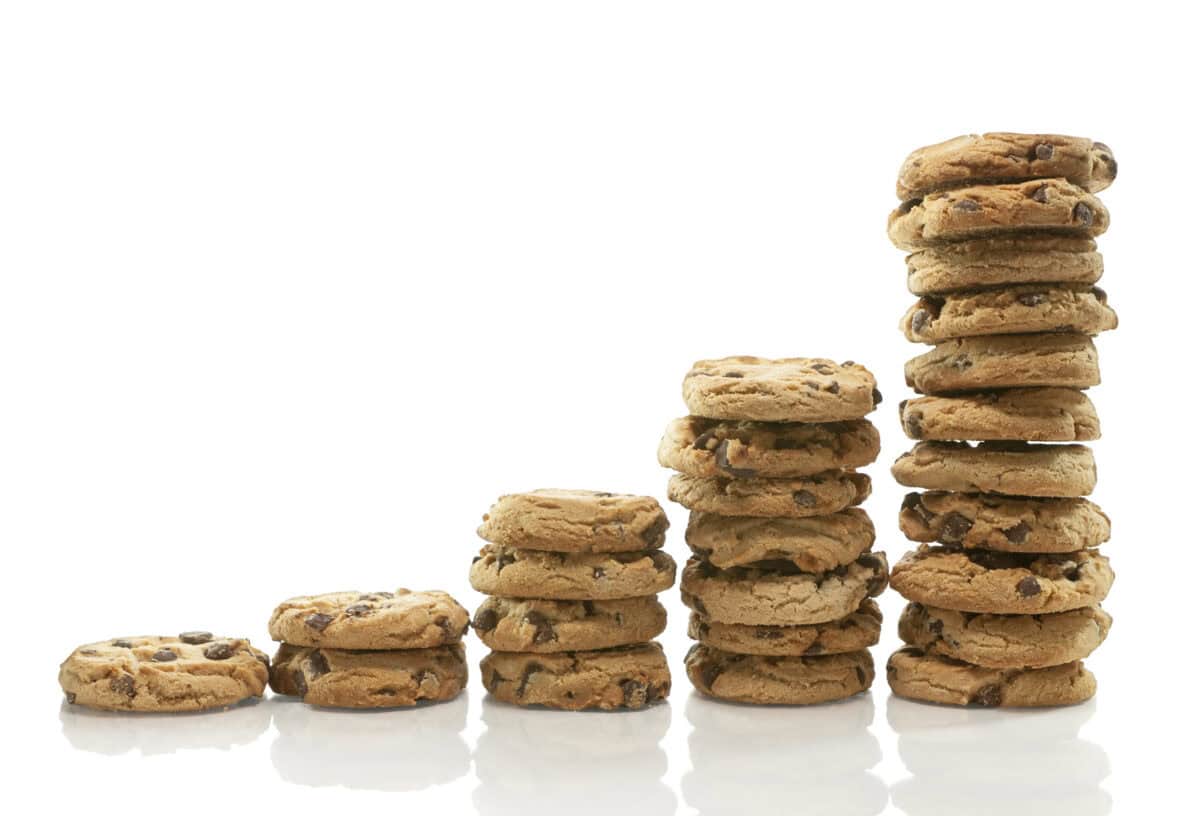
A stock only has to grow at about 7.2% a year, compounded, to double in 10 years, which is quite modest. However, the majority of stocks fail to deliver inflation-beating returns over time and trail the broader markets due to a variety of factors, including competition, narrowing margins, or weak financials.
Below are three TSX stocks I believe have the moats, cash flow, and management discipline to double investor capital by 2036.
Source: Getty Images
Constellation Software is a top Canadian stock
Constellation Software (TSX: CSU) acquires profitable software companies that run critical, niche operations, which include scheduling systems, public transit software, or club management tools. These are called vertical market software, or VMS, businesses.
Once a hospital or transit agency builds its operations around one of these systems, switching to a competitor is slow, risky, and expensive, making CSU stock a top buy in 2026.
Instead of flipping businesses for a quick profit, the TSX tech stock reinvests the cash flow from mature software firms into dozens of smaller acquisitions every year.
Management also confirmed that it has not seen meaningful revenue loss tied to AI competition, even as it invests in the technology across its portfolio companies.
Constellation has already compounded shareholder capital for more than two decades. Even as it moves into larger deals and new strategies, such as minority stakes in public companies, I believe the business is well positioned to deliver a 7.2% annual return through 2036.
Is Brookfield a good TSX stock?
Brookfield Corporation (TSX: BN) is a global alternative asset manager. It owns and operates cash-generating assets like infrastructure, real estate, and renewable energy projects.
At its 2026 annual meeting, President and CFO Nicholas Goodman laid out the company’s long-term growth math.
Brookfield expects distributable earnings to climb from US$2.54 per share to US$6.95 per share by 2030, driven by growth in its core businesses plus disciplined capital allocation.
Goodman also pointed to the scale of Brookfield’s opportunity, noting the company holds US$175 billion in permanent capital and expects fee-bearing capital in its asset management arm to grow past US$1 trillion. Management’s stated target is annual returns of 15% or higher over five-year cycles, roughly double the pace needed to double an investment in 10 years.
Brookfield also recently moved to combine its corporate structure with Brookfield Wealth Solutions, a step designed to simplify ownership and open the door to broader index inclusion, which tends to attract more passive investor demand over time.
With a stated return target well above the doubling threshold and a business built on decades-long infrastructure and insurance assets, I see Brookfield as one of the more reliable compounders on the TSX.
The bull case for Couche-Tard stock
Alimentation Couche-Tard (TSX: ATD) runs thousands of convenience stores and fuel stations across North America, Europe, and Asia under brands like Circle K.
The convenience retail industry remains highly fragmented, which gives Couche-Tard room to keep buying smaller regional chains at reasonable prices. At the same time, the company is improving margins in its existing stores through better food offerings and a more efficient supply chain.
In its fiscal 2026 fourth-quarter results, Couche-Tard reported same-store merchandise sales growth of 3.4% in the United States, its best quarterly result in three years. CEO Alex Miller noted that food service same-store sales grew over 5%, with fresh food sales up more than 10%, supported by nearly 1.2 million weekly meal deal bundles.
The company is also preparing for the shift toward electric vehicles, expanding EV charging across its network to turn quick fuel stops into longer, higher-spending store visits.
Couche-Tard has historically doubled investor capital faster than once a decade. Given its low debt levels, steady buybacks, and ongoing acquisition pipeline, I view a 7.2% annual return as a conservative expectation rather than a stretch goal.