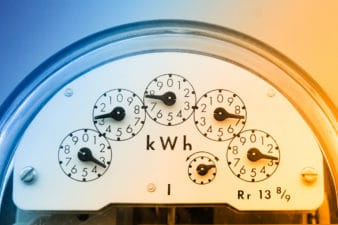
Artificial intelligence (AI) may live in the cloud, but the infrastructure keeping it there is remarkably heavy.
Data centres need enormous quantities of electricity. Getting that electricity to servers requires transmission lines stuffed with copper. Nuclear plants need uranium. Mines, power stations, substations, and cooling systems all have to be built before an AI model can answer your latest inane question. Like, for example, how to spell, “inane.”
Source: Getty Images
Getting physical
That physical side of AI kept surfacing at the Canada Investment Summit. Prime Minister Mark Carney said Canada intends to capture value across the “entire intelligence infrastructure stack,” while simultaneously doubling the electricity grid, expanding uranium production, and building more nuclear power.
The private sector delivered a similar warning. BlackRock Chief Executive Officer Larry Fink told the summit that AI demand is already growing faster than infrastructure supply. Blackstone President Jon Gray highlighted Canada’s critical minerals, natural gas and hydro power as enormous competitive advantages.
Put those ideas together and AI begins looking less like a software boom and more like a construction boom. That’s why I’d buy Aecon Group (TSX: ARE).
Aecon connects everything
Aecon is one of Canada’s largest infrastructure and construction companies. It builds electricity infrastructure, nuclear facilities, industrial projects, and transmission systems. Its mining business also provides construction and processing services for minerals including copper and uranium.
That makes Aecon an unusual way to approach the AI boom. Investors don’t have to guess which copper miner discovers the best deposit or which uranium producer signs the next giant contract. Aecon can make money helping build the infrastructure around those industries.
Even better, AI is already appearing in its backlog. Aecon recently won a massive contract to help construct the Greenlight Electricity Centre in Alberta, a 932-megawatt power plant being developed to supply a major data-centre project. Aecon’s share of that contract is approximately $1.7 billion. That’s not theoretical AI demand. That’s work heading into the order book.
Nuclear adds more
Aecon also has decades of experience inside Canada’s nuclear industry. It recently helped complete the refurbishment of Ontario’s Darlington nuclear station, where all four refurbished units will provide more than 3,500 megawatts of electricity. Now Aecon is involved in the Pickering nuclear refurbishment and is expanding its nuclear capabilities in the United States.
That lines up almost perfectly with what Carney described at the summit: building nuclear power across the value chain while expanding Canada’s uranium industry. Management itself now highlights nuclear power, conventional power, critical-resource development, and digital infrastructure among its biggest growth opportunities.
The numbers are beginning to show it. Second-quarter revenue jumped 25% year over year to $1.6 billion, while adjusted earnings before interest, taxes, depreciation and amortization (EBITDA) doubled to $82.4 million. Backlog stood at $10.5 billion before Aecon’s $1.7 billion Greenlight award was added. That’s quite a pipeline for a company valued at only around $3 billion.
Considerations
Aecon shares recently traded around $46.50, nearly double their level from one year ago. At roughly 25 times forward earnings, investors are no longer buying the turnaround at bargain-bin prices. Aecon also pays a modest dividend yielding around 1.7%.
Execution remains the biggest risk. Construction companies can make spectacularly large projects considerably less profitable with cost overruns, and Aecon has suffered from problematic fixed-price contracts before.
Yet the company has deliberately been shifting toward lower-risk collaborative contracts while moving deeper into power and nuclear infrastructure.
Bottom line
AI may be the technology everyone wants to own, but artificial intelligence can’t run on promises and hope. It needs copper, uranium, and a staggering amount of electricity. Aecon gets paid to help build the stuff connecting all three.