By now, investors should be well aware that OPEC still has the power to induce massive moves in the oil market. On February 16, Saudi Arabia, Qatar, Russia (which is non-OPEC), and Venezuela reached a preliminary agreement to freeze production. The agreement was arranged to be finalized on April 17 in Doha, Qatar.
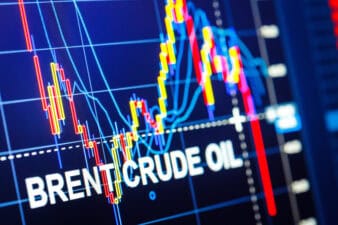
The result of the news of an OPEC freeze kicked off a rally that ended the oil rout; prices surged from the low of US$26 per barrel to US$42 per barrel. The upcoming meeting in Doha has the potential to trigger similar moves, but unlike the previous meeting, the move could go in either direction.
Bank of America suggests that oil could rally to US$50 if an agreement is reached, while other banks have suggested oil could head down to the US$30 level if an agreement is not reached. What does this mean for investors?
A whole host of Canadian stocks will be affected by this meeting, and generally speaking, Canadian investors would be wise to stay out of the market for the next several days. There is far more downside than upside risk from this meeting.
The agreement will not fix the oversupply
Forget about the short-term impact on prices for a moment. It is important to look at the actual impact of an OPEC freeze on supply/demand fundamentals as this is what will ultimately drive prices.
Sprott Energy fund manager Eric Nuttall recently described the OPEC meeting as “noise” that’s largely not relevant to the fundamentals that will affect the oil market over the next several months, and this description is largely accurate.
To understand why, it is important to look at the major sources of supply coming online. The largest source of global supply coming online in 2016 by far is from Iran, which is expected to come online with about 500,000-600,000 barrels per day in 2016. Unfortunately, Iran has stated they won’t agree to any production freeze and, at this point, they are uncertain if they’ll even attend a meeting.
For Iran, this makes perfect sense—sanctions on the country were recently released, and Iran wants to grow its production to pre-sanction levels, and considering other OPEC producers such as Saudi Arabia and Iraq are producing at near-record levels, it would be fully against Iran’s self-interest to freeze production and not produce to capacity and try to gain market share.
Without Iran’s participation, not only will an agreement not make a significant difference to the oil supply/demand balance, but it also makes an agreement challenging to obtain. Outside of Iran, production growth in OPEC is limited—Iraq is producing right at capacity, and while Saudi Arabia does have excess capacity of about two million barrels, they are unlikely to use it.
This is because their own domestic consumption is growing, and Saudi Arabia likely wants to maintain this capacity, so they don’t need to reduce exports. The key takeaway is that an OPEC freeze means little, since production growth would have been minimal to begin with.
Major price volatility is likely
Despite the small fundamental impact of the meeting, prices could still be volatile due to the importance the market places on a deal. The current market rally has been driven in part by the prospects of an agreement, and if an agreement is not reached, there could be a huge price downside.
Similarly, if an agreement is reached, prices could surge, but this could be counterproductive since oil prices near the US$50 level could slow the decline in U.S. production and delay the rebalancing.
The smartest thing for investors to do is to wait and avoid entering names that are exposed to oil prices. This especially applies to Canadian banks, which are more correlated to oil than ever. Royal Bank of Canada (TSX:RY)(NYSE:RY), for example, has the largest loan exposure to Alberta and has relatively high exposure to oil and gas loans.
Investors would be wise to avoid buying stocks like RBC as well as intermediate and junior oil/gas names (like Crescent Point Energy Corp. (TSX:CPG)(NYSE:CPG), until the dust from the meeting settles. If the meeting goes poorly, there could be impressive opportunities to buy these stocks at a discount.