Cenovus Energy Inc. (TSX: CVE)(NYSE: CVE) is doubling down on Canadian oil sands operations. At the end of March, the company agreed to take a 100% ownership in an existing joint venture with ConocoPhillips for $17.7 billion.
The market is not pleased.
Since the announcement, Cenovus’ stock price has declined more than 18% on worries that now may not be the right time to be doubling down on the Canadian oil sands.
Why not?
Reports over the past week have reiterated the strength of North American fracking operations, providing more supply of light, sweet crude to global markets at a faster rate than demand is growing.
Global oil supplies are continuing to climb despite recent OPEC cuts aimed at trimming global crude supplies and boost prices. With the recent IEA Oil Market Report highlighting the effect of the cuts, and specifically the 99% compliance rate from OPEC members, the reality is that a larger portion of the global oil supply is being filled by non-OPEC countries such as Canada and the United States, meaning OPEC no longer has a stranglehold on global supply and has become less and less effective in attempting to affect the price of oil over time.
The oil that comes out of Alberta’s oil sands is fundamentally different than the shale product extracted from other parts of North America. The oil Cenovus sells is disadvantaged for a few key reasons:
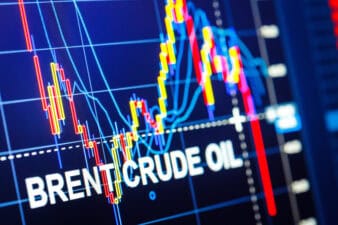
- Oil is traded as Western Canadian Select, which has historically traded at a steep discount to WTI or Brent crude. As of April 20, the price of WCS was $40.02; the price of WTI was $50.27; and the price of Brent was $52.99. This represents a discount to Brent of 24.5% and a discount to WTI of 20.4%.
- Due to the heavy, sludge-like viscosity of WCS crude, transportation costs are increased due to the need for condensate to be added to the oil to transport this product long distances in pipelines – product that is shipped by rail, or worse, by truck, has extremely high transportation costs due to the fact that much of Alberta’s oil is shipped to refineries on the Gulf Coast.
- Oil extracted from Alberta’s oil/tar sands is widely considered to be the among the worst types of oil for the environment; independent reports have shown that extracting and burning oil from Alberta’s oil sands is at least 20% worse than oil extracted from shale.
- Increased carbon taxes and regulations in Alberta via the newly-elected government has been yet another headwind for oil producers in Alberta; a number of high-profile global oil producers have backed out since the election for the aforementioned reasons, and ConocoPhillips is just another example.
Bottom line
It can be a prudent strategy to buy assets when they are cheap, and ramp up production at higher prices; if prices eventually do rebound to 2013/2014 levels, Cenovus may look very smart for its recent acquisition and this article will be without merit.
That said, taking a medium- to long-term perspective of Canada’s oil sands industry, it appears to me that the long-term fundamentals have changed for Canada’s oil sands relative to other more efficient and environmentally-friendly forms of oil production.
Stay Foolish, my friends.