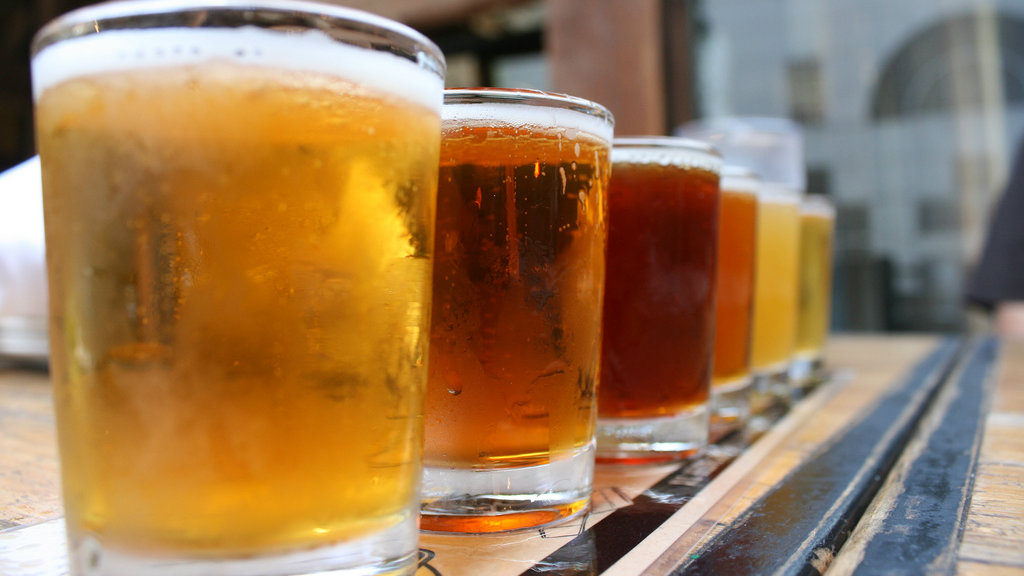
Recent quarterly results from Molson Coors Brewing Co. (TSX:TPX.A)(TSX:TPX.B)(NYSE:TAP) and Anheuser Busch Inbev NV (ADR) (NYSE:BUD) have indicated a continuation in the recent trend of a softer North American beer market.
Is this indicative of a potential shift in changing consumer preferences and the more widespread adoption of recreational cannabis as a substitute for alcohol products?
If so, what are the potential implications on the alcohol and marijuana markets?
People are drinking less beer in North America
First-quarter results out of two of North America’s largest alcohol beverage makers show an alarming trend in what appears to be a slowdown in beer consumption in the Canadian and U.S. markets.
In the first quarter, Molson saw a 5.8% decline in sales to the United States along with a 2.5% drop-off in shipments to Canadian markets.
Meanwhile, AB Inbev, which owns the Budweiser, Stella Artois, and Corona brands, experienced a similar fate in its first quarter, reporting 2.3% softer sales than it experienced in the U.S. a year ago.
Granted, some of the weakness can probably be attributed to the growing popularity in recent years of “craft brews,” often locally owned and operated breweries that are run on a much smaller and “grassroots level.” But that theory, however, fails to account for what Molson referred to as a “softer-than-anticipated start” for the U.S. beer industry as a whole.
This leads one to believe that if North Americans as a whole are consuming less alcohol, is that because they’re smoking more “pot” instead?
The case of marijuana as a substitute for alcohol
The best case that could be made to “put down the pint and pick up the pipe” would have to be the purported health benefits of marijuana.
Case in point being that even in advance of the drug becoming legal for recreational purposes, it is already being prescribed for a whole host of medical applications from treatment for multiple sclerosis to seizure disorders and Chron’s disease.
Contrast that to alcohol, which carries with it all kinds of detrimental side effects, like cancers and liver disease, and given how health-conscious society is becoming, it’s easy to see how people could be coerced to make the switch from alcohol to pot, or at the very least begin practicing a more “balanced” approach to their recreational activities.
The implications for alcohol and marijuana stocks
Whether that story ends up playing out or not, there’s reason to believe that it may be in the alcohol industry’s best interests to get ahead of the curve, so to speak, and hedge their bets.
After all, it’s estimated that by the beginning of the next decade, the market for cannabis products in Canada could be as large as the beer market today.
When you view this picture through the lens of management at companies like Molson Coors and AB Inbev then, you can see how making an investment in the marijuana industry might help them save their jobs in five or 10 years’ time.
If you don’t think this is a very real possibility, you needn’t look any further than Constellation Brands, Inc.’s (NYSE:STZ) US$245 million investment in Canopy Growth Corp. (TSX:WEED) last year.
Bottom line
With legalization expected for later this year, M&A activity has already started to heat up in the sector.
That includes Aurora Cannabis Inc.’s (TSX:ACB) purchase of CanniMed earlier this year for $1.23 billion, and, more recently, rumours that Aurora is in talks to acquire MedReleaf Corp. (TSX:LEAF).
But if the alcohol companies are going to act, they had better act fast.
The marijuana industry is expected to grow in excess of 20% annually through at least 2020, meaning that the price they’ll have to pay for one of Canada’s licensed pot growers will only get steeper from here.