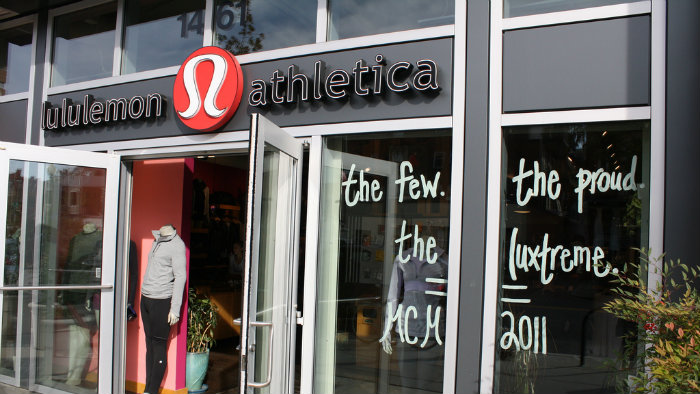
Lululemon Athletica Inc. (NASDAQ: LULU) and Gildan Activewear Inc. (TSX: GIL)(NYSE: GIL) are both clothing companies, but they are very different.
Lululemon is known for its high-quality, stylish athletic wear and is specialized in women yoga apparel. Gildan is a low-cost manufacturer of family apparel, such as t-shirts, socks, fleece, and underwear.
Which one of these apparel retailers is a better buy? Let’s look at their latest quarterly results to see if one stands out from the other.
Lululemon Athletica Inc.
Lululemon reported an impressive first quarter, beating all expectations. Shares surged more than 15% after the release, reaching an all-time high.
The efforts of the company to revamp stores paid off, as sales jumped 25% to US$650 million.
Comparable sales increased 19%, while the market expected an increase of 12%. Direct-to-consumer revenue, which includes online sales, jumped 62% thanks to the relaunch of the transactional website.
The Vancouver-based company more than doubled its net income, reaching US$75.2 million, or US$0.55 per share. Analysts expected net income of US$61.3 million, or US$0.46 per share.
The gross margin was 53.1%, an increase of 3.7% compared to the first quarter of fiscal 2017.
Lululemon ended the quarter with 411 stores and had opened seven new stores during the first quarter. The athletic apparel retailer is also expanding its men division and expects it to reach $4 billion in sales by 2020.
Considering those strong results, Lululemon raised its full-year forecast to be between $3.10 and $3.18 per share, up from its previous forecast of $3 to $3.08.
Earnings are estimated to grow by 15.3% next year and by 15.7% per year on average for the next five years.
Like the clothes it is selling, Lululemon’s stock is expensive. Its P/E of 56 is much higher than its competitors’ average of 23. However, its forward P/E is not that high at 39.
The stock has delivered high returns during the last three years, as shown by its compound annual growth rate of return (CAGR) of 25% over that period. Year to date, the stock is up almost 60%.
Gildan Activewear Inc.
Gildan reported disappointing results in its first quarter. Its profit dropped 19% as compared to a year ago from US$83.5 million to US$65.9 million. Per diluted share, that equaled US$0.31, down $0.05 from a year ago.
Sales were US$647.3 million, down 2.7% from US$665.4 million. While activewear sales increase 3.2% due to price increases, sock and underwear sales dropped 20.4%. Sales were down 4.3% in the U.S. and 19.4% in Canada, only partially offset by a 23.8% increase in international revenue.
Higher raw material and other costs, along with investments in e-commerce and distribution, weighed down on gross margin, which decreased by 1.2% to 27.2%.
During the quarter, the company launched a full collection of Gildan-branded men’s underwear on Amazon. It also expanded the American Apparel e-commerce site in April to 200 countries and is hoping to double sales of this brand to $100 million this year. American Apparel will open its first U.S. store in Los Angeles later this year.
Earnings are estimated to grow by 10.2% next year and by 6.4% per year on average for the next five years.
Like the clothes it is selling, Gildan’s stock is also cheap. It has a P/E of 19, which is lower than the industry’s average P/E of 29. Gildan’s forward P/E is also low at 16.
The stock has had a hard time delivering positive returns during the past few years, as shown by its three-year CAGR of -1.5%. Year to date, shares are down 7%.
Bottom line
While Lululemon’s stock is more expensive than Gildan, I feel that its lofty valuation is justified. Lululemon is growing fast, and there is a prestige associated with the brand that attracts consumers. So, if you are looking for growth, Lululemon looks like a better buy.
However, if you are a long-term value investor, Gildan may interest you more, as it is cheaper. While its last quarter was weak, the American Apparel acquisition should boost Gildan’s growth during the next years.