The Strait of Hormuz is one of the most strategic oil bottlenecks in the world, with a third of all water-borne oil passing through it daily. Without safe passage through the Strait of Hormuz, Middle Eastern crude producers would find it a lot harder to reach their markets in North America, Europe, and the Asian Pacific.
It goes without saying, then, that control of the Strait is key to the international oil trade. Unfortunately, the threat of closure as leverage in international disagreements has once again become a possibility, with Iran potentially eyeing such as a strategy in response to a threatened U.S. ban on exported Iranian oil.
How would such an event affect oil prices around the world, and should Canadian investors reconsider their positions in oil-weighted stocks? Let’s take a closer look.
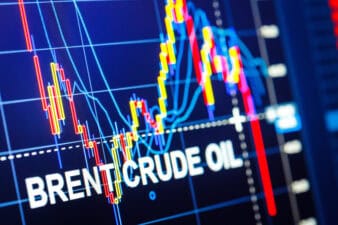
One thing’s for sure — oil prices will be volatile this year
According to the International Energy Agency (IEA): “The risks to stable supply that will grow later this year could cause higher prices and thus impact demand growth. Another factor to consider is that trade tensions might escalate and lead to slower economic growth, and in turn lower oil demand.”
This mixed message that seems to augur self-stabilizing oil prices is echoed by further advice from the IEA, which suggests that supply concerns are already being mitigated to some extent by increased output from Russia and Saudi Arabia. Demand growth has also slowed after a runaway first quarter that saw oil prices galloping.
But will it happen? What’s most likely is that a resolution will be reached, and the Strait will remain open. However, in today’s global political climate, it would appear that all options are still on the table, however unlikely they may seem.
Which stocks should you keep an eye on?
Two heavily oil-weighted Canadian energy stocks come to mind. If oil stabilizes and the threat of closure evaporates, consider pulling back on the following, but be ready to get invested should a pinched supply send oil prices soaring.
Vermilion Energy (TSX:VET)(NYSE:VET)
Overvalued compared to its future cash flow value, Vermilion displays unreadable P/E and PEG ratios at present. Its P/B of 2.4 times book is a little high, though, for both the TSX index and the domestic oil and gas industry. A huge 63.4% expected annual growth in earnings marks this one out as a growth investor favourite.
A dividend yield of 6.5% is pretty decent, too, making this a good choice for energy investors looking to hang on long term for dividends as well as that once-in-a-lifetime spike on the back of towering crude prices.
Parex Resources (TSX:PXT)
Discounted by 44% compared to its future cash flow value, Parex has been in the bargain basement all summer. Its fundamentals look great: a P/E of 12.1 times earnings, PEG of 0.4 times growth, and P/B of 2.4 times book, matching its competitor above.
A 26.9% expected annual growth in earnings likewise qualifies Parex as a growth stock, and a return on equity of 19% last year shows a fairly decent use of shareholder funds. However, a lack of dividends counts this out as one for your TFSA or RRSP, though an upward trending share price means that this could be one for long-term momentum investors.
The bottom line
Vermilion is a great high-yield defensive stock that belongs in any energy portfolio, while Parex is a debt-free alternative that could be good for selling high when overheated oil prices hit their peak. While price-leveling factors such as reduced demand from trade friction may help to normalize prices, investors in the black stuff are likely to see a steep surge in oil prices should any restrictions in supply manifest themselves, so keep an eye on these two Canadian energy giants.