Brookfield Infrastructure Partners (TSX:BIP.UN)(NYSE:BIP) has been one of the fastest-growing stocks over the past decade. Since 2009, the company’s stock has risen from $12 per share to nearly $60 per share, a return of almost 500%. Plus, investors have received an impressive annual dividend, which now stands at about 5%.
What’s led to this incredible performance, and is Brookfield positioned to do it again? With a market capitalization under $15 billion, there’s still plenty of room for growth — in theory. Plus, shares are down 20% in 2018, a rare occurrence considering Brookfield stock has only finished in negative territory one other year over the past decade.
Let’s first understand Brookfield’s incredible long-term returns and then take a look forward to gauge the probability of it repeating this feat over the next decade.

Infrastructure is a secular growth story
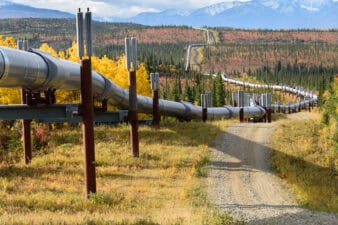
Managed by Brookfield Asset Management, Brookfield Infrastructure invests in infrastructure projects around the globe, from roads and power plants to pipelines and terminals. Its investments are incredibly diversified, with roughly a quarter of cash flows coming from each North America, Europe, Asia, and South America. Impressively, most of its cash flows are hedged against inflation, with 95% of its business immune from swings in commodity prices.
In a nutshell, Brookfield owns interests in a diversified portfolio of critical infrastructure projects with resilient business models. Sounds pretty great, huh?
Even better, there’s plenty of room for growth. Since 2000, countries with massive populations and economic footprints have moved towards privatization. This has led to high-reward opportunities for those that purchase or develop what historically have been state-owned businesses. For example, much of China’s energy infrastructure has been traditionally owned by the state. Over the past decade, however, much of this has moved into private hands.
If you have the right connections, experience, and business acumen, you can take advantage of many truly “once-in-a-lifetime” opportunities. That’s exactly what Brookfield has done.
The company is an active investor as well, buying assets at distressed prices and monetizing them when the market gets greedy. The last 10 dispositions have fetched more than $3 billion, all of which covered both the 5% dividend and its acquisition pipeline.
Can Brookfield repeat its historical performance?
It’s exciting to see most of the tailwinds that produced Brookfield’s decade-long outperformance are still intact, and the company isn’t too large to continue taking advantage.
According to Global Infrastructure Hub — an organization backed by G-20 members — $3.7 trillion needs to be invested in infrastructure every year just to meet new demand. China alone, a region Brookfield knows well, will need to spend $28 trillion on infrastructure projects over the next 20 years.
Importantly, these estimates are backed by reliable variables, as they are mostly a function of rising populations. While birth rates fluctuate, long-term population growth can usually be predicted fairly accurately. By 2040, the world’s population is set to rise by two billion people. Over the same time period, urban populations are expected to grow by nearly 50%.
While there are many moving pieces, it’s difficult to forecast a gloomy picture for Brookfield Infrastructure. There will always be execution risk, but judging by the company’s proven history of success, it’s a good bet that it will continue to take advantage of secular tailwinds.
Sometimes, simple stories provide the most powerful long-term opportunities. Brookfield Infrastructure’s long-term success story still has plenty of years ahead of it.