TFSAs have eclipsed RRSPs in popularity, with more Canadians contributing to it every year more than the RRSP. And rightfully so, as the TFSA is a fantastic savings investment tool and more flexible than the RRSP.
But this doesn’t mean the RRSP is yesterday’s news. There are certain situations where it is better to use your RRSP over your TFSA. Here are three of those scenarios.
Your RRSP tax-shelters U.S. dividends
Typically, investing in a U.S. stock will have unique tax consequences in your Canadian account. When you invest in the stock, the Internal Revenue Service (IRS) will tax your dividends by 15%. The tax is a withholding one and will apply to any U.S. stock investments from your TFSA.
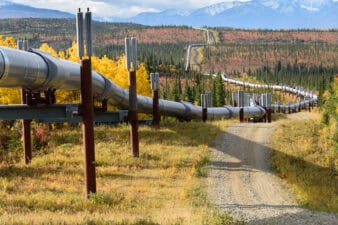
Consider if you were to purchase Enbridge (TSX: ENB)(NYSE: ENB) stock. Enbridge is the largest energy infrastructure company in the region. The Canadian firm has the world’s longest and most complex crude oil and liquids transportation system. Its pipes are in Canada and the United States.
The giant energy infrastructure company just released its Q2 earnings report. The company reported a $1.74 billion profit for the quarter on $13.26 billion revenue.
In 2019, Enbridge will transport 25% of all North American crude. That includes about 63% of U.S.-bound Canadian exports. The company’s natural gas system will carry 18% of all the gas consumed in the United States.
If you had purchased Enbridge in your TFSA on the New York Stock Exchange instead of the Toronto Stock Exchange, the dividends would be subject to a 15% withholding tax. If you instead purchase it in your RRSP, you would not have to pay that tax. The savings in tax can lead to significant increases in your portfolio, especially over a long period.
Your RRSP has added features
Your RRSP has a couple of special programs that the TFSA does not have. If you’re looking at buying a new house and are a little short on the down payment or are going to pursue more education, look into these two fantastic offerings:
Lifelong Learning Plan (LLP)
The LLP allows you to withdraw money from your RRSP. You can use the money for full-time training or education for you or your spouse or common-law partner. The amount you can withdraw is $10,000 per year, up to a maximum of $20,000 total. You must repay the amount withdrawn within 10 years, with payments due every year. If you’re short on tuition and have some RRSP money, the LLP could be a life saver. There is no better investment than in your education.
Home Buyers Plan (HBP)
The HBP allows you to withdraw up to $25,000 from your RRSP to buy or build your first home. If you’re short of the 20% down payment requirement to avoid paying the default insurance to Canada Mortgage and Housing Corporation, this can be a huge money saver if it gets you to that point. There is also a long 15-year period in which you can repay the amount.
Invest in RRSP if you’re a high-income earner
This section is where the RRSP outshines the TFSA. If you’re a high-income earner with a high marginal tax rate, investing in your RRSP will save you more money in the long run than the TFSA.
Final thoughts
The TFSA has gotten most of the attention and accolades in recent years. But don’t sleep on the RRSP if you are a high-income earner, are investing in U.S stocks, or need a new home. As each person is unique. I recommend finding an advisor or a TFSA or RRSP comparison tool online and seeing which choice is right for you.