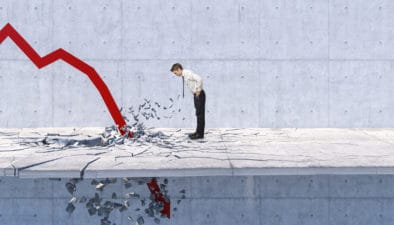
Don’t look now, but the Dow Jones Industrial Average just posted its worst two-day point drop in history, as investors hit the panic button and rushed to the exits over growing concerns of what could be a global pandemic of epic proportions.
A CDC official warned Americans of the imminent spread across the U.S., and the fear gauge has gone off the charts in just two days’ time. Talk about a 180-degree reversal in sentiment without a moment’s notice!
It’s rare to have two consecutive days where the U.S. indices are down over 3%, and for many investors, this is the sharpest decline they’ve faced. For beginners tuned into the financial media, it’s not easy to resist the urge to follow the herd and sell a significant portion of your stock portfolio. Some pundits see the near-2,000 Dow drop as “the tip of the iceberg,” and with recession being thrown around in the mainstream financial media again, that dreaded +50% market crash (which we’re way overdue for) is undoubtedly on the minds of a vast majority of investors.
It seems like just yesterday that we were sitting at fresh all-time highs, but after two days of selling hell, the Dow is now off 8% from its high and is flirting with correction territory, with the TSX Index following closely behind, now down around 4.5%. It seems like the world is ending, and the headlines are horrifying, but as an investor, the worst thing you can do is feed your panic at a time that you should be trying to find your cool.
Don’t panic
Nobody ever made any money by panicking, and while your threshold of pain is being put to the test, it’s vital for you to take a step back, so you don’t make a rash decision and jeopardize your long-term plan. Yes, it was the worst two-day Dow point drop in history, but the TSX isn’t even off 5% from its high, and we’re barely oversold given the markets were frothy just last week.
You could blame the coronavirus (COVID-19), Warren Buffett’s extremely defensive positioning, or whatever you want for the latest decline. But the fact of the matter remains that market corrections are only healthy and that such violent pullbacks are to be expected by all investors.
I’ve been pounding the table of low-beta defensive stocks for well over the past month, warning overly cyclical investors that they’d be taking on “double damage” when the correction, which happens once per year on average, inevitably hits.
So, here we are, and if you gotten euphoric on the stocks that have been working over the past year, you’ve been hurt double-time, and your portfolio may already be well past correction territory (10% decline). But if you maintained your prudence, stuck with Warren Buffett’s “be fearful while others are greedy” philosophy, you’re probably not phased by the vicious pullback, and, as a result, you’ll be able to hang on for the ride.
Caught offside?
If you’re one of many investors who found themselves growing complacent as the markets continued making new highs, it’s not too late to mitigate your risks buy trimming your cyclical stocks and buying defensive positions to better buoy your portfolio for what could be another wave of excessive selling.
The markets are hardly oversold, and things could have the potential to become much worse, so it’s only prudent to properly diversify your portfolio and lower your beta, so you’re not in a position to take on double damage as stocks continue their decline.
In prior pieces, I’ve warned investors to ditch “frothy” airlines like Air Canada and use the proceeds to play defence with one-stop-shop, low-volatility plays like BMO Low Volatility Canadian Equity ETF. And after suffering a nearly 8% drop, I still think it’s wise for improperly positioned investors to rotate out of cyclicals and into defensives, and take any losses as a lesson that’s to be remembered for the rest of your investment career.
Foolish takeaway
Defensives are less sexy, but they’re like shocks for your portfolio. You’re going to need them when you navigate through rough terrain, regardless of how smooth you think the roads are going to be to your final destination. You wouldn’t drive a vehicle without shocks, so you shouldn’t invest without any defensive positions!