Warren Buffett didn’t make any significant buys when the market was at its worst. Understandably, this made Berkshire Hathaway investors a bit concerned, because a market crash is where fortunes are made, and Buffett wasn’t putting the company’s titanic cash pile to use. It even irritated many speculators and investors, because Buffett is famous for making money off recession and market crash deals.
Berkshire Hathaway started the year with almost US$130 billion in cash and cash equivalents. By the end of the first quarter, the cash pile had grown to US$137 billion. With a war chest like that, people were wondering why he didn’t go to war. But even if it was later, when the market had already recovered quite a bit, Buffett started buying. By the second quarter, Buffett had expanded its cash position to almost US$146.6 billion.
In this quarter, Buffett has disclosed about US$19 billion worth of investments. So, we can assume that his cash position has been trimmed a bit (to about $126.6 billion). But that’s still a huge number, not too far from what he started the year with. Why is Buffett not buying more vigorously?
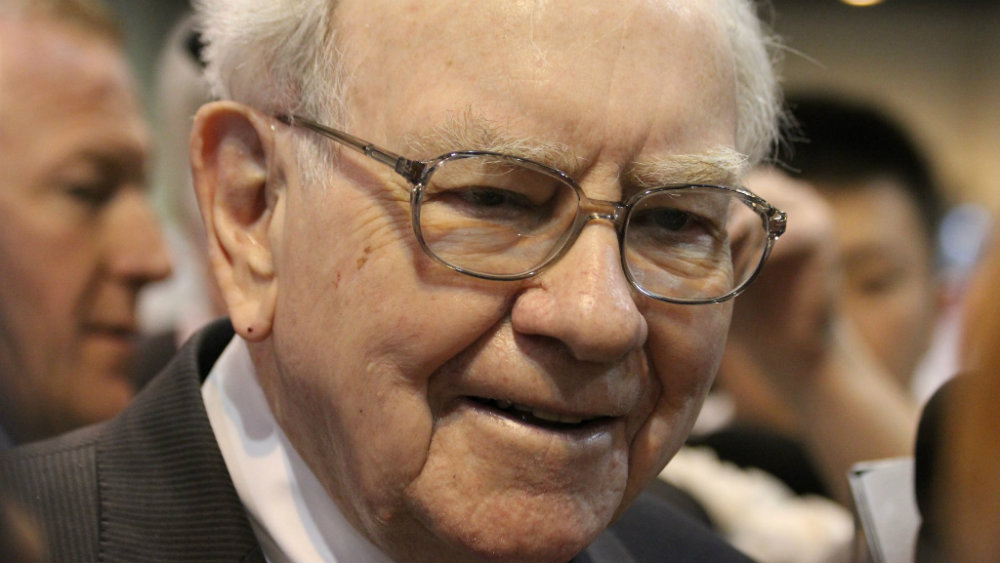
Image source: The Motley Fool
Two possibilities
There are two possibilities. The first is Buffett’s usual reason for not making any sizable moves, and it’s that he hasn’t found anything worthy. He has made a few unconventional purchases this year (gold, IPO). These investments make us think that Buffett has expanded his dimensions of “good businesses,” and he might invest in sectors that he previously didn’t care for if he deems them good businesses.
This means that he should be buying more, not less. But since he isn’t buying more, the second possibility seems more likely. And it’s that Buffett might believe that another market crash is coming. We already had one scare when the tech started crashing at the beginning of September, but it didn’t instigate a full-on market crash. Still, the signs of a second crash are visible, and the probability that we might see one within 2020 is getting stronger.
What to buy?
We can’t accurately predict what Buffett might buy, especially now that he is investing a bit unusually. So, you can pick a decent growth stock that’s currently too expensive to touch, like Altus Group (TSX:AIF). Not only is it a tech stock, and it showed a remarkable recovery pace after the previous crash, but it’s also related to the commercial real estate industry.
Commercial real estate isn’t a very desirable asset class right now, and if the second crash coincides with a real estate crash as well, Altus Group stock might fall down quite a bit. This means you might get to pick it at a very mouthwatering discount. The company has a strong balance sheet and a sizable cash pile at its disposal. It also has $227 million in debt, which is a bit high for a software company, but it has assets enough to cover this debt.
The company’s five-year CAGR is almost 24.8%. It also pays dividends, but the yield (1.18%) isn’t reason enough to overlook its expensive price tag.
Foolish takeaway
Warren Buffett’s restraint in buying new businesses isn’t the only significant indicator of a market crash that can be associated with him. The Buffett Indicator, which compares the market to the GDP, is also unusually high. This means markets worldwide, including the U.S. and Canada, are overpriced compared to the underlying economy.
This gap will widen with the second wave of the pandemic, bringing down the economy even further and the stock market upward. But this pattern is most likely to collapse inward toward balance.