Last week was chaotic at the Canada Revenue Agency (CRA). It opened the application window for the Canada Recovery Benefit (CRB), and a system glitch didn’t accept many applications. It resolved the glitch and closed the application window for the weekend for routine system maintenance. Then there was also confusion around the eligibility options listed on the CRB applications. In all this chaos and confusion, many Canadians either didn’t apply or were not able to apply for the CRB.
While you can’t do anything about the technical glitch, you can clear up your confusion around the application options.
Confusion around the CRB application
The confusion comes as the Justin Trudeau government divided the Canada Emergency Response Benefit (CERB) into CRB and Employment Insurance (EI). Those who can’t access EI can apply for the CRB. But the options don’t explicitly state that.
The online CRB application option states:
- “You stopped work for reasons related to COVID-19”
- “You have had a reduction of at least 50 per cent in your employment income or self-employment income for reasons related to COVID-19.”
People, who lost their job before the pandemic and were living off EI were left in a dilemma as neither of the two options was true for them. They didn’t lose their job because of COVID-19, but they couldn’t find work because of the pandemic. Now they have exhausted their EI and are therefore applying for the CRB. The CRA has assured that it will change the wording. But until then, you can select the first option, as it implies that you are unemployed.
What does the CRA mean by “COVID-19 reasons?”
When the CRA says stopped work because of COVID-19, it implies:
- You were terminated from the job or had to close down your business because the pandemic impacted revenues.
- You have been actively searching but were unable to find work as the job market has dried up because of COVID-19.
- It also means that you were working before the pandemic. But you had to quit work because a medical practitioner advised you to stay home because your medical condition could put you at high-risk if you contract COVID-19.
The CRA will reject your application if you voluntarily quit or reduced working hours for other reasons like labor disputes, performance issues, or refusal to work.
There is a better benefit than CRB
Once you submit the application, the CRA will review it, and if satisfied it will credit $900 after tax in your account for the two-week period. In a month, you can get $1,800 in CRB payments. But you will pay more taxes on these payments when you file 2020 returns. And if your annual income was above $38,000 after excluding CRB, the CRA would also take back some portion of the benefit. Moreover, the CRB is temporary just like CERB.
Despite so much hassle and uncertainty, the CRA cash benefits have supported millions of Canadians. There is a better benefit that will be with you for a lifetime, will be tax-free, and the CRA can’t take it away from you. But that benefit needs discipline, patience, and smart investing through the Tax-Free Savings Account (TFSA). This benefit is passive income, where the money works for you.
How do I create My CRB?
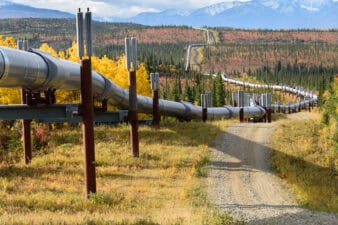
You can start by investing $50 a week from your $450 CRB payment in securities that gives an 8%-10% annual return. Later, when you get a job, you can increase your contribution to $100 a week. You can start by investing in Enbridge (TSX:ENB)(NYSE:ENB), North America’s largest pipeline operator, and a must-have for dividend lovers.
Even though Enbridge has high exposure to the oil industry, which is in crisis, its robust business model protects its cash flows. It spends a large sum on building and maintaining pipelines and earns cash by transmitting oil or natural gas through them. It neither produces nor stores oil, which protects its cash flows.
The stock is currently down 30%, which has inflated its dividend yields to 8.3%. A $1,300 investment ($50 for 26 weeks) can earn you $100 in annual dividends.
Moreover, Enbridge has more than $13 billion in liquidity, which will help it withstand the crisis and pay dividends. In the worst-case scenario, it might halt the dividend increase for a few years.