When the CERB started, a few people were against it. They weren’t against the notion of helping those in need. But they feared that a generous benefits program like CERB might encourage more people to delay re-joining the workforce, which will slow down the economic recovery of the country.
This was probably one reason to end the CERB and replace it with a more discerning program. The CRB was created to fill a void left by the CERB that the EI can’t fulfill. It is created for people who are part of the gig economy and rely upon freelancing or temporary gigs to earn an income.
Since these people typically don’t qualify for the EI, and their livelihood is just as much affected as the livelihood of people with jobs, the CRB was created to provide benefit to these people.
CERB’s partial replacement
There are many similarities between the CERB and the CRB that replaced it. This is one of the reasons why it’s getting so much attention and is considered a genuine alternative to the comprehensive CERB benefit. That’s not the case. The EI is actually more of a CERB replacement because it is targeted at a larger population of people who lost their jobs.
Still, the CRB is providing a valuable service because it can accommodate many of the people that don’t fit the bill for the EI, and it’s not limited to gig workers. People who primarily had part-time jobs, or changed jobs too frequently, might qualify for the CRB since they might not have enough insurable employment hours to make up the EI cut even with the “hours” credit.
Still, any person applying for the CRB would have to show proof of at least $5,000 earned in this year, last year, or 12 months before the CRB period they are applying for.
Personal savings
Whether it’s the CERB or the EI, both are taxable benefit payments which you may or may not qualify for, based on your circumstances. This is one of the reasons personal savings are so important. They help you get by if you lose your income or experience an extensive pay-cut without relying on the government’s help.
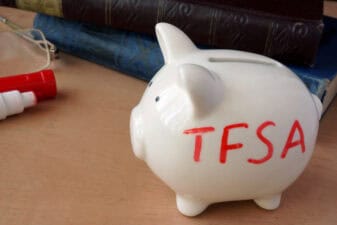
Savings alone might not be enough, but if you invest your savings in a stock like Blackline Safety (TSXV:BLN), it might help you grow your funds enough to sustain you through tough financial times. Its current five-year CAGR is 24.39%. At this pace, it can triple your $3,000 TFSA investment in less than six years, which would be enough to replace four to five months of a government benefit like the CRB.
If we consider the balance sheet and the steady revenue growth, Blackline Safety seems like a safe enough stock. It’s overpriced, thanks to its rapid growth in the past five years, so if you want to buy it at a more reasonable and fair value, you may have to wait for a market crash to normalize the price.
Foolish takeaway
Another benefit of the TFSA-based funds to sustain you when you don’t have any income is that they don’t add to your taxable income and don’t push you into a higher tax bracket. If you start investing as early as possible, you might create a sizeable enough nest egg to help you through the next financial crisis.