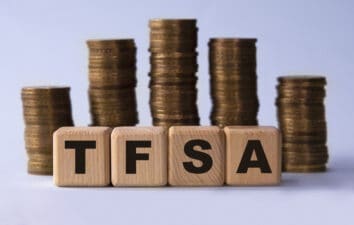
Even though it has been over a decade since the Tax-Free Savings Account (TFSA) was introduced, many people still don’t fully understand the TFSA and tend to make mistakes. Some of these mistakes are relatively harmless and are more oriented towards people not using the full potential of the TFSA (such as only using it for cash savings), but some mistakes draw the ire of the CRA.
Over-contribution
This is one of the most common mistakes with one of the most clearly defined CRA penalties. You get taxed 1% on the amount that you over-contribute to your TFSA (over the yearly limit or the TFSA limit available to you, carried over from previous years). The penalty tax is deducted every month that the exceeding amount stays in your TFSA.
Over-trading
This one is a little bit tricky. The TFSA was created to motivate and help Canadians save and invest. But the stipulation (and assumption) is that you will invest and not trade. That means holding assets long-term in your TFSA. If you use your TFSA to trade (which is taxed as business income and not as investment income) stocks, your account will lose the tax-free status, and your TFSA income will be taxed as business income.
The CRA doesn’t exactly define what constitutes day-trading, but if you buy and sell funds too quickly (and usually intra-day), your TFSA might become a tax nightmare for you.
Mixing contributions and withdrawals
Let’s say you have already contributed the yearly allowed amount ($6,000) to your TFSA. You need some funds, so you raid your TFSA and make a $2,000 withdrawal. But you realize later that you don’t need the funds, so you put the amount back in — but wait — you can’t!
The TFSA yearly contribution is a one-way road. You are only allowed to contribute a set amount for a year. And if you’ve withdrawn a sum from your TFSA, you can’t put it back to your TFSA until next year, with your withdrawal is added to your yearly contribution limit.
Proper use of your TFSA
Adding the right long-term holdings to your TFSA is the proper way to use your TFSA. It allows you to grow your TFSA funds without over-contributing, and since you will be holding them for a long-time, you won’t become susceptible to trading in your TFSA.
One stock you may want to consider for your TFSA is Capital Power (TSX: CPX). It’s an Alberta-based independent power company that claims to produce “responsible energy for tomorrow.” The company has 28 power generation facilities across the country and the U.S. that include wind, solar, coal, natural gas, and solid fuel. The total power generation capacity is 6,491 MW.
A clean energy business model is good news for investors since it probably means that the company will have a bright future and its long-term prospects look good. The two other reasons to love this stock is its juicy 5.5% yield and a 22.6% five-year compound annual growth rate (CAGR).
Foolish takeaway
The TFSA can be a powerful tool if you use it properly. It allows you to save and invest your money for short-term goals and emergencies, and it’s also great for saving for retirement. Using your TFSA improperly won’t just get you penalized, but can also put significant dents in your TFSA nest eggs.