Air Canada (TSX:AC) is a stock that many investors have been watching recently. The company is well documented to have been one of the hardest-hit Canadian businesses by the pandemic.
After its stock initially sank in the market pullback early last year, it quickly recovered some ground. However, even with the announcements of the vaccine, it’s been mostly flat for some time.
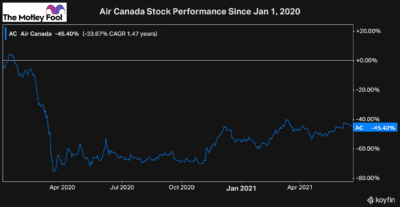
These days, some investors expect that its stock will begin to recover once restrictions start to lift and Air Canada can see a rapid recovery in sales.
And while the stock could see an initial pop as travel ramps up, I wouldn’t be surprised if the stock price tanks again soon after similar to what happened after the vaccines were announced.
So while you may be looking to buy Air Canada stock today, here are three risks the stock still faces.
Revenue could take a few years to recover
There is no question there will be a tonne of pent-up demand from travellers when travel restrictions begin to lift. However, it could be a while before Air Canada stocks will see capacity levels as it did during its last full year in operation in 2019.
First off, while some travellers will be eager to fly, others could have some hesitancy. The major airlines are already selling tickets at vastly reduced costs to incentivize customers to return.
That could help bump up volumes and help the recovery come quicker. However, selling discounted tickets will weigh on the little revenue that the company can make in the short term.
Furthermore, global travel restrictions will be different everywhere. And it could be some time before all travel restrictions are lifted altogether.
Plus, on top of the revenue headwinds Air Canada stock will face, costs will likely remain elevated some time.
More debt and dilution
Another issue the stock faces is all the debt and shares it had to issue through the pandemic. Losing billions of dollars a quarter in cash, the company had no choice but to raise capital.
Since December 2020, Air Canada’s long-term debt has increased by more than 50% and its shares outstanding have increased by more than 25%.
So although it was necessary to raise capital, unfortunately for shareholders hoping for a major recovery, this will weigh on Air Canada going forward.
Not only will more debt also increase Air Canada’s costs, but much of the free cash flow it generates over the next few years will have to go toward paying down that debt, which could weigh on growth after the pandemic.
Furthermore, with shareholders being diluted through the pandemic, this means Air Canada stock will have to earn 25% more for investors to see the same level of per-share earnings as they did before the pandemic.
Air Canada stock is already at fair value
Finally, another issue to consider is that currently, Air Canada is trading right around its fair value. This is a risk for a few reasons. If the stock pops on news of travel restrictions being lifted, it could quickly become overbought.
In addition, if the travel industry doesn’t recover as soon as everyone is expecting, or as fast as we all hope, Air Canada could continue to lose value.
So even if the stock trades flat, if Air Canada continues to lose value, the stock could soon be trading above its new fair value.
Currently, the average analyst target price is just $30. So the stock is trading right around fair value, offering little upside. And when you consider the risks and headwinds it still faces, it’s clear several Canadian stocks offer far more value today.