We all know the market can be volatile. In fact, volatility and the constant ups and downs of the stock market are a major concern for many investors. It’s even one of the main reasons keeping Canadians from investing their money, over the fear of losses.
Volatility is something you can’t avoid. You can diversify your money to avoid company-specific risk, but if you’re investing in the market, you’re likely going to be exposed to market risk. Luckily, though, short-term movements of stocks are often overblown by the market and the media.
Volatility just has to do with a lot of short-term movements in stocks and the market having a hard time making up its mind whether to be bullish or bearish. If you aren’t looking at the price of your investments each day, though, then volatility can’t necessarily impact you.
Over the long run, if the companies you are buying are high quality, they will grow their value and the value of the stock. This is why long-term investing is so important.
It helps you mitigate the risk of short-term price movements so that volatility doesn’t matter. If anything, you can use it to your advantage.
How to capitalize on market volatility
We may not necessarily know when the stock market may pull back and see increased volatility. However, we do know that it’s bound to happen eventually.
We also know that these opportunities are few and far between. And there might not ever be a better time to buy a stock than when the market is pulling back.
So from investors, it takes patience and discipline to stay the course and wait for the market to come to you. You don’t want to get impatient and force investments just because.
That doesn’t mean only buying stocks every few years when the market sees a big correction. You should be adding positions as you see fit, and often some stocks will trade cheap on their own.
However, you also want to be prepared and have cash ready for when the broader market does pull back. Because without question, this will be the best opportunity to buy stocks.
A top stock to buy on a pullback
Any high-quality stock that trades at a discount as the market sees an increase in volatility will be a great opportunity. The best stocks to buy, though, are ones with major growth potential that typically trade with a premium due to their quality. One of the first stocks that come to mind in Canada has to be Shopify (TSX: SHOP)(NYSE:SHOP).
Shopify is one of the best Canadian growth stocks of all time. The $250 billion company has been revolutionary in a high-growth industry. Its operations continue to impress, and it continues to put up incredible growth numbers.
Because of this immense success, Shopify is an investor favourite and trades with a significant growth premium. So when you can buy it cheap, like it was earlier this year, it’s definitely worth considering.
Since there’s no telling how stocks will behave in the short run, volatility could work the opposite way too, though. You can buy a stock, and it could tank 10% or 20% soon after. The key is how you react. Having your investment fall significantly in value right after you bought it could obviously be displeasing, but it’s not the end of the world.
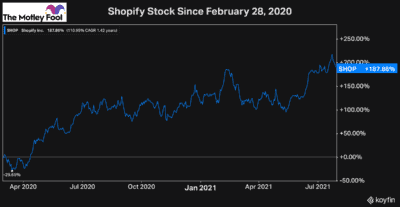
For example, if you had bought Shopify at the end of last February, only a few weeks later it was down nearly 30%. That would have been unfortunate. But the investors who held on, and especially those who were buying have been the investors who were most rewarded.
So if you believe you bought your stock at a fair price and you believe in it long-term, then any market volatility shouldn’t affect you. There’s nothing saying you have to sell today at this new undervalued price.
You can either buy more and bring down your average cost. Or you can continue to hold since you believe that the stock is worth more than the market is offering today.
Volatility can be unpleasant. But as long as you’re disciplined and patient, then it’s actually a great tool that investors can use to their advantage.