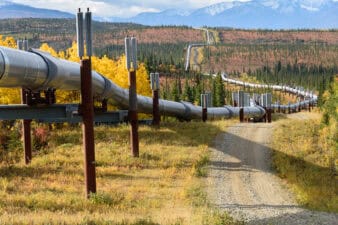
Canadian oil continues to be one of the largest producers in the entire world. But last week, President Joe Biden made a decision that was hair-raising to Canadian investors in energy stocks. Biden revoke the permit of Keystone XL pipeline after the US$8 billion project waded through years of environmental protests.
But that’s not the only worry facing energy stocks. The Canadian government committed to decarbonizing as the climate crisis escalates. Unfortunately, Alberta is one of the worst carbon producers on earth, even with recent improvements. Still, Canada continues to produce oil, hitting a record high recently after pandemic levels.
The next issue is spending. The oil and gas sector’s spending has dropped by over 60%, which means there is likely to be even less produced in the future. That’s what comes with the territory of lower carbon emissions, and net-zero targets.
So, what should Motley Fool investors do now to prepare for the next decade of energy stocks?
Don’t give up on gas
Oil production will continue, but it’s likely to change over the next decade. Whether that means these energy stocks will suddenly become clean energy producers or slip away, we can’t tell. But it’s not going to change overnight.
In fact, five of the largest Canadian producers of oil and gas put forth a $75 billion decarbonization plan. The plan is to capture, use, and store the carbon for perhaps nuclear energy, thereby getting rid of these emissions.
Meanwhile, companies like Suncor Energy (TSX: SU)(NYSE: SU) have changed tack. Suncor stock told investors it would be aiming for “value over volume.” Investors don’t want to see spending right now but rather saving cash to prepare for the future. And this is likely to be the goal throughout 2025.
Motley Fool investors familiar with Suncor stock know that the company has had a rough go. Canada’s largest fully integrated oil and gas producer cut its dividend by half and, even with strong earnings, it has yet to increase it again.
This prudent investing is one way to invest in energy stocks, and another is also to support existing pipelines. Enbridge (TSX: ENB)(NYSE: ENB) is one of the largest pipelines in North America, with long-term contracts bringing in cash for decades. Again, to support a shift rather than an overnight change, Enbridge stock would set up your Motley Fool portfolio to see years of growth. That’s including from its 6.78% dividend yield.
Prepare for the inevitable
Enbridge stock and Suncor stock have also been preparing for the inevitable, however. Clean energy is here, and it’s going to change over the next decade. By 2030, global spending on clean energy infrastructure should reach US$10 trillion. That’s massive investment, and something these energy stocks will want to get in on. Suncor stock already has some wind farms, and Enbridge stock has land that could certainly change over to clean energy uses.
Meanwhile, there are other ways to invest in this change over the next decade. Brookfield Renewable Partners (TSX: BEP.UN)(NYSE: BEP) and Cameco (TSX: CCO)(NYSE: CCJ) both own clean energy infrastructure bound for investment over the next decade. Brookfield owns every type of clean energy asset across the world. Cameco is one of the largest uranium producers, and the resurgence of nuclear reactors mean it’s likely to see growth as well. These energy stocks will continue to climb in share price as investment increases.
Bottom line
Energy stocks are here to stay, but they are changing. As the world changes towards net-zero emissions, companies will have to find a way to survive and thrive. These four stocks provide your portfolio with a major advantage, as they are able to shift away from oil and towards clean energy, as the rest of the world does, too.