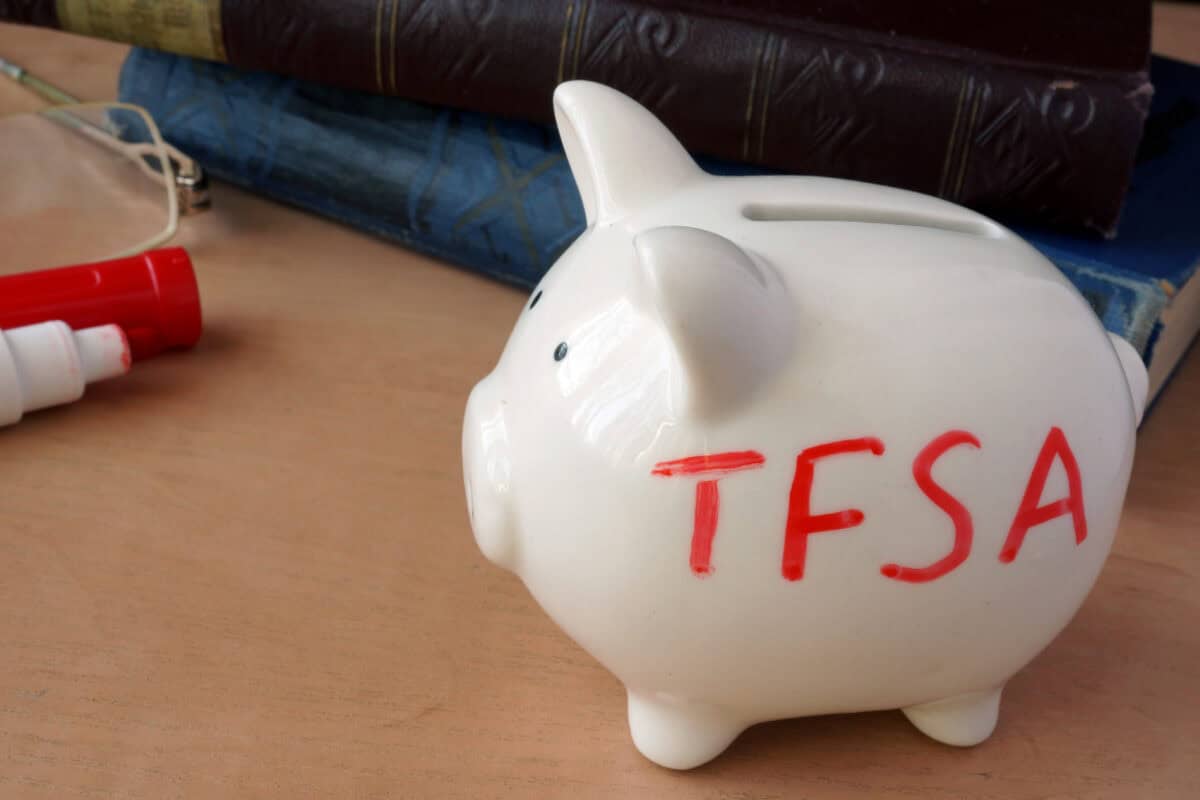
The Tax-Free Savings Account (TFSA) in Canada is unmatched for its versatility and usefulness to all account holders. Unfortunately, some TFSA investors who can max out the yearly limits might wish for higher contribution limits. A TFSA is one of a kind in that earnings inside the account and withdrawals are tax-free.
The Canada Revenue Agency (CRA) only penalizes over-contributions and those carrying a business (buying and selling of stocks) in their TFSAs. However, assuming you’ve maxed out your TFSA limit and still have money to invest, where else can you go?
Source: Getty Images
RRSP
The Registered Retirement Savings Plan (RRSP) came ahead of the TFSA. While money growth is tax-free, users pay taxes on withdrawals. Still, the older investment vehicle is the next-best alternative to the TFSA. The CRA also determines the contribution limits. For 2024, the limit is $31,560 or 18% of your income in the previous year, whichever is lower.
Most RRSP users invest in dividend stocks like Imperial Oil (TSX: IMO). You can earn two ways from this large-cap energy stock: price appreciation and quarterly dividends. At $88.11 per share, current investors enjoy an 18.3% year-to-date gain in addition to the decent and safe 2.72% dividend yield.
The $47.2 billion petroleum company is majority-owned (69.6%) by American oil giant ExxonMobil. A Dividend Aristocrat like Imperial Oil is ideal for a tax-sheltered investment account. The energy stock has raised dividends for 28 consecutive years.
According to a new International Energy Agency (IEA) report, oil producers in Canada and the United States are well-positioned to break output records through 2030.
RESP
An option for investors with children is the Registered Education Savings Plan (RESP). This long-term savings plan can help you save for your children’s education after high school. Adults can also open a RESP for themselves. A family RESP extends to children, grandchildren, adopted children, and stepchildren.
Real estate investment trusts (REITs) are eligible investments in a RESP. Slate Grocery (TSX: SGR.UN) is a lucrative option for its high yield and monthly dividend payouts. This REIT trades at $11.13 per share and pays a 10.6% dividend.
The $658.1 million REIT owns and operates grocery-anchored real estate in the United States. Its chief executive officer (CEO), Blair Welch, notes the strong demand for grocery spaces and growing net operating income (NOI) to start the year. In the first quarter (Q1) of 2024, rental revenue and NOI increased 2.2% and 1.8% year over year to US$52 million and US$40.5 million.
Net income during the quarter reached $13.6 million compared to the US$14.8 million net loss in Q1 2023. In addition to new leases coming online soon, Slate Grocery plans to capitalize on the grocery-anchored sector’s tailwinds to unlock additional unitholders’ value.
Other investment options
After dividend stocks and REITs, Canadians can invest in bonds, Guaranteed Investment Certificates (GICs), and mutual funds. However, if held in non-registered accounts, interest income or distributed income are taxable.
Bonds are debt securities, while GICs are savings deposits issued by banks and financial institutions. However, both are fixed-income generating and lower-risk investments compared to stocks. In mutual funds, gains are taxed when you cash in, redeem, or sell the units or shares.
Tax-free for life
Investing early in a TFSA allows money to grow tax-free throughout a lifetime. The RRSP, RESP, and other investment options can be backups after you max out your annual TFSA limits.