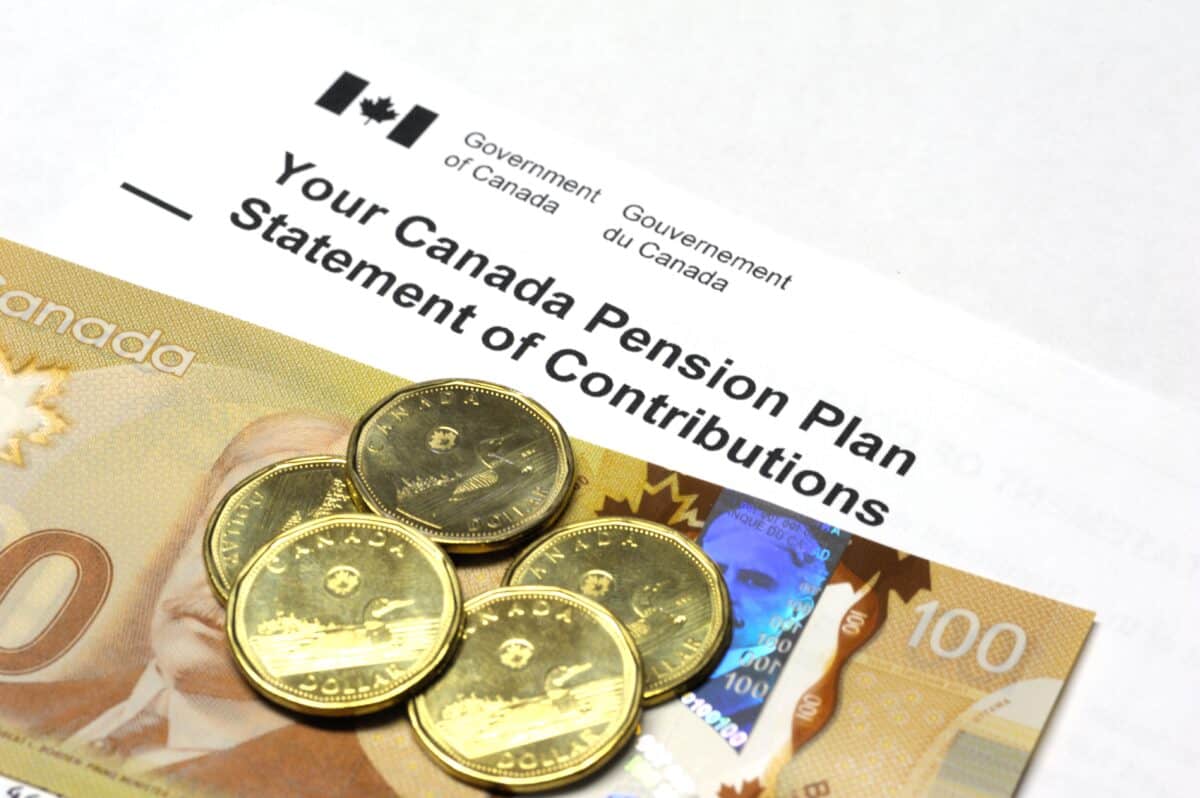
The Canada Revenue Agency (CRA) has made it compulsory for all individuals working in Canada, whether as employees or self-employed, to contribute to the Canada Pension Plan (CPP). You can start collecting your CPP payout as early as age 60. The ideal age is 65. If you collect your CPP payout before, the CRA deducts 0.6% every month from your payout. If you collect CPP at age 60, you take a 36% cut for a lifetime. However, sometimes it makes sense to take this cut.
Source: Getty Images
Why collect CPP at age 60?
While it is suggested to take an early payout if you need the money, you could do so even if you don’t need the money. It is because the CPP payout depends on your contributions and has nothing to do with how markets perform. Every year, the CRA determines the average and maximum CPP payout at age 65. This amount is inflation-adjusted. To get the maximum payout, you should have made a maximum CPP contribution for 40 years.
You will get the CPP till your last breath. So why not get maximum payouts even if the amount is low? You might as well enjoy your life savings while you still can, especially if you have a low life expectancy. And if you have a boatload of money stashed up in trusts, an early CPP payout can keep the income slightly lower for tax purposes.
While it may not look wise on the tax front to collect low CPP at age 60, you could adjust your trust payouts. This way, your investments can compound in the trust for a longer time. By keeping your income low, you can also get a maximum monthly Old Age Pension at age 65.
What can you do with the extra CPP?
If you have achieved the level where you don’t need the CPP payout, that is an achievement and a mark of sound financial health. You may not need the payout, but you have to pay tax on it. You might as well make your CPP earn the tax amount and generate money for emergencies.
While your Registered Retirement Savings Plan (RRSP) has an age limit of 71, your Tax-Free Savings Plan (TFSA) has no age limit. You can use your CPP payouts to invest in resilient stocks that could give you a 20% annual return, as that is the minimum tax your pension might attract.
A 20% return is possible in technology ETFs. They diversify your investment across the entire sector, reducing the risk of investing in individual stocks.
The iShares S&P/TSX Capped Information Technology Index ETF (TSX: XIT) invests in 20 Canadian technology stocks, with its top two holdings in Constellation Software and Shopify. They are the best-performing tech stocks of the TSX and have given strong double-digit returns to investors. While Constellation stock shows resilient growth, Shopify stock is volatile. The ETF balances the volatility with resilience and gives you the tech market returns.
Recently, the tech stocks have been seeing a correction on lower-than-expected earnings. A correction is the time to buy them as their long-term secular trend continues. Their double-digit returns in a year or two can help you pay the tax on CPP payouts and get some tax-free gains for emergencies through a TFSA.
Investor takeaway
Retirement is a new start. You can use this time to learn about stocks and read some company financials. However, invest only the money you don’t need for at least two years. Otherwise, emergencies could make you sell stocks at a loss. The CPP you don’t need can be invested, but the CPP you need should be spent.
While investing is good, spending is equally important. A good balance of the two can keep money flowing till your last breath.