After a weak December, the Canadian equity markets have begun 2025 positively, with the S&P/TSX Composite Index rising 2.4%. However, uncertainties persist over the impact of the proposed tariffs on imports by the United States on global growth. So, the Canadian equity markets could remain volatile in the near term.
Amid the uncertainty, investors can strengthen their portfolios and earn stable cash flows by adding quality dividend stocks. Given their regulated and contracted businesses, Canadian pipeline companies generate stable financials irrespective of the broader market conditions, thus making them smart buys in this uncertain outlook. Against this backdrop, let’s assess which among Enrbdige (TSX:ENB) and TC Energy (TSX:TRP) would be a better buy right now.
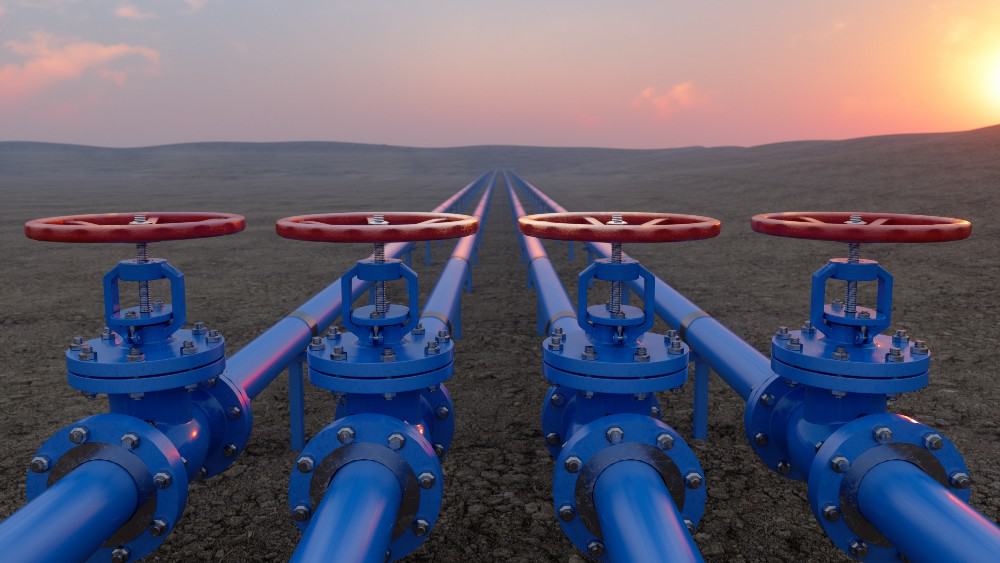
Image source: Getty Images
Enbridge
Enbridge owns and operates a pipeline network transporting 30% of North America’s crude oil production and 20% of the United States’s natural gas consumption. The company also has a healthy presence in the utility and renewable energy sectors. With around 98% of its cash flows underpinned by regulated assets and long-term contracts, the pipeline giant enjoys stable and predictable cash flows. Supported by these healthy cash flows, the Calgary-based diversified energy company has paid dividends uninterruptedly for 69 years. It has also raised its dividends for the previous 30 years and currently offers a healthy dividend yield of 5.9%.
Moreover, Enbridge recently acquired three natural gas utility assets in the United States, making it North America’s largest natural gas utility company. Given their low-risk business profile, these acquisitions could further strengthen the company’s cash flows. Further, the pipeline developer is continuing with its $27 billion capital investment plan and expects to put $6 billion of projects into service this year.
Amid these growth initiatives, the company’s management expects to generate an adjusted EBITDA (earnings before interest, tax, depreciation, and amortization) of $19.4–$20 billion this year, with the midpoint representing a 9.4% increase from the 2024 guidance. The management also expects its adjusted EBITDA to grow at an annualized rate of 7–9% in the long term. Given its healthy growth prospects, I believe Enbridge could continue its dividend growth.
TC Energy
TC Energy operates pipeline networks, storage facilities, and power-generation plants. In October, it spun off its liquid pipelines business to focus on natural gas infrastructure and power and energy solutions. With around 97% of its adjusted EBITDA underpinned by rate-regulated assets and take-or-pay contracts, the company’s financials are less prone to market volatility, allowing it to raise its dividends consistently. TRP has raised its dividends for 24 years. However, its dividend has declined post-spinoff to reflect the proportionate allocation. Currently, TC Energy stock offers a quarterly dividend of $0.8225/share, with its forward dividend yield at 5.7% as of the January 22 closing price.
Moreover, TC Energy has planned to invest $6–$7 billion annually to expand its asset base. Amid these growth initiatives, the company expects its adjusted EBITDA to grow at an annualized rate of 5–7% through 2027. Also, its AFFO (adjusted funds from operations) could increase by 4–5% annually during the same period. Given these healthy growth prospects, TC Energy could continue rewarding its shareholders at a healthier rate.
Investors’ takeaway
Both Canadian pipeline companies offer excellent buying opportunities, given their solid underlying businesses, healthy growth prospects, and high dividend yield. However, I am more bullish on Enbridge due to its diversified revenue streams and higher growth prospects.