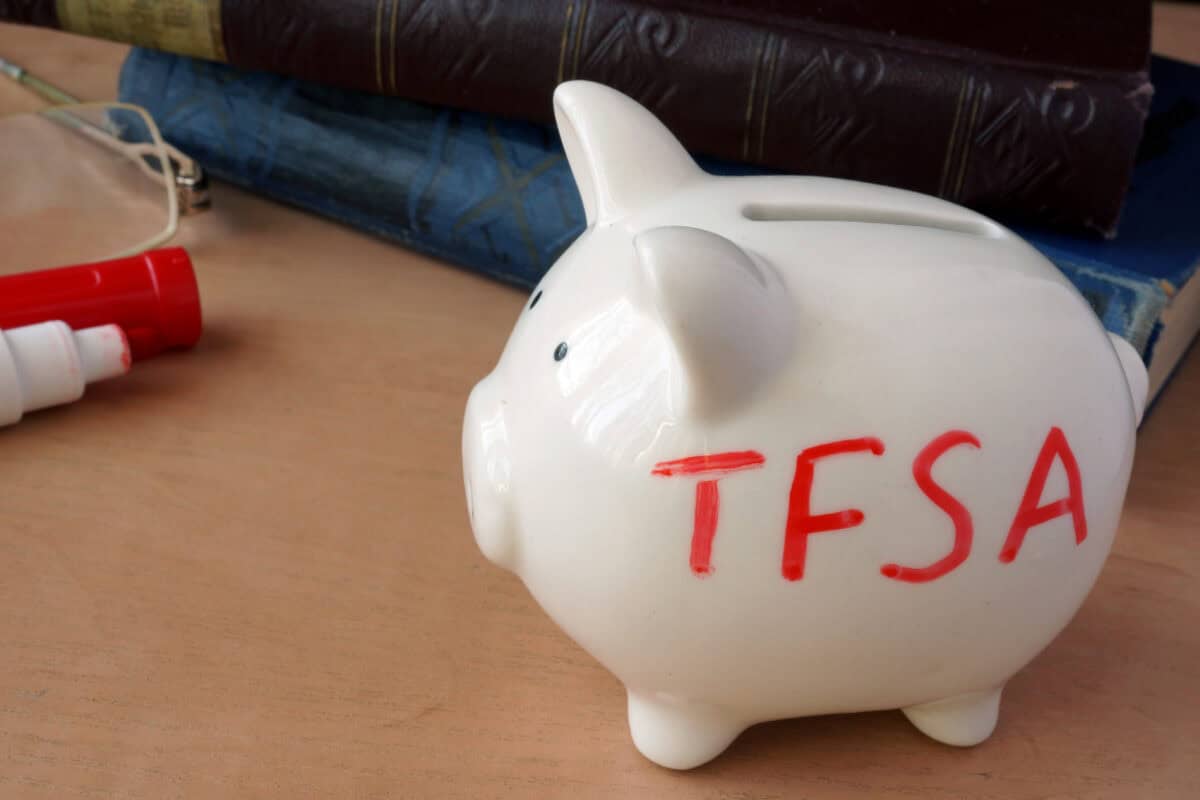
Do you want to maximize your investment returns in 2025? If so, then investing in a tax-free savings account (TFSA) is the way you want to do it. Taxes are the number one drain on investors’ performance, and a TFSA lets you invest significant sums of money tax-free. If you were 18 or older at the end of 2009, you can contribute up to $102,000 to a TFSA for tax-free compounding. In this article, I share three principles for maximizing your TFSA investment returns in 2025.
Source: Getty Images
Principle #1: Define your objectives
Before doing anything else in investing, you need to define your objectives. While high returns sound nice on paper, some investment objectives entail prioritizing low risk. Some financial plans and the risk/return objectives associated with them include:
- Saving up to buy a house. Saving up to purchase a specific item on a specific date gives you liquidity needs, so low risk assets (i.e., GICs) are ideal.
- Saving up for retirement. If you’re saving up for a retirement that you expect to happen far into the future, you can afford to take considerable risk.
- Already retired and managing your investments to cover day-to-day expenses. Here you have liquidity needs like the person saving up for a house, but don’t need a massive lump sum on a specific date, so you can invest in a mix of risky and low risk assets.
As you can see, a rational person’s risk/return objectives vary considerably with his/her personal circumstances. So, be sure to consider yours.
Principle #2: Hold the right assets
Once you know basically the mix of risk and return you’re after, the next step is to pick asset classes that fit it. Some options include:
- Treasuries. Bonds that pay interest and are sold by the government. Low risk.
- GICs. Like treasuries but illiquid and sold by banks. Low risk.
- Stocks. Little pieces of companies. Individually risky but considerably less so with diversification.
- Index ETFs. Portfolios that trade on the stock market which give you the diversification benefit mentioned above.
Principle #3: Select the right securities
Once you know what asset classes you want to invest in, you need to pick individual securities within them. Picking a GIC is a fairly straightforward matter that your bank will walk you through. With equities, the matter is a bit more complex, but basically you’ll want to start with index funds.
Consider the Vanguard FTSE Emerging Markets All Cap Index ETF (TSX:VEE). It is an index fund that invests primarily in the shares of emerging market companies; it has nearly doubled the return on the S&P 500 this year. The countries it invests in include China, India, and Brazil.
VEE is a good fund to mention right now because North American stocks are getting quite pricey. Canadian stocks not as much so as US stocks, although the TSX is arguably quite pricey given the constituent companies’ growth prospects. Emerging markets are cheaper than both Canada and the US. The VEE portfolio has a 14.8 P/E ratio and a 2.1 price-to-book ratio. Its companies grew their earnings by 15% on average over the last year. In exchange for this enticing combination of value and performance, VEE only charges you a 0.23% management fee. Overall, it probably merits a place in your diversified TFSA portfolio.