Here’s the Average TFSA Balance at Age 44 in Canada

If your TFSA is looking empty, consider prioritizing it!

| More on:
Key Points
  • The average TFSA balance for Canadians aged 40–44 is only $17,604, far below what’s ideal at this stage of life.
  • The TFSA offers unmatched flexibility compared with FHSA, RRSP, and RESP accounts.
  • A simple all-in-one ETF like ZGRO can help 44-year-olds build long-term, tax-free wealth in a TFSA.

Stats Canada releases all kinds of useful data that most people never look at, and one of the more insightful sets each year is the summary of Tax-Free Savings Account (TFSA) usage.

The report breaks down contribution patterns, withdrawals, and account values by age and gender. One number that stands out for the 40–44 age group is the average TFSA fair market value of just $17,604 for the 2022 contribution year (released in 2024).

Yikes. I know Gen X has been struggling financially for years, but seeing that number in black and white is jarring, especially considering the new TFSA room for 2025 alone is another $7,000.

Despite competing priorities like the First Home Savings Account (FHSA), Registered Retirement Savings Plan (RRSP), and the Registered Education Savings Plan (RESP) for parents, I think the TFSA should be one of the first accounts Canadians try to max out. Here’s why.
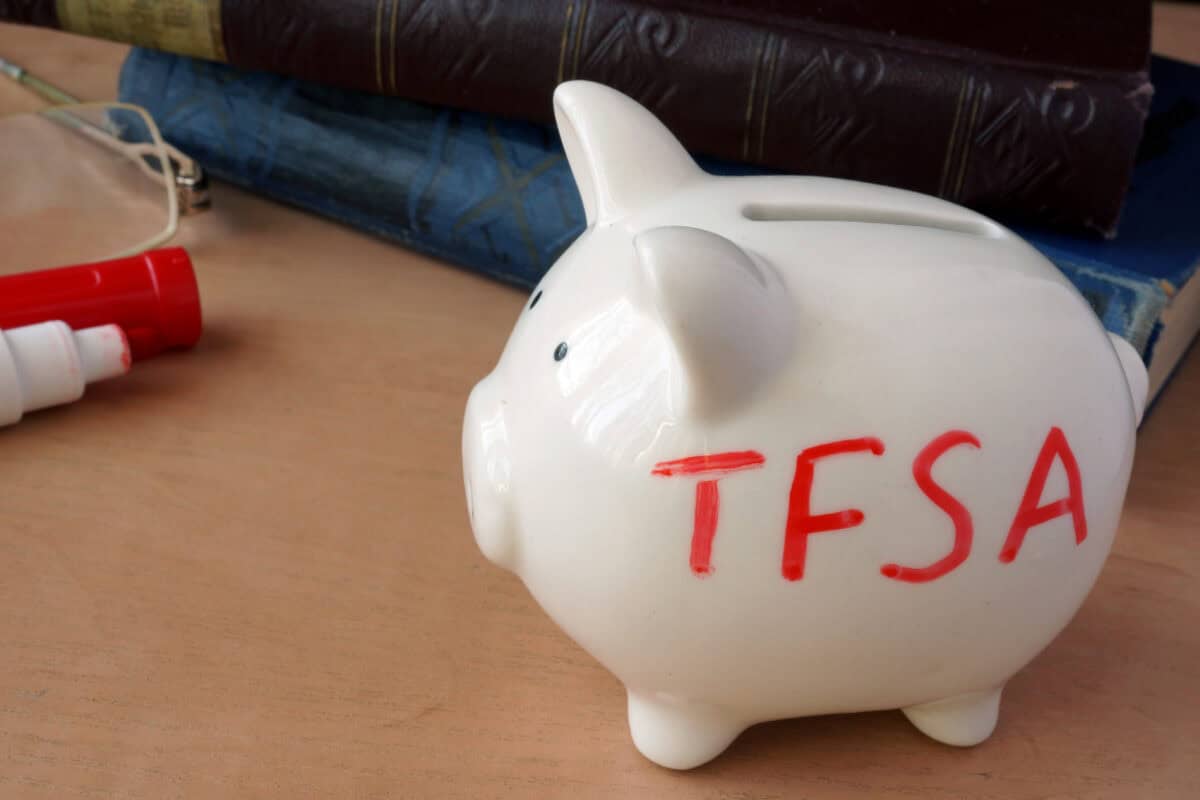
Piggy bank with word TFSA for tax-free savings accounts.

Source: Getty Images

Why a TFSA?

The TFSA is simple. Every year you turn 18 and live in Canada, you receive new contribution room. The 2025 limit is $7,000, and limits tend to rise over time with inflation. Your investments grow tax-free, and all withdrawals are also tax-free, with no age restrictions, income requirements, or repayment rules. Compared with other accounts:

-Versus the FHSA: The FHSA is great if you’re buying your first home, but once you buy, the account loses its ongoing usefulness. The TFSA works for every stage of life.

-Versus the RRSP: RRSP withdrawals are taxable and structured around retirement. The TFSA lets you pull out money anytime for any reason, tax-free.

-Versus the RESP: RESPs are excellent for kids, but they’re locked in for education. The TFSA is a blank cheque with no conditions attached.

The only meaningful limitation is the 15% withholding tax on U.S. dividends, which applies even inside a TFSA. Other than that, there’s no registered account in Canada that matches its combination of tax treatment, flexibility, and simplicity.

What to buy in your TFSA

At age 44, most Canadians still have a long investing runway of 20 years or more until retirement. That supports a growth-oriented risk profile, but with some bond exposure to smooth out volatility. One option that fits this well is the BMO Growth ETF (TSX: ZGRO).

This is an all-in-one portfolio ETF that holds 80% global equities (Canada, U.S., and international stocks) and 20% bonds. The stock portion drives long-term growth, while the bonds help stabilize returns during market swings.

The fee is just 0.2%, meaning every $10,000 invested costs only $20 per year. For investors who want simplicity, diversification, and tax-free compounding, this kind of diversified ETF is hard to beat inside a TFSA.

Fool contributor Tony Dong has no position in any of the stocks mentioned. The Motley Fool has no position in any of the stocks mentioned. The Motley Fool has a disclosure policy.

More on Investing

Child measures his height on wall. He is growing taller.
Dividend Stocks

New to Investing? Start With This Canadian Dividend Stock

This Canadian stock has a proven record of paying dividends and consistently raising their payouts in the years ahead.

Read more »

ETFs can contain investments such as stocks
Dividend Stocks

VFV Isn’t a Complete Portfolio: Here’s What Canadian Investors May Be Missing

VFV feels like a complete portfolio, but it’s really a concentrated bet on U.S. large caps and the U.S. dollar.

Read more »

Partially complete jigsaw puzzle with scattered missing pieces
Dividend Stocks

Don’t Want to Wait a Year for a GIC Payout? This 11.7% Dividend Stock Pays You Monthly

Hamilton Canadian Financials Yield Maximizer ETF (TSX:HMAX) stands out as the ultimate passive-income booster, but it's far different than GICs.

Read more »

dividends grow over time
Dividend Stocks

GIC or Dividend Stock? Here’s Where I’d Put $10,000 for Income and Growth

Rogers can beat a one‑year GIC on income and long-term upside, but only if you can handle volatility and debt…

Read more »

tsx today
Stock Market

TSX Today: What to Watch for in Stocks on Friday, September 11

Falling oil and natural gas prices could pressure TSX energy stocks today, while approaching U.S. tariffs on more Canadian goods…

Read more »

Agricultural harvesting at the last light of day, aerial view.
Dividend Stocks

Potash Power Play: Why This Overlooked Commodity Could Be Canada’s Trump Card

Canada’s potash dominance gives Nutrien a strategic edge as trade tensions rise, making this overlooked commodity worth watching closely.

Read more »

gold prices rise and fall
Dividend Stocks

Trade War 2.0: The TSX Stocks That Could Actually Benefit From U.S. Tariffs

These two TSX stocks could give investors great ways to benefit from Trade War 2.0.

Read more »

senior man and woman stretch their legs on yoga mats outside
Energy Stocks

Retirees Love Dividends: Here’s the Number That Matters More Than Yield

A tempting 7% yield can vanish fast, so checking the payout ratio helps confirm a dividend is actually sustainable.

Read more »