Artificial intelligence (AI) infrastructure is a massive opportunity for today’s investor. Every breakthrough in AI depends on an enormous physical backbone. These include data centres, high-powered chips, fibre networks, cooling systems, and industrial real estate, all of which must scale rapidly to meet exploding global demand.
As companies race to train larger models, deploy automation, and process real-time data, the world needs far more capacity than currently exists. That means billions flowing into construction, electricity generation, semiconductor production, and cloud-computing hardware. Investors aren’t just betting on AI software, but tapping into the essential infrastructure that makes the entire AI revolution possible.
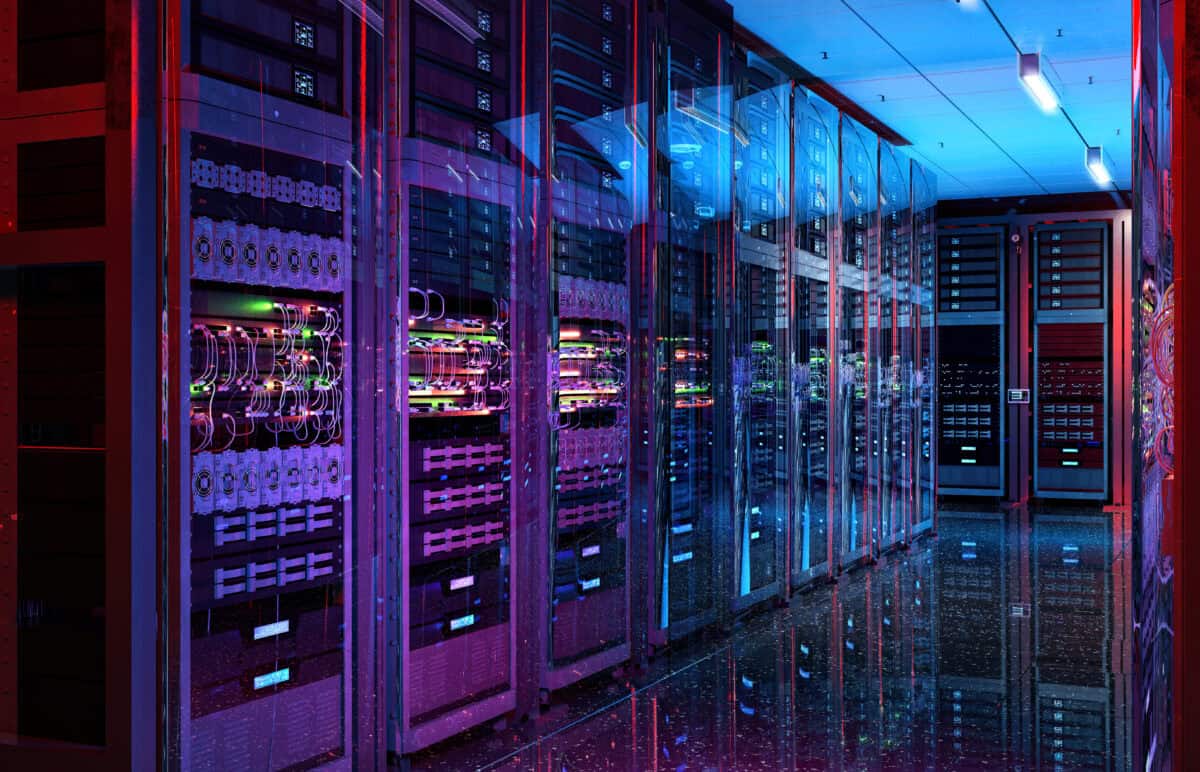
Source: Getty Images
A boom in the making
AI infrastructure could become Canada’s hidden asset boom because the country already has the building blocks the world is scrambling to secure. This includes abundant clean energy, vast land suited for industrial development, a cold climate ideal for cooling data centres, and a tech ecosystem capable of supporting advanced computing. As global demand for AI skyrockets, the physical requirements to power it become as valuable as the technology itself. Canada is uniquely positioned to step into this role. Provinces like Quebec, Ontario, and British Columbia offer relatively low-cost, low-carbon electricity, something AI giants desperately need as data centres consume staggering amounts of power.
This shift isn’t theoretical either. Massive capital is already flowing into the sector. Major cloud and semiconductor players are exploring or expanding Canadian footprints precisely because space and energy are becoming scarce in the United States. Meanwhile, industrial real estate investment trusts (REITs), utilities, and power producers are quietly preparing for a surge in demand tied directly to AI training clusters and edge-compute facilities. It all mirrors past resource booms, but instead of oil or minerals, the resource is power, bandwidth, and land, three things Canada has in abundance.
If Canada leverages policy, streamlines permitting, and creates investment incentives, the AI infrastructure boom could rival past waves of resource-driven prosperity. Jobs would come from construction, engineering, utilities, and technology, while investment would pour into power producers, industrial landlords, telecom networks, and critical-mineral developers. For investors, this presents a once-in-a-generation opportunity in sectors that traditionally grow slowly but could accelerate dramatically as AI becomes a global utility.
Consider Hut 8
If you’re looking for a way to get in on this future action, Hut 8 (TSX:HUT) is a strong place to start. HUT is a North American infrastructure and digital-compute company that specializes in high-performance computing, crypto mining, and data centre capacity. The AI stock owns and operates physical power-generation and energy infrastructure, high-capacity data centres, and assets that fuel energy-intensive workloads. Over time, Hut 8 broadened beyond just cryptocurrency mining into a broader platform that supports digital infrastructure.
In its third-quarter 2025 report, Hut 8 delivered a sharp revenue increase, nearly doubling year over year to roughly US$83.5 million. Meanwhile, adjusted earnings before interest, taxes, depreciation, and amortization (EBITDA) and net income surged compared with prior-year periods. The AI stock also significantly expanded its compute capacity. As of late 2025, its total hashrate rose to about 26.8 exahash-per-second (EH/s), a substantial increase from the prior 12 EH/s. On top of that, Hut 8 currently holds a large Bitcoin reserve, with more self-mined coins than any publicly traded entity in the space.
What makes Hut 8 especially interesting is that it doesn’t just mine cryptocurrencies; it operates real, scalable infrastructure that could power next-generation AI and high-performance computing workloads. The AI stock describes itself as a vertically integrated “power-first” platform, combining energy generation, data centre infrastructure, and compute capacity under one roof. As AI adoption grows and demand for data centre capacity explodes, AI stocks like Hut 8 may see demand for compute and energy infrastructure surge.
Bottom line
Canada may not dominate AI software, but it can become the powerhouse behind it, supplying the energy, space, and physical infrastructure that make the AI revolution possible. With its large Bitcoin holdings providing a financial cushion, Hut 8 is less reliant on short-term crypto price swings. This gives it flexibility to pivot toward AI-related workloads or infrastructure services if that becomes the dominant demand driver, making it a hidden but strong AI infrastructure option.