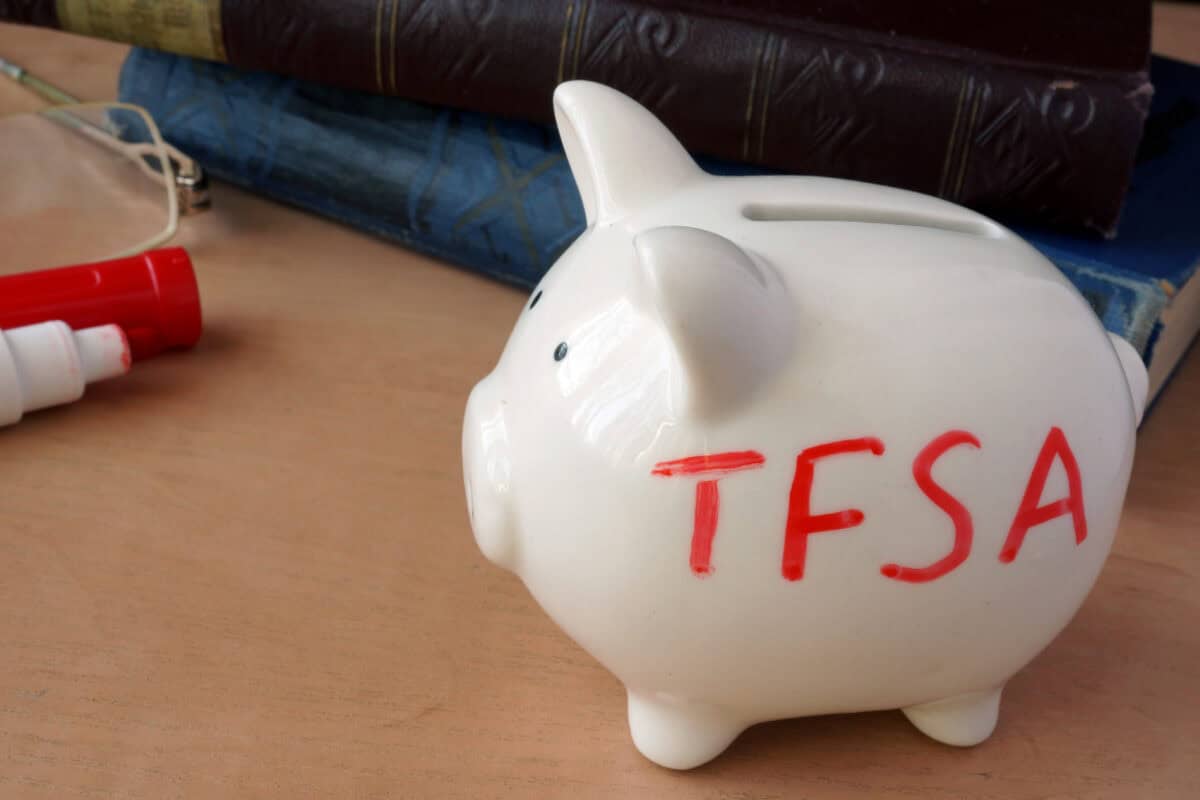
At 50, you stop having the luxury of saying, “I’ll deal with it later.” Knowing the average Tax-Free Savings Account (TFSA) balance gives you a reality check that cuts through wishful thinking. It tells you whether you sit in the pack, behind it, or quietly ahead of it. It also helps you set a target that feels concrete, which matters at 50 because the next decade can do heavy lifting if you keep contributions steady and invest with purpose.
Source: Getty Images
Where you fall
The most useful benchmark comes from the CRA’s TFSA statistics, which group Canadians aged 50 to 54 together. For the 2023 contribution year, the average TFSA fair market value for that age band was $24,150. That number often surprises people, because by 50, many Canadians have had years of contribution room to use, and the TFSA can hold far more than what that average suggests.
The first thing investors should take into account is that “average” hides a wild spread. The second thing to note is that the TFSA story at 50 often becomes less about brilliance and more about consistency. If you want to catch up, the lever is not a perfect stock pick. It’s an automatic contribution schedule, a simple portfolio you can stick with, and a willingness to keep investing when headlines feel annoying. The TFSA rewards calm, and 50 is a great age to lean into that.
XBAL
iShares Core Balanced ETF Portfolio (TSX:XBAL) is basically the “keep it simple” option in a single ticker. It aims for a strategic mix of about 60% equities and 40% fixed income, using a small set of underlying iShares exchange traded funds (ETF) to do the work. The pitch is straightforward: you get diversification across markets and bonds, and you do not have to rebalance it yourself.
Over the last year, it has been the trend of money flowing into all-in-one ETFs as Canadians want fewer moving parts. The fund has also grown into a large vehicle, with net assets recently around $2.80 billion and a unit price around $34.50 as of writing. That kind of scale matters because it tends to support liquidity and tight trading spreads.
Numbers-wise, XBAL keeps costs low for what it offers. It offers a management expense ratio (MER) at 0.2%, and also tends to pay distributions. Recent screens have shown a yield in the 2.8% range, though that moves with markets and payout timing. Your real driver becomes the mix: equities for long-term growth, bonds for ballast and income. That blend can feel less exciting than a single hot stock, but excitement rarely helps at 50 if your goal is steady progress.
Looking ahead, the outlook depends on the same plain forces that drive balanced portfolios. If equities grind higher over time, the 60% equity sleeve helps. If bond yields stay reasonably supportive, the 40% fixed income sleeve can provide income and dampen volatility. The trade-off is that this ETF will not usually beat an all-equity fund in a roaring bull market, because the bonds will hold it back.
Bottom line
So, could XBAL be a buy for someone trying to catch up at 50? Certainly, as the biggest risk at this age often comes from zigzagging strategies, not from picking the “wrong” balanced fund. XBAL can give you a disciplined default that you can keep feeding inside a TFSA, and it removes the temptation to constantly “fix” your portfolio. The downside is that it will not deliver miracle catch-up returns on its own, and the bond sleeve can feel slow if you crave fast growth, so it works best for people who value consistency more than bragging rights.