Paying attention to daily financial news feels responsible. It feels smart. After all, shouldn’t informed investors outperform?
Ironically, the opposite may be true.
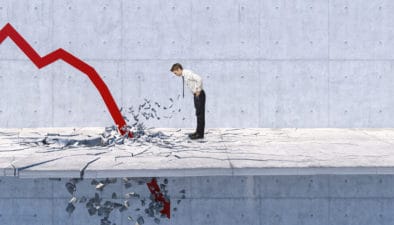
Continuous exposure to market headlines can foster insecurity, amplify fear, and trigger emotional decisions that quietly erode long-term wealth.
While staying broadly informed has value, obsessively tracking financial news may push investors into short-term, reactive behaviour — selling during downturns, chasing rallies, and constantly “doing something” when patience would have been far more rewarding.
Here’s why tuning in too often might be costing you.

Source: Getty Images
The emotional trap: How headlines hijack your decisions
Financial news is designed to provoke a reaction. Calm rarely attracts clicks.
This environment fuels powerful behavioural biases:
- FOMO (Fear of Missing Out): When headlines trumpet record highs or the “next big thing,” investors feel pressured to buy — often near peaks, when risk is highest.
- Panic selling: Negative news dominates coverage because fear captures attention. Market dips are framed as crises. Investors, overwhelmed by loss aversion — a concept developed by psychologists Daniel Kahneman and Amos Tversky — feel the pain of losses roughly twice as strongly as equivalent gains. The result? Selling at precisely the wrong time.
- Information bias: A constant stream of contradictory forecasts creates the illusion that action is required. This leads to overtrading, which increases transaction costs and taxes — two guaranteed drags on returns.
The market does not reward anxiety. It rewards discipline.
The illusion of control: Why reacting rarely pays off
Many investors believe news gives them an edge. In reality, headlines are usually late.
By the time a story appears, markets have already processed the information. Professional traders act on expectations and data long before the event becomes a public narrative. Reacting to news is often reacting after prices have adjusted.
Consider a recent example. The Canadian market, using iShares S&P/TSX 60 Index ETF (TSX: XIU) as a proxy, fell roughly 11% from its 2025 highs, bottoming in April of the year amid tariff concerns tied to U.S. policy changes. Headlines were dire. Fear was widespread.
But roughly 10 months after the bottom, the market has climbed more than 46%, turning what felt catastrophic into a temporary correction. Investors who sold based on headlines locked in losses. Those who did nothing (or even added to their positions) benefited from the recovery.
Sometimes, the so-called “Ostrich Approach” — ignoring short-term volatility — is not negligence but strategy.
The hidden costs: Noise, finfluencers, and lost focus
The modern investor faces another risk: social media “finfluencers.” Studies suggest that those who rely heavily on social media-based financial advice are significantly more likely to encounter misleading information or scams. The constant chatter encourages speculation over strategy.
Meanwhile, daily focus on news about inflation, interest rate changes, and recession predictions distracts from what truly builds wealth:
- Consistent saving
- Low fees
- Diversification
- Ownership of high-quality businesses
- Long-term compounding
Financial news thrives on urgency. Wealth grows through patience.
Excessive exposure to financial news can also erode confidence. With analysts having different projections and opinions on stocks, for instance, investors might begin to doubt their decision-making and abandon well-constructed strategies and plans.
Investor takeaway
Staying informed is wise. But excessively consuming daily financial news can make you poorer by encouraging emotional trading, overreaction, and costly market timing attempts.
Headlines could amplify fear, exaggerate risk, and create the illusion that constant action is necessary. In reality, markets often recover faster than narratives shift.
For long-term investors, discipline, diversification, and patience consistently outperform anxiety-driven decisions. Sometimes the smartest financial move isn’t reacting to the news — it’s ignoring it.