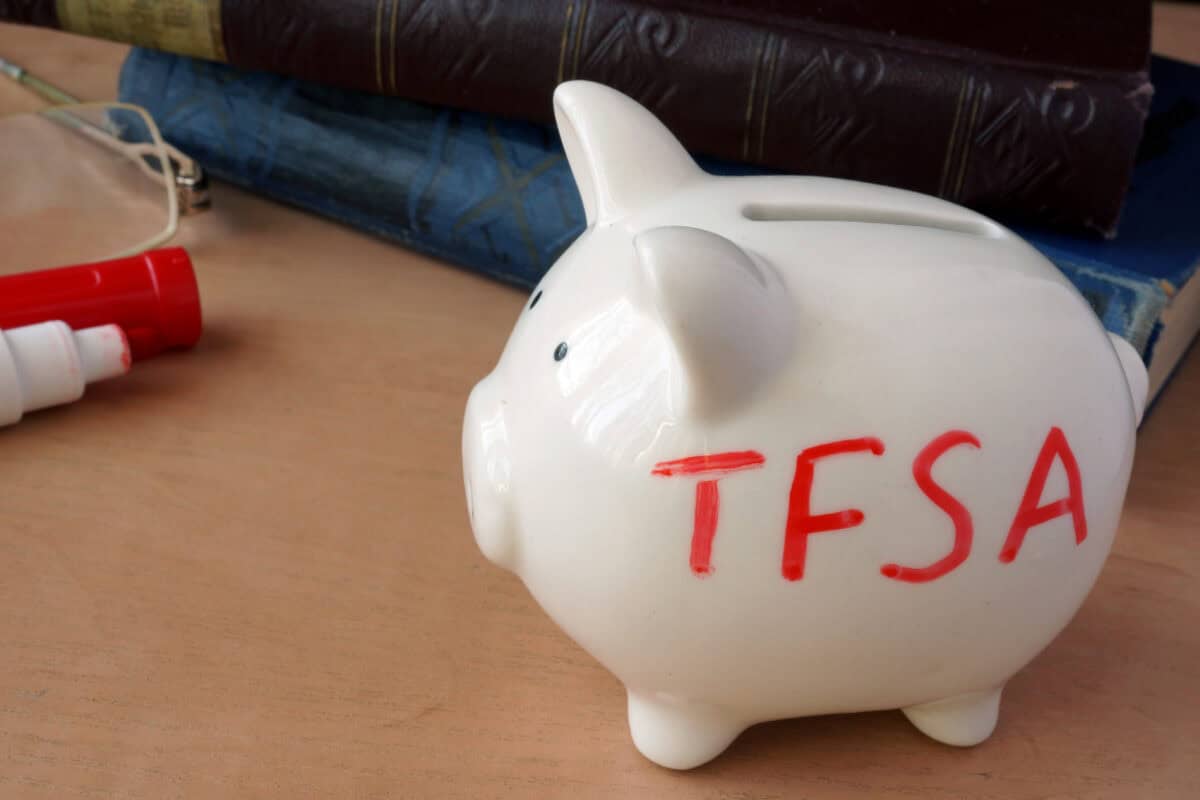
Canadians sometimes underestimate just how good the Tax-Free Savings Account (TFSA) really is. It is often compared with the American Roth IRA. The annual contribution limits are fairly similar, but the TFSA is generally much more flexible.
There are no income limits preventing high earners from contributing. Withdrawals can be made at any time for any purpose without tax, and the amount withdrawn is added back to your contribution room the following calendar year. That makes the TFSA useful not only for retirement but also for major life expenses and building passive income.
Because of that flexibility, I also think Canadians spend less time worrying about the tax consequences of their investments than many Americans do. While the TFSA is an excellent place to compound wealth over decades, it can also become a powerful tax-free income engine once you decide to start drawing cash from your portfolio.
Source: Getty Images
Why I prefer the TFSA for passive income
When it comes to generating passive income, I generally prefer the TFSA over the Registered Retirement Savings Plan (RRSP). This is because TFSA withdrawals are completely tax-free and do not increase your taxable income. An RRSP works differently. Contributions generate a tax deduction today, but every withdrawal is taxed as ordinary income.
Once the account is converted into a Registered Retirement Income Fund (RRIF), minimum annual withdrawals eventually become mandatory whether you need the money or not. That makes the TFSA much more flexible for retirees who want to control both the amount and timing of their withdrawals.
There is one important exception. If your passive income strategy focuses on U.S. dividend-paying stocks or U.S.-listed exchange-traded funds (ETFs), I would generally prefer holding those investments in an RRSP. Under the Canada-U.S. tax treaty, qualifying U.S. dividends paid into an RRSP are generally exempt from the 15% U.S. withholding tax that applies inside a TFSA.
One ETF to consider
For investors looking to build tax-free monthly income, the Vanguard FTSE Canadian High Dividend Yield Index ETF (TSX: VDY) is an attractive option.
VDY invests in a diversified portfolio of Canadian dividend-paying companies, with significant exposure to banks, pipelines, utilities, telecommunications, and energy producers.
The ETF currently offers a 3% trailing 12-month distribution yield, charges a 0.22% management expense ratio (MER), and pays distributions monthly, but income is only part of the story.
Over the long term, VDY has also delivered strong capital appreciation, demonstrating that dividend investing does not necessarily mean sacrificing growth. For Canadians seeking tax-free cash flow without giving up the potential for long-term wealth creation, it remains one of the strongest core income ETFs available.