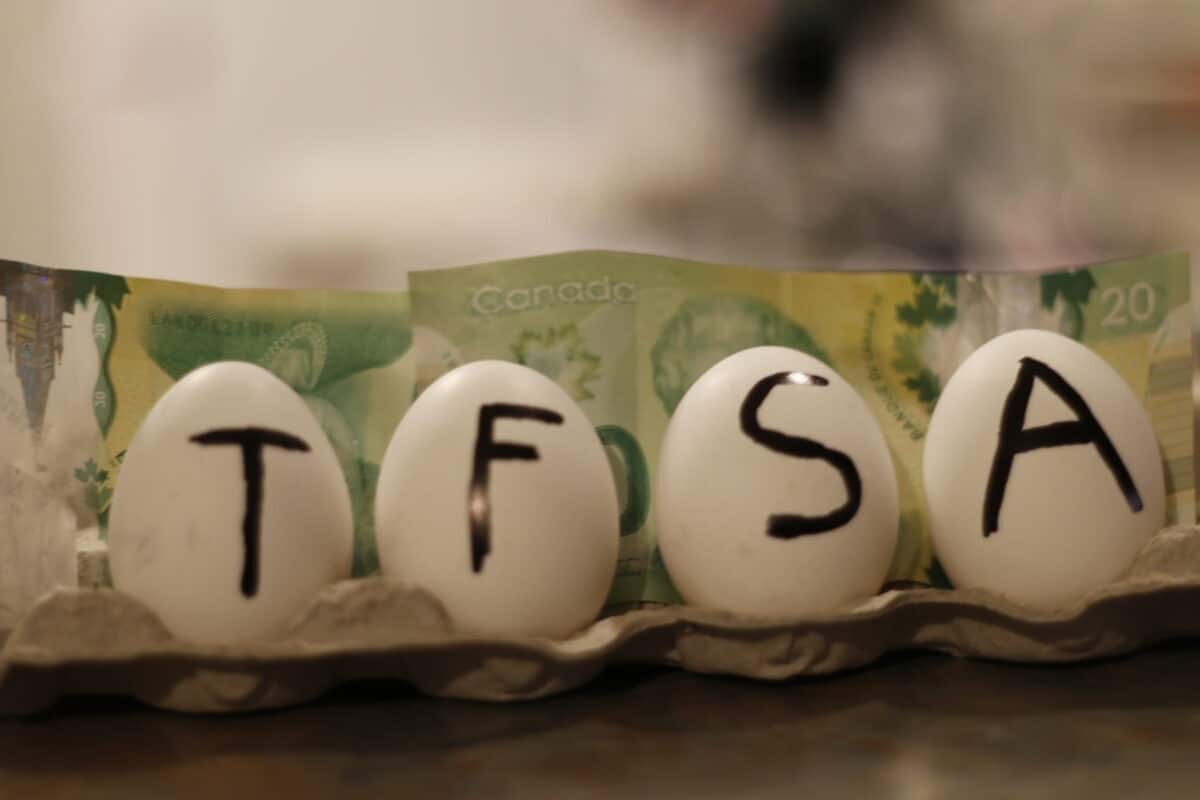
Cash has an excellent reputation. It doesn’t crash overnight, send alarming push notifications, or make you wonder why a perfectly respectable company just lost 12% because somebody used the wrong adjective on an earnings call. That security has real value. Yet inside a Tax-Free Savings Account (TFSA) meant to grow for decades, too much cash can become its own kind of risk.
A Capital One Canada survey makes the distinction important. It found that 56% of respondents earning $60,000 or less didn’t have an emergency fund. Surprisingly, 33% earning at least $100,000 said they had no extra money saved for emergencies. More than half had faced an unexpected cold-weather expense during the previous five years.
So, yes, keep cash. Just give it the right job.
Source: Getty Images
An emergency fund isn’t a TFSA
Capital One suggests working toward roughly three to six months of basic expenses for emergencies. Money for a leaking roof, a lost job, or a spectacularly ill-timed transmission repair shouldn’t depend on the TSX. After that cushion exists, however, long-term cash deserves another look.
A TFSA is only an account. It can hold cash, GICs, stocks, bonds, exchange-traded funds (ETF), and other eligible investments. The 2026 annual TFSA limit is $7,000, although individual room varies because unused contribution room carries forward. Withdrawals are also added back to available contribution room the following calendar year.
Those rules make a TFSA wonderfully flexible. Yet flexibility isn’t the same thing as growth. Leaving long-term money sitting in cash can waste years of tax-free compounding, particularly once interest rates fall. For money that won’t be needed for years, I’d rather own a business capable of growing with the Canadian economy.
A boring business
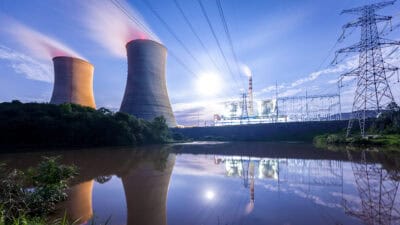
Hydro One (TSX: H) owns and operates much of Ontario’s electricity transmission and distribution network. That’s not going to earn many points at a cocktail party, but dependable infrastructure has its charms.
The company has an enormous investment runway as Ontario needs more electricity for population growth, industry, data centres, and electrification. Hydro One was recently selected to develop the Red Lake Transmission Line and is advancing several other major transmission projects, including the North Shore Link.
The earnings are following the spending. Second-quarter earnings per share rose about 15% year over year to $0.62, helped by higher regulated rates and electricity demand. Hydro One also invested $812 million during the quarter. Meanwhile, the quarterly dividend increased to $0.35 per share, bringing the annualized payout to $1.41.
At a recent price of $51.25, $10,000 would buy 195 whole shares for $9,993.75. Those shares would currently produce about $275.42 annually. That’s only a roughly 2.8% yield, so the dividend isn’t the entire attraction. Hydro One has increased its dividend by about 6% annually on average since going public. Reinvest those payments inside a TFSA, and future dividends and capital gains can continue compounding tax-free.
| COMPANY | RECENT PRICE | NUMBER OF SHARES | ANNUAL DIVIDEND | ANNUAL TOTAL PAYOUT | FREQUENCY | TOTAL INVESTMENT |
|---|---|---|---|---|---|---|
| H | $51.25 | 195 | $1.4124 | $275.42 | Quarterly | $9,993.75 |
Bottom line
There is a price for that potential growth. Hydro One shares recently sat about 15% below the July high, which is a handy reminder that even a regulated utility can fall. Large infrastructure projects can run over budget, financing costs can rise, and regulators ultimately influence how much Hydro One earns on its investments.
That’s why emergency savings shouldn’t suddenly become Hydro One shares because cash has been accused of being boring. Instead, I’d separate the two buckets. Keep enough accessible cash to handle life’s surprises, then consider putting truly long-term TFSA money to work across diversified Canadian dividend stocks.
Cash can buy peace of mind. Once you’ve bought enough of that, leaving another decade’s worth of TFSA money sitting beside it could be considerably more expensive than the market swings you’re trying to avoid.