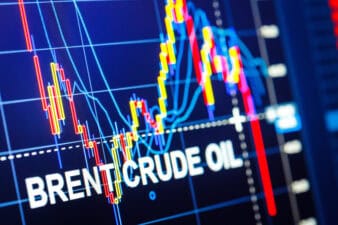
For the first time in almost a year, the price of crude recently broke the psychologically important US$50 per barrel barrier because of an optimistic outlook triggered by signs that oil markets are starting to rebalance.
In fact, a number of fund managers and investment banks have stated that the bottom for oil has arrived and that prices can only continue to recover from this point. Even the eternally bearish Goldman Sachs has changed its tune recently, calling an end to cheap oil.
Much of this optimism can be attributed to growing supply constraints and a bigger than expected drawdown from U.S. oil inventories that now sees them at their lowest level in six weeks.
Nonetheless, despite these positive sentiments, there are signs that cheap oil is here to stay.
Now what?
Firstly, Goldman may have stated that the end of cheap oil is over, but they are still predicting that crude will only hit US$50 per barrel for the second half of 2016. To my way of thinking, this is still cheap, especially when it is considered that this is less than a third of oil’s 2008 peak of US$145 per barrel and less than half of its 2013 peak of US$110 per barrel.
In fact, US$50 per barrel isn’t even high enough to trigger renewed spending on critical exploration activities. The majority of analysts believe that at least US$60 per barrel is needed to make exploration economic once again.
Secondly, there are signs that the recent supply constraints that triggered the rally in crude are only temporary.
You see, the two million barrel per day supply slump was triggered by outages caused by civil unrest in Nigeria and Libya as well as wild fires in Canada.
These outages are only temporary as much of the Canadian oil production that was shut down by wildfires is slowly coming back online. Suncor Energy Inc. (TSX:SU)(NYSE:SU) expects that initial production from its affected operations will recommence this week.
Meanwhile, civil unrest in Nigeria and Libya is nothing new. In the past, both countries have shown that their oil output bounces back to pre-crisis levels quite quickly. This is because crude exports generate much-needed hard currency for the unstable regimes governing those nations.
The Libyan oil port of Marsa al-Hariga, which was closed for three weeks, has been reopened; tankers are now being loaded, while three oil terminals that have been closed for over a year and a half are forecast to reopen later this year.
Finally, Iran is determined to keep the spigots open and pump crude at a frenetic pace as it ramps up oil output to pre-sanction levels. For April 2016, its oil production was up to 3.4 million barrels daily, a 3% increase month over month and a 17% increase from January 2016.
In fact, this is just a mere 100,000 barrels a day shy of the 3.5 million barrels it pumped at the end of 2011 when sanctions were tightened. There are also signs that Iran’s production will go even higher; Tehran is determined to use crude exports to reinvigorate its stagnant economy.
So what?
Current fundamentals don’t support a sustained rally in crude, and while there may have been a brief rebalancing, it appears that supplies will continue to grow for some time. For these reasons, oil will retreat from recent highs, leaving heavily indebted oil producers such as Penn West Petroleum Ltd.(TSX:PWT)(NYSE:PWE), Lightstream Resources Ltd. (TSX:LTS), and Pengrowth Energy Corp. (TSX:PGF)(NYSE:PGH) struggling for survival in a harsh environment where sub-$50 crude is shaping up as the new normal.
Consequently, investors should exercise considerable caution when investing in the energy patch, sticking to high-quality names such as Suncor, which has its deep pockets, a solid balance sheet, and recent judicious employment of capital for acquisitions. Suncor should emerge from the current crisis in solid shape.