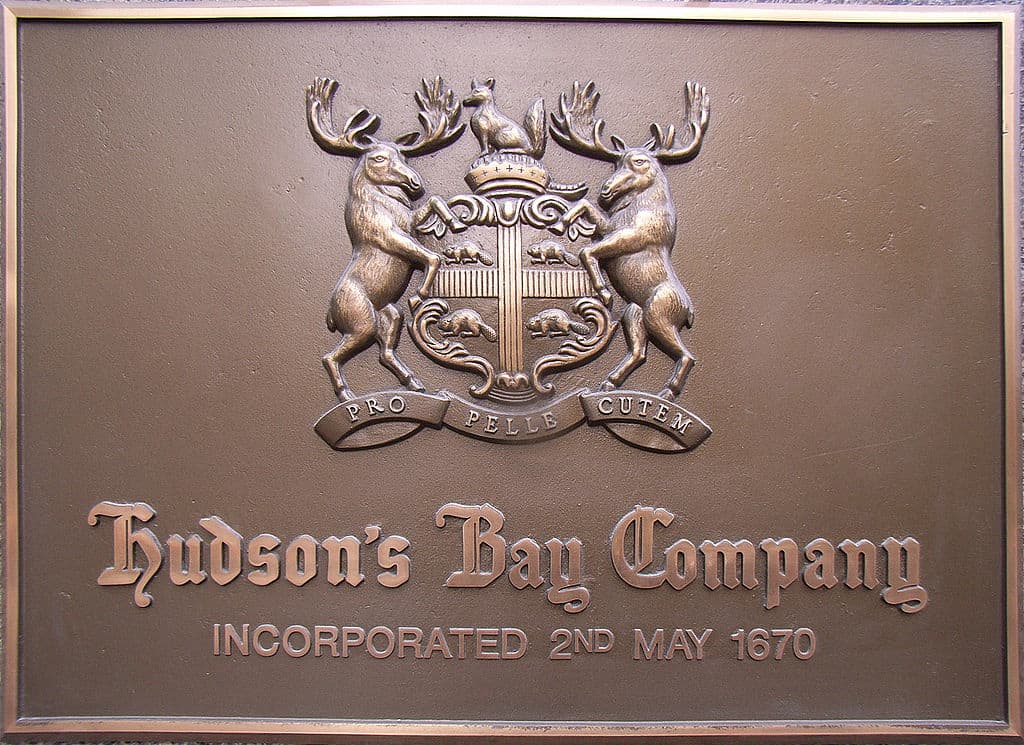
Any time a stock pops 15% and you own it, you’ve got to be happy, especially if it’s Hudson’s Bay Co. (TSX:HBC), whose share price traded near $30 two years ago.
The department store consolidator has excellent real estate, and that’s what’s got Connecticut-based activist investor Land & Buildings Investment Management, who own 4.3% of Hudson’s Bay’s stock, publicly pleading with Hudson’s Bay’s board to consider all strategic alternatives available to monetize its valuable properties.
The question isn’t whether or not Hudson’s Bay owns valuable real estate; the question is if Hudson’s Bay management will finally act to unlock some of that value.
While it’s tempting to placate investors, it might not be the best long-term solution for the company. Here’s why.
Unique assets
We’ve heard this argument before.
It’s not new to suggest that assets like its Saks Fifth Avenue store, which is approximately 660,000 square feet of prime New York real estate and worth as much as $5 billion, should be repurposed.
“Hudson’s Bay’s portfolio of assets is truly unique. Consider that the Saks Fifth Avenue store between 49th Street and 50th Street, across from Rockefeller Center … is likely one of the most valuable locations not only in Manhattan, but in the United States,” wrote Land & Buildings in its June 19 letter to the board. “Is the best use of this location truly a department store? What about a hotel? Or office? Or boutique retail stores the likes of Apple and Gucci?”
Executive Chairman Richard Baker is a pretty smart real estate person. I’m sure he’s run the numbers a million times and understands that what Land & Buildings proposed is indeed a value-creation bonanza.
He continues to stay the course. Why might that be?
Is it a real estate company?
Land & Buildings believes Hudson’s Bay is a real estate company. I’m sure Samuel Lord, George Washington Taylor, Andrew Saks, and the Hudson’s Bay directors, who moved the company away from fur trading into retail in the early 1900s, might see things differently.
In the activist investors’ letter to the board, it points to David Simon, CEO of Simon Property Group Inc. (NYSE:SPG), whose company has a joint venture with Hudson’s Bay, as validation of Hudson’s Bay’s real estate.
I don’t disagree.
However, Simon’s company, along with GGP Inc., 35% of which is owned by Brookfield Asset Management Inc., and Authentic Brands Group, acquired teen retailer Aéropostale for $243.3 million out of bankruptcy in September 2016.
Does that make Simon a retailer? By Land & Buildings’s rationale, it does.
Bruce Flatt, CEO of Brookfield, is one of the best asset allocators anywhere in the world. If he doesn’t see a problem owning malls across the U.S., you can be sure brick-and-mortar retail isn’t dead.
As for Richard Baker, an American operating an iconic Canadian business, he understands the value of the Hudson’s Bay brand. If at all possible, I’m sure he’d like to have an operating business that is cash flow positive to go along with its quality real estate.
Avoiding a fire sale
If Hudson’s Bay admits it’s a real estate company and begins selling its various properties in a fire-sale manner, investors can kiss goodbye any chance of extracting value for its retail businesses, thereby putting thousands of people out of work.
As for the real estate, take a look at what’s happened with Sears Holdings Corp. (NASDAQ:SHLD) and its spin-off, Seritage Growth Properties (NYSE:SRG).
Yes, Eddie Lampert has extracted some value out of Sears’s properties, but with 60% of Seritage’s rent coming from Sears, a collapse of the retailer could be devastating to the real estate company, thereby defeating the purpose.
If Richard Baker goes down this road, you can be sure Hudson’s Bay faces the same outcome.
Bottom line
Lampert never bothered to address Sears’s operating business effectively.
Baker still has an opportunity to do so. What he does next could mark the end of Canada’s oldest company to placate an investor with just 4.3% ownership.
To me, that’s short-sighted and misguided.