If generally accepted accounting principles (GAAP) are the numbers you use when evaluating a company’s financial statements, you won’t be happy with the second-quarter results from Restaurant Brands International Inc. (TSX: QSR)(NYSE: QSR).
However, if you’re a little more flexible and don’t mind an adjustment or two on an income statement to reflect one-time and unusual items that don’t reflect operating performance, you’ll likely be satisfied with the Q2 performance of Tim Hortons’s parent.
Beauty, you see, is in the eye of the beholder.
Franchisees see red
RBI’s operating income in the second quarter was US$414.4 million on US$1.1 billion in revenue. That’s a 2.3% decline in operating income year over year combined with an 8.9% increase in revenue.
However, on an adjusted EBITDA basis, its earnings were US$531.1 million in the quarter, 10.9% higher than the same time last year.
Its latest results have done little to rectify the soured relationship between franchisor and franchisee. If anything, they’ve turned up the rhetoric.
“The lacklustre quarterly earnings [Restaurant Brands] announced this morning are just one more indication that RBI needs to adjust the methods they employ in managing the various organizations under their umbrella,” Dave Hughes, president of the Great White North Franchisee Association (GWNFA) wrote. “While RBI continues to be profitable, the same cannot be said for Tim Hortons franchisees. RBI’s profits are at the expense of the store owners, who have been squeezed at every level of their operations by head office.”
Spain isn’t Canada
In a classic public relations move of leading with your strengths, RBI announced at the same time as its earnings that it had signed a joint-venture agreement with an unidentified partner to take Tim Hortons to Spain — one more country in its international expansion plan.
Why talk about the fact your Canadian and U.S. franchisees are mad as hell when you can boast about the high demand for Canada’s iconic coffee brand? It’s a much more compelling story, don’t you think? Well, it is if you’re CEO Daniel Schwartz, but you’ve got a serious problem when your franchisees aren’t making money.
Same-store sales contracted
Tim Hortons’s same-store sales in the second quarter declined by 0.8%, a second consecutive quarterly decline in this all-important key productivity indicator.
If this were Starbucks Corporation (NASDAQ: SBUX), you can bet its stock would be down double digits. The Seattle coffee giant announced Q3 2017 results July 27 which showed its U.S. stores grew same-store sales by 5%. However, that news along with a four cent drop in earnings year over year, sent its stock tumbling 9% in a single day’s trading.
By almost any standard, Starbucks’s U.S. stores would have to be considered a mature market, much like Tim Hortons in Canada. Yet, RBI’s stock went up after earnings simply because of some good news from Burger King.
This move by RBI makes absolutely no sense whatsoever.
Starbucks is a much better operator, and yet its stock trades at 3.8 times sales, almost half the multiple for RBI. Either RBI is overvalued, or Starbucks is undervalued. I’d go with the latter.
Tim Hortons is going to get worse before it gets better
So far it looks as though Burger King franchisees have stayed out of the fight with head office. That’s likely not going to change as long as same-store sales — up 3.9% in the latest quarter — keeping showing improvement on both sides of the border.
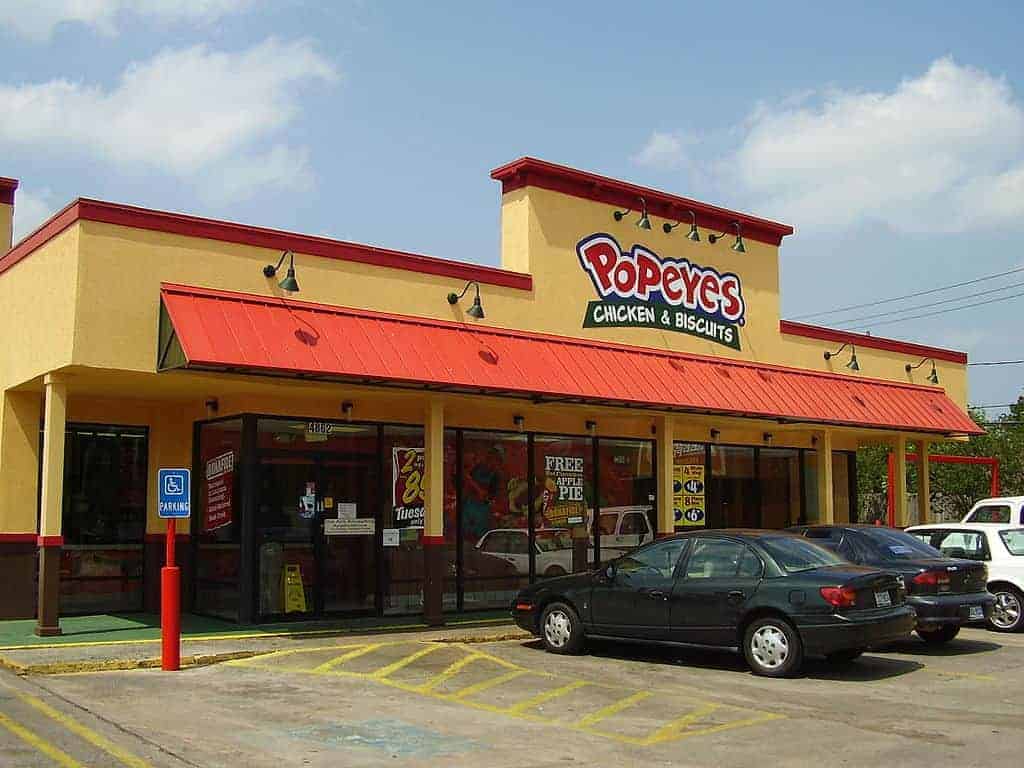
As for Popeyes, it’s relatively new to the RBI family of restaurant brands, so, despite a 2.7% same-store sales decline in the second quarter, I doubt they’d join the fight either.
That leaves the men and women who own Tim Hortons franchises on both sides of the border. If the GWNFA carries its $500 million class-action lawsuit all the way to court, I expect the same-store situation to worsen.
If this happens, I don’t see this ending well for RBI shareholders.