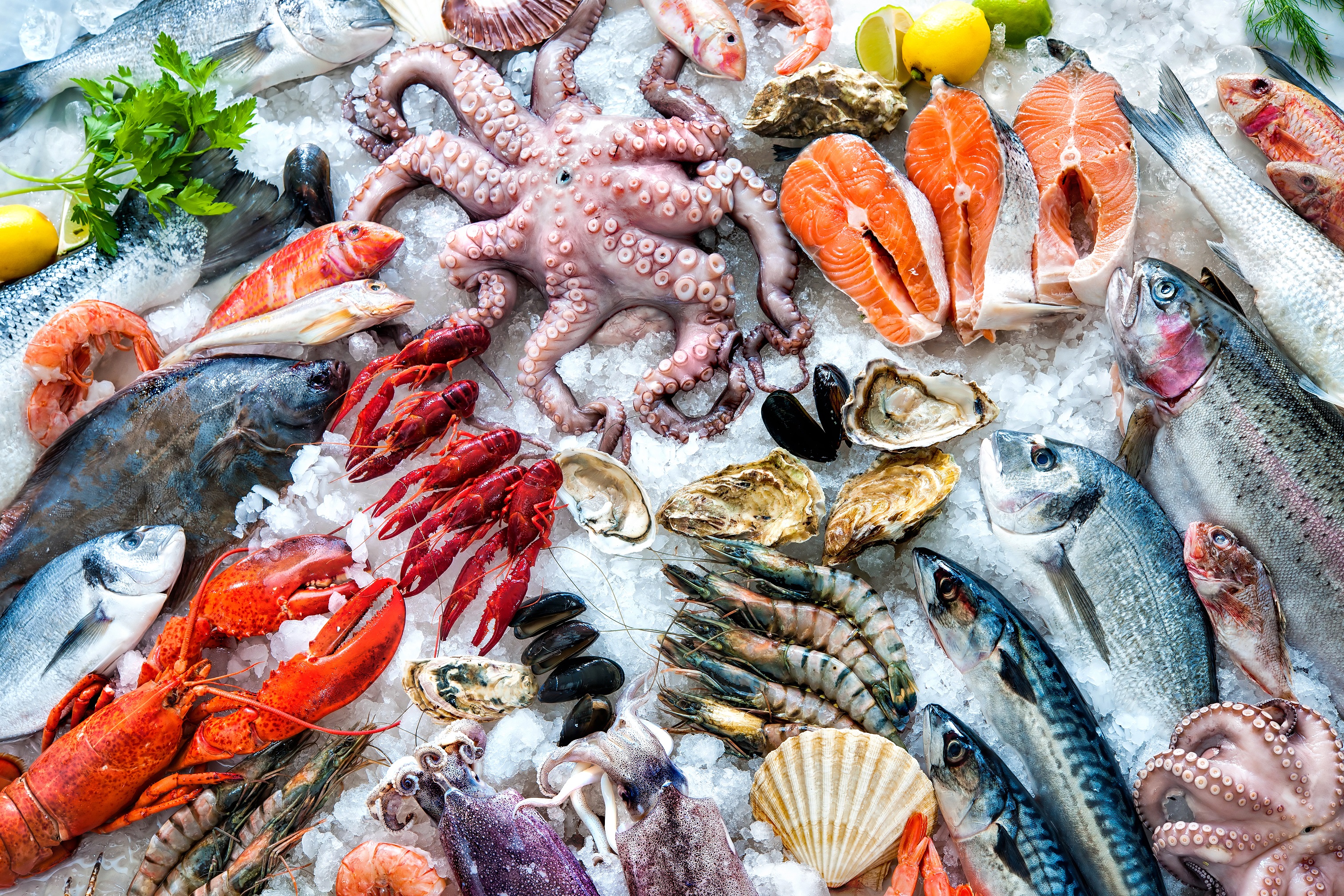
Food stocks can be some of the most stable and rewarding investments to make. Ironically, many of us fail to realize that the myriad of brands we pass in the frozen food aisle of our supermarket are actually owned by the same company, and that company could be an impressive investment offering an even more impressive dividend.
One such company is High Liner Foods Inc. (TSX: HLF)
Even if seafood is not to your personal liking, as an investment, High Liner has several compelling reasons that make the company a very attractive offering.
Let’s take a look at some of those reasons.
High Liner owns a massive portfolio of brands
Many of us have seen the High Liner brand of frozen fish in our local supermarket, but few of us actually realize how many other brands of frozen seafood that the company owns and markets alongside its namesake.
Some of the other brands that High Liner owns include C. Wirthy & Co. Fisher Boy, Icelandic Seafood brands, Sea Cuisine and Mirabel.
Beyond those well-known brands, High Liner also provides custom and unbranded seafood products to both bulk-club stores and supermarkets.
That wide variety of brands and channels gives High Liner a leading market share over the frozen seafood market, which has an additional, not so obvious advantage.
High Liner’s leading share of the market provides a sizable most over its competition, and that moat, in turn allows High Liner to adapt more quickly to changing consumer tastes without compromising any of the revenue from its core brands.
A prime example of this is the recent trend to swap out dried and breaded fish products for products that include fire-roasted vegetables and steamed fish.
High Liner expands wisely
Despite that commanding market share, High Liner continues to expand into new markets and with new products. Last year, High Liner acquired Rubicon Resources in a mammoth $107 million deal.
The addition of the shrimp distributor to High Liner’s portfolio helped give the company a sizable boost in its most recent earnings announcement. The Rubicon deal also added a whopping 7.9 million pounds in volume for the most recent quarter.
High Liner is a great dividend investment too
One of the things that few people realize is that High Liner is a great income investment too.
The company offers a quarterly dividend that pays out a handsome yield of 5.56%, and High Liner has impressively provided a decade of consecutive dividend growth to investors, which may be reason enough for some investors to consider the company as a great income-producing investment.
What about results?
In the most recent quarter, High liner reported sales of US$3192 million, a full US$43.5 million improvement over the same quarter last year. In terms of gross profit, High Liner finished the quarter at US$60.6 million, bettering the same quarter last year by US$5.1 million.
The impact of the Rubicon deal was noticed throughout the results, as weakness in traditional seafood markets was offset by a strong showing from the frozen shrimp sector.
Should you buy High Liner?
High Liner’s most recent results were much better than they would have been without the addition of Rubicon, which the company noted during its earnings announcement, but the company stated that the focus for the remainder of the year would be on cost reduction, improving efficiencies and simplifying the business across all its segments.
Where High Liner does shine is as an income investment. The 5.56% dividend is hard to deny, and given the history of increases and increasing demand for fish by consumers, the company is set for a bright future.