U.S. President Donald Trump once doubted Warren Buffett’s decision to sell his airline stocks worth $6 billion after the March market crash. I agree that Buffett has made many mistakes in his 65+ years in the stock market, but selling airline stocks ain’t one of them.
At the time of crisis, only the fundamentally strong companies survive. But the magnitude of the COVID-19 crisis was beyond fundamentals. The pandemic disrupted international air travel. No airline was left behind. Under such circumstances, it comes as no surprise that airline stocks lost more than 60% of their value.
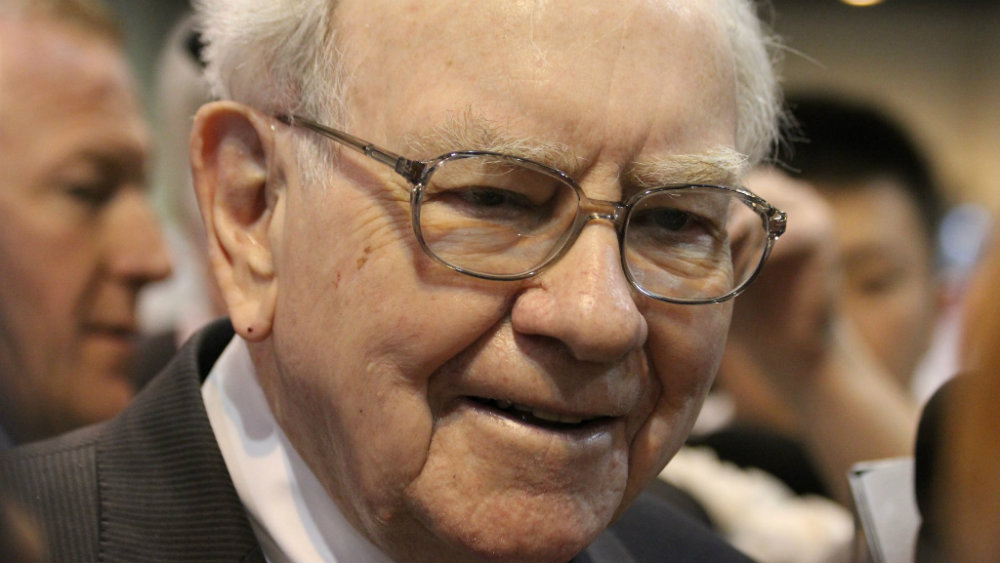
Image source: The Motley Fool
Buffett: Airline suffers from pitfalls of a capital-intensive business
Buffett has avoided airline stocks for a long time as it suffers the same pitfalls of a capital-intensive business. He had burnt his hands back in 1962, when he invested in the loss-making textile company Berkshire Hathaway. After injecting significant capital, restructuring, downsizing, and losing an estimated US$200 billion in 20 years, Buffett called it his big mistake. (He later converted it into a reinsurance company.)
Like textiles, airlines need substantial capital to produce commoditized services that are sold at competitive prices. Both industries suffer from capacity issues because they have high fixed costs.
For instance, Air Canada (TSX: AC) spends 90% of its revenue on operating expenses. Its 50% operating cost is fixed, such as maintenance of fleet, salaries, and airport charges. It earns a profit when it runs at full capacity and beaks even at 75-80% capacity.
The COVID-19 pandemic has slashed 90% of AC’s capacity, which has made fixed costs a burden. International travel restriction is something beyond the airline’s control. There is no clarity on when these restrictions will ease. Also, there is no clarity on when would air travel demand return amid the coronavirus scare. The most optimistic bet is three years.
The airline industry is expecting three years for international travel to recover to the pre-pandemic level. But with the three-month U.S.-Canada border restriction extended to six months, the recovery will take much more time.
Buffett exited at the right time
When capacity becomes a liability instead of an asset, companies downsize. AC and other airlines are doing just that. Operating at 10-20% capacity is a nightmare. Even when travel demand resumes, AC won’t operate at 70-80% capacity. Hence, it is wise to reduce capacity as per the demand. AC is reducing its fleet size by a third, and its workforce by half.
Airlines are prone to bankruptcy. AC filed for bankruptcy in April 2004 after the SARS epidemic. Even though it has averted bankruptcy for the next three years, the risk remains.
The key to investing in capital-intensive businesses is knowing when to exit. Otherwise, like the 1962 Buffett, you will be stuck with a loss-making business for years. Hence, when the COVID-19 pandemic struck, Buffett didn’t think twice before selling his $6 billion worth of airline stocks in April.
How long until Air Canada stock sees growth?
In the SARS epidemic, AC stock returned to growth after it became profitable again after 10 years. The airline has already lost $2.8 billion and is on track to report a loss of $4 billion in 2020. Moreover, it is piling up debt to maintain a strong liquidity position. So far, it has a net debt of $4.56 billion.
The airline will continue to make losses for at least two to three years until air travel recovers. It will take the airline another three years to recoup these losses, provided it operates at full capacity. It will be able to report its first profit in seven to 10 years.
Seven years is a long time and a good quality stock that’s resilient to the pandemic can help you double your money. Buffett invested in the natural gas distribution business in July. It is a defensive business as it has little competition and stable cash flows.
Enbridge pays regular dividends from the money it earns by transmitting oil and natural gas. It has the largest pipeline infrastructure in North America. The stock has grown 25% from its March low and has a dividend yield of 7.6%.