The Trudeau administration plans to increase Canada’s carbon tax and hit the country’s emission target by 2023. Should it push through and becomes law, the carbon tax will increase by $15 per tonne each year, starting in 2023 until the tax reaches $170 per tonne in 2030. The overall increase would be around 566%.
Canadian provinces with carbon taxes on fuels must match the federal increases in 2023 to 2030. If not, their carbon taxes would not be equivalent, and, therefore, the federal tax will apply on fuels produced and distributed in their provinces. Similarly, provinces must match the federal tax in their emissions regulations or else the output-based pricing system (OBPS) may apply.
Impact of a higher carbon tax on consumers
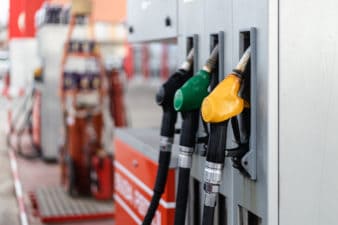
Currently, the carbon price translates to an extra 2.3 cents per litre of gasoline. It will increase by an additional 12 cents per litre under the $50 per tonne pricing in 2022. After 2022, the increase per litre is about 27.6 cents. By 2030, Canadians would pay can an extra 39.6 cents per litre of gasoline at the pumps.
Challenges to businesses and industries
The Trudeau administration’s new climate plan has challenges, including cost impacts for Canadian industries. Businesses that sell goods on international markets face competitiveness risks. Also, these businesses might have to pass on higher carbon tax-costs to consumers.
However, the plan involves a $3 billion fund allocation for the industry to help Canadian companies lower their carbon emissions via strategies like carbon capture technologies. The measures aim to reduce carbon emissions by 32% by 2030. If provinces participate with their own programs, the combined emission reduction could jump to 40%.
Resilient business model
In the stock market, Parkland Fuel (TSX: PKI) is underperforming thus far in 2020 (-9% year-to-date), although the company reports better-than-expected financial and operational results. The $6.26 billion company from Calgary markets, distributes and refines fuel and petroleum products.
For Q3 2020 (quarter ended September 30, 2020), Parkland’s marketing segments in Canada, the U.S. and internationally combined to generate a 24% increase in Adjusted EBITDA versus Q3 2019. Its fuel and petroleum product volume is recovering from COVID-19’s impact and nearing last year’s volumes.
Management offsets the volume declines with pro-active cost reductions and healthy per unit fuel margins. The company’s liquidity position stands at $1.6 billion. Parkland’s President and CEO, Bob Espey, said, “We continue to prove the resilience of our business model and first-rate execution capabilities.”
Parkland’s recent acquisitions (Story Distributing Company and Carter Oil Company) in the U.S. will add approximately 275 million litres annually to its USA segment’s fuel and petroleum product volume.
With steady volume recovery, strong fuel margins, and convenience store sales, analysts covering Parkland recommend a buy rating. They forecast the price to climb from $41.85 to $51 (+22%) in the next 12 months. If you’re a dividend investor, the stock pays a respectable 2.9% dividend.
Risks to the world
Climate change poses unprecedented risks to Canadians and the world in general. If Canada expects to reach its 2030 emissions target, it must reduce greenhouse gas (GHG) emissions.
Policymakers are looking to implement the most cost-effective way to reduce emissions. However, Canada’s Ecofiscal Commission says climate policy cost-effectiveness is not the only criterion. A worthwhile goal is to minimize costs to households and businesses.