Did you know the 93-year-old Warren Buffett earned over 90% of his fortune when he qualified for Social Security benefits, despite starting investing at age 11? What took him so long? He began investing in 1941, during the Second World War, the Cold War, and many such crises. Despite losing money in investing mistakes, he became one of the wealthiest investors, as he stuck to investing.
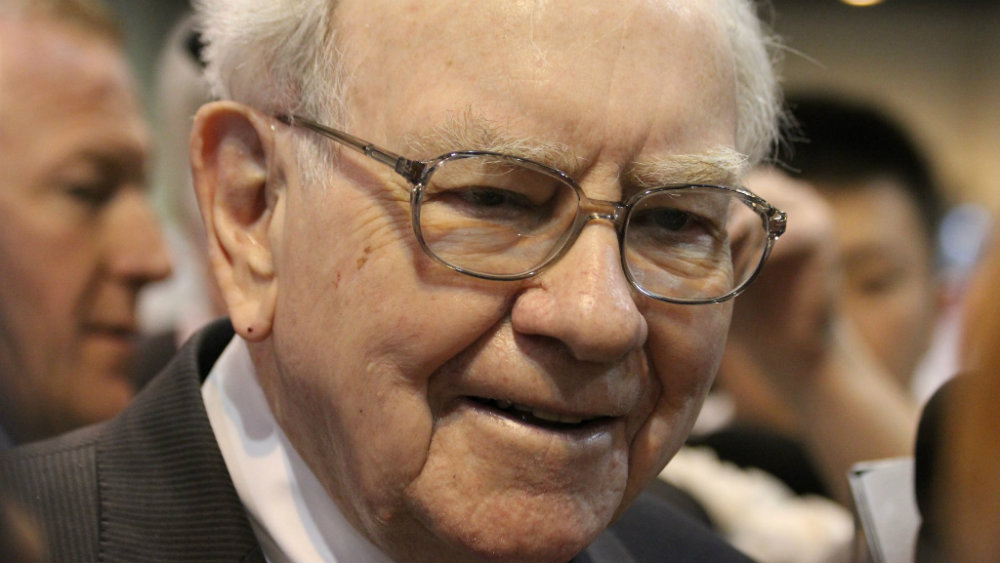
Image source: The Motley Fool
Warren Buffett’s investing strategy
An investment portfolio has diverse stocks, including some small-cap, some large-cap, some growth, and some dividend stocks. Some stocks are experimental, while some are evergreen, which you buy and hold forever. If you look at Buffett’s investing lessons, they keep changing with time.
At one point, Buffett avoided tech stocks. But later, he added tech stocks like Apple (NASDAQ:AAPL), making them some of his most profitable investments. It is so because learning is a continuous process. The world has changed drastically from the 1980s to what it is today. It will change further in the 2050s. What was a good investment in the 80s won’t be in the 2020s. The idea is to learn from mistakes and be net positive.
Investing lesson #1: Invest in simple businesses
Keep it simple. The stock market has thousands of companies, each generating returns at a different pace. Instead of running behind trending stocks you don’t understand, invest in a business you do. But that doesn’t mean you quit learning. Buffett is an avid reader.
Apple has made its early shareholders millionaires. However, Buffett did not invest in it then, as he didn’t understand technology. When you can’t understand the business, how can you envision its future?
Later, in 2016, Buffett invested in the company when the stock dipped. He learned about Apple and understood it as a consumer product company that buys back shares. If you look back at Buffett’s portfolio, most of his holdings are in consumer companies, as he understands them. Most of his holdings, like Coca-Cola and McDonald’s, have simple business models of consumer demand driving revenue. Buffett played on his strength and moved along with changing consumer demand. You can replicate this approach.
Some companies are changing this sector significantly. Since you know the segment well as a user, you can identify a good product/service with a competitive edge. Invest in the company and not the stock.
As a tech enthusiast, Nvidia (NASDAQ:NVDA) is always on my buy list at the dip, as its graphic processing units (GPU) give unmatched performance. They have a competitive edge that no other company could meet. While other accelerated chips are replacing GPUs in some artificial intelligence (AI) tasks, Nvidia’s GPUs remain the preferred choice of crypto miners, gamers, and AI developers.
Investing lesson #2: Look for companies that have a moat
Continuing on the above lesson, if there is a product, technology, or sector you understand, look for companies that have a moat. Even if the company has achieved a $100 billion market cap but still has the moat, its shares are worth buying. Remember, Buffett purchased shares of Apple and Coca-Cola when they were already market leaders. And these shares grew his wealth.
Apple was the first to reach the $1 trillion market cap, then $2 trillion and $3 trillion. It is always the first $1 trillion that takes time. After that, a company with a competitive advantage multiplies. I believe Nvidia has such a moat.
Investing lesson #3: Never invest because you think a company is a bargain
When investing in the dip, remember some companies’ stocks fall because of weak management or fundamentals. Bombardier stock fell before the pandemic as its businesses were loss-making. But a management change in 2020 turned the company around, and the stock soared over 600%.
If a stock is trading at an attractive price, look at the balance sheet and profits. If you can’t see signs of recovery, avoid investing in it.