When we think of dividend stocks, it’s easy to get starry-eyed at the sight of a high dividend yield. After all, who wouldn’t want an income stream that promises to outshine others? But here’s the thing. A high dividend yield isn’t always the gold mine it appears to be. Sometimes, it’s the slow-and-steady players that end up winning the race, especially when compared to heavyweights. Let’s dive into why a seemingly modest dividend yield can actually be a smarter, safer investment.

Image source: Getty Images
Why watch the yield
To start, let’s break down what a high dividend yield can signal. While it may look like a big win for investors, it can often be a red flag. Why? Because a yield isn’t just about dividends. It’s tied to the stock price. If a company’s stock has taken a nosedive, the yield automatically looks inflated. This can indicate that investors are wary of the company’s prospects. Enbridge (TSX:ENB) currently offers a forward dividend yield of 5.84%, which might seem like a jackpot. But before jumping in, it’s crucial to ask: is this yield sustainable?
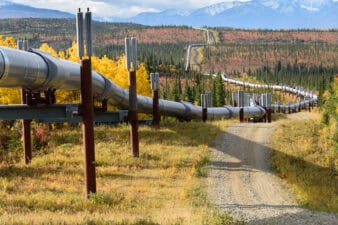
Enbridge, as many know, is a giant in the energy sector. It’s involved in transporting oil and natural gas, and it’s been diversifying into renewable energy. On the surface, this sounds great! Growth, diversification, and a strong market position. However, Enbridge’s growth strategy has included some significant risks, like its recent US$14 billion acquisition of three utilities. While this move could eventually pay off, large-scale acquisitions often come with headaches, from integration challenges to ballooning debt. Enbridge’s total debt, which currently sits at a staggering US$95.58 billion, is worth noting. That’s a lot of money owed, and servicing this debt eats into the company’s resources.
This brings us to Enbridge’s payout ratio, a critical measure for dividend investors. A payout ratio shows what percentage of earnings a company uses to pay dividends. For Enbridge, that number is over 123%. Yes, you read that right. The company is paying out more than it earns. This isn’t just unsustainable; it’s a potential red flag. To maintain these high payouts, the dividend stock may have to dip into reserves, issue more debt, or even cut dividends in the future — none of which is ideal for investors counting on steady income.
Consider Hydro One
Now, let’s compare that to Hydro One (TSX:H). With a forward dividend yield of 2.84%, Hydro One’s payouts might not grab headlines but come with a level of stability that’s hard to ignore. The dividend stock has a payout ratio of just 64.61%, meaning it retains a healthy chunk of its earnings for reinvestment and debt management. This lower ratio suggests Hydro One is playing the long game, prioritizing financial health over flashy payouts.
Hydro One operates in the highly stable electricity transmission and distribution sector, primarily serving Ontario. Unlike oil and gas, where revenues can swing wildly based on commodity prices and geopolitical events, electricity is a regulated utility service. It’s consistent, predictable, and essential. The company’s third-quarter earnings in 2024 highlight this reliability. Hydro One reported a net income of $371 million, up from $357 million in the same period the previous year. This steady growth reflects its ability to deliver consistent results, which is a cornerstone for any dividend-paying company.
Furthermore, as Ontario’s primary electricity distributor, Hydro One benefits from a near-monopoly in a regulated market. This translates to steady revenues and predictable growth, which are critical for maintaining and potentially increasing dividends. Moreover, as demand for renewable energy and electrification grows, Hydro One is well-positioned to benefit from these long-term trends.
Bottom line
Contrast that with Enbridge, which, while diversified, remains heavily reliant on the oil and gas sector. The volatility in oil and gas prices adds another layer of uncertainty, not to mention the regulatory and political challenges the industry faces. So, a high dividend yield might seem like the ultimate prize, but it often comes with strings attached. Sometimes, slow and steady really does win the race.