Canadians are building self-directed Tax-Free Savings Account (TFSA) portfolios to provide retirement earnings that can fill gaps not covered by government pensions. Finding the right investment balance requires some planning.
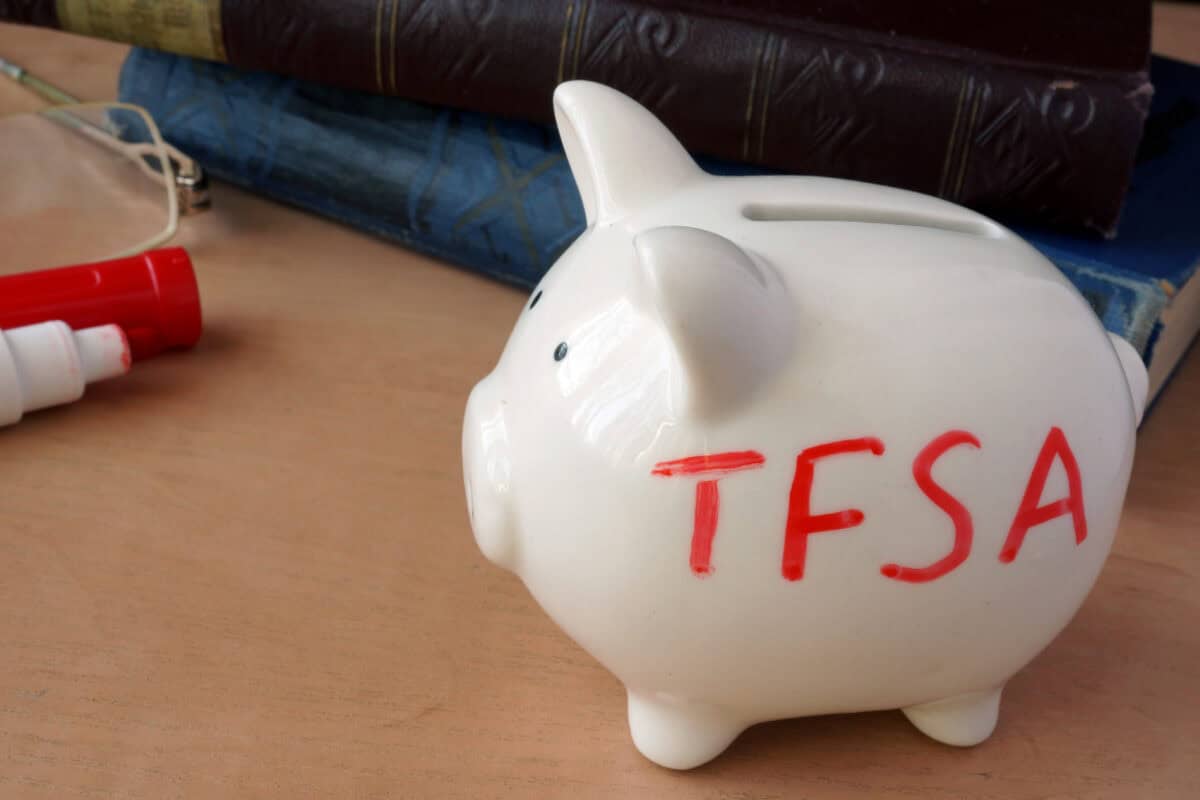
Source: Getty Images
TFSA limit
The Canadian government created the TFSA in 2009 to give people another savings tool to go along with their Registered Retirement Savings Plan (RRSP). Since inception, the cumulative maximum lifetime TFSA contribution space has grown to $102,000.
The TFSA limit for 2025 is $7,000. Unused TFSA space can be carried forward. In addition, the full value of any TFSA withdrawals in the year will open up equivalent new contribution space in the following calendar year, along with the annual TFSA limit allocation.
Retirees and other income investors like the TFSA for its flexibility and the tax-free earnings. The full value of dividends, capital gains, and interest income generated inside the TFSA can go straight into your pocket. No part of the earnings will be split with the Canada Revenue Agency (CRA).
GICs or Dividend Stocks for a TFSA?
Investors seeking income generally focus on guaranteed investment certificates (GICs) and dividend stocks for TFSA holdings.
Rates on non-cashable GICs provided by Canada Deposit Insurance Corporation (CDIC) members are currently in the 3% to 3.75% range, depending on the term and the provider. This is down from a peak rate of 5% to 6% in the fall of 2023 after the central bank raised interest rates aggressively to get inflation under control.
Interest rates have since fallen back, driving up bond prices and lowering yields. Government bond yields impact how banks and other GIC providers determine the rates they will offer. Analysts broadly expect interest rates to continue to decline later in the year as the Bank of Canada moves to shore up a weakening economy. That being said, bond yields have not fallen as much as expected, and that trend could continue even if interest rates drop. In this scenario, GIC rates might hold up better than expected in the coming months.
The benefit of owning a GIC from CDIC members is that the investment is guaranteed up to a $100,000 limit if the institution offering the GIC goes bust. The downside of non-cashable GICs is that the funds are locked up for the term. In addition, rates offered in the market when the GIC matures could be much lower.
What about dividend stocks?
Dividends paid by many top Canadian companies currently offer yields well above the best GIC rates. Owning stocks, however, comes with risks. Share prices can fall below the purchase price and dividends are not 100% safe. On the upside, many firms have long track records of dividend growth, providing steady annual increases that raise the yield on the initial investment. Stocks also offer flexibility. They can be sold at any time to access the funds if needed.
Enbridge (TSX:ENB), for example, has increased its dividend annually for the past 30 years and currently provides a dividend yield near 6%.
The bottom line on TFSA investing
The right mix between GICs and dividends depends on a person’s risk tolerance, required returns, and need for quick access to the capital.
In the current market, investors can quite easily put together a diversified portfolio of GICs and top dividend stocks to get an average yield of 4.5%. On a $21,000 TFSA, this would generate $945 per year in tax-free TFSA income while offering some upside potential as dividends grow and share prices move higher.