Northland Power (TSX:NPI) has been riding the clean energy shift for years, but 2025 has been a reminder that renewable power isn’t always predictable. The dividend stock spent much of the past year bouncing between $16 and $24, with a recent pullback to around $21 after weaker wind conditions weighed on results. Still, the dividend stock’s pipeline and recent project completions suggest it could be well positioned to catch the next big wave in green power demand. So let’s dig into it.
Source: Getty Images
Into earnings
The most recent quarter wasn’t perfect. Revenue fell to $509 million from $529 million a year ago. Plus, adjusted earnings before interest, taxes, depreciation and amortization (EBITDA) slipped 9% to $245 million. The culprit was a lack of wind across European offshore facilities, along with planned outages at some natural gas sites. That translated into a net loss of $53 million compared to a $262 million profit in the same period last year. Yet the underlying story wasn’t all negative. Operating cash flow actually surged to $451 million from $171 million, helped by tax refunds and contributions from new assets.
One of those new assets is a milestone for Canadian clean energy. The Oneida Energy Storage Project, the country’s largest operating battery system, entered service ahead of schedule and under budget this spring. With 250 MW of capacity and a 20-year contract with Ontario’s grid operator, it provides a stable, long-term revenue stream while helping balance intermittent renewable generation.
Onshore renewables also offered a bright spot. Strong wind conditions in New York and parts of Canada, along with Oneida’s launch, drove a 15% revenue boost in that segment. Adjusted EBITDA from onshore and storage rose 11% year over year. These gains helped offset some of the offshore weakness and highlighted the value of a diversified asset base.
More to come
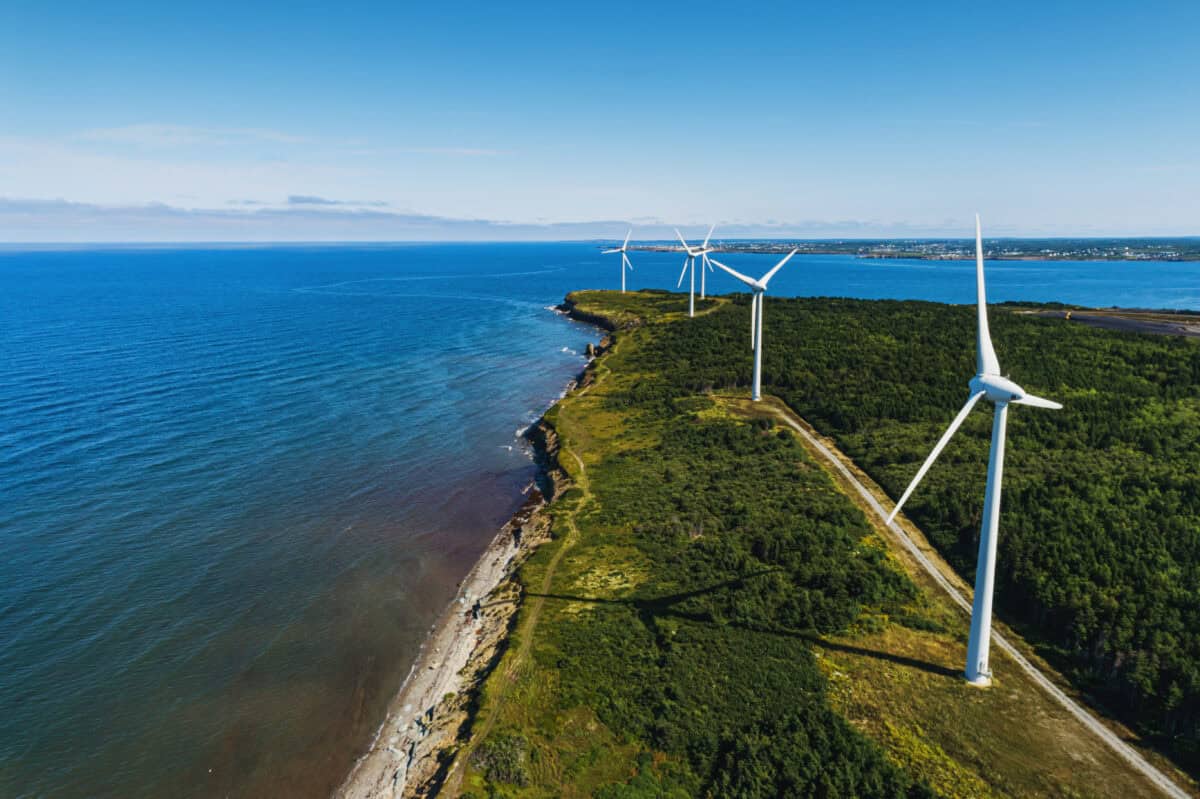
Management advanced two massive offshore wind projects: Hai Long in Taiwan and Baltic Power in Poland. Both are moving through installation phases, with Hai Long producing first power and Baltic Power installing its first turbines. Together, these will add more than two gigawatts of capacity when completed over the next two years.
Investors have long been drawn to Northland for its dividend, which currently yields over 5%. The payout has been steady, but with a payout ratio above 120%, it leaves less room for error if cash flow dips. Management’s updated 2025 guidance trimmed expectations for both adjusted EBITDA and free cash flow per share, now calling for $1.2 to $1.3 billion and $1.15 to $1.35 per share, respectively. This cautious tone reflects the unpredictable nature of wind output, but also shows discipline in setting achievable targets. Even so, that dividend would bring in $566 from a $10,000 investment at writing.
| COMPANY | RECENT PRICE | NUMBER OF SHARES | DIVIDEND | TOTAL PAYOUT | FREQUENCY | TOTAL INVESTMENT |
|---|---|---|---|---|---|---|
| NPI | $21.18 | 472 | $1.20 | $566.40 | Monthly | $9,993.96 |
The growth story remains intact. Offshore wind, battery storage, and onshore renewables are all benefiting from long-term policy support and rising demand for clean electricity. Northland’s upcoming project completions will expand its geographic footprint and reduce reliance on any single market’s weather patterns. If wind conditions normalize and new assets ramp smoothly, earnings could rebound faster than the market expects.
Bottom line
Risks aren’t hard to spot. High leverage with over $7.5 billion in debt means interest costs and refinancing are ongoing considerations. Construction delays or cost overruns on big-ticket projects could dent returns. And as recent results show, Mother Nature’s variability can swing revenue from one quarter to the next. Still, the company’s 95% commercial availability across its fleet shows strong operational execution even in tougher conditions.
Northland Power may not deliver a straight-line recovery, but the pieces are in place for meaningful upside as its growth projects come online. For patient investors comfortable with the ebb and flow of renewable energy output, the recent dip could be a chance to plug into the clean power wave before it builds again.