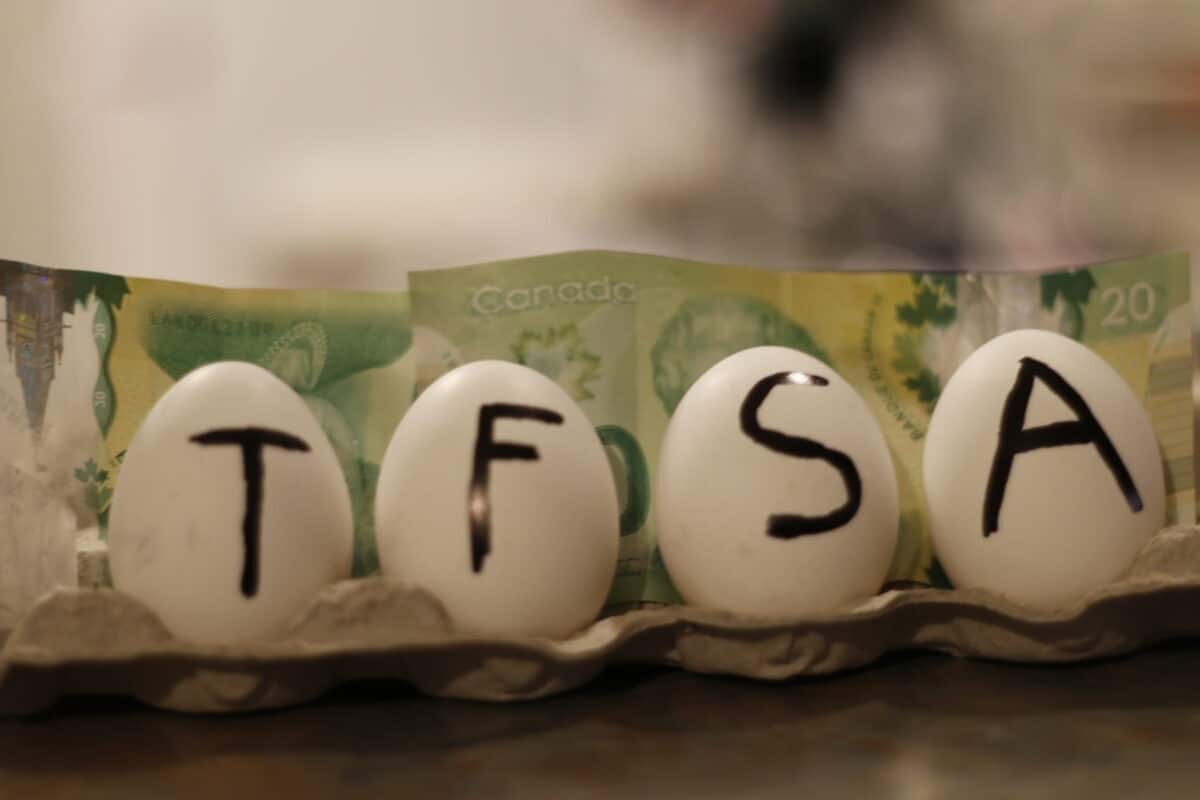
The Tax-Free Savings Account (TFSA) is a must-use wealth-building tool for Canadians. It allows investments to grow tax-free, whether you’re earning regular income from dividends or interest, or irregular gains from stock or bond price appreciation. A TFSA can hold a wide variety of investments, including stocks, bonds, guaranteed investment certificates (GICs), mutual funds, exchange traded funds (ETFs), and even certain shares of small business corporations.
But just because something is simple in principle doesn’t mean it’s easy in practice. Too many investors unknowingly make mistakes in their TFSA — and these errors could be costing them tens or even hundreds of thousands of dollars over time. Here’s how to steer clear of the most damaging missteps.
Source: Getty Images
Mistake #1: Holding high-yield foreign stocks in your TFSA
An often overlooked mistake is placing high-dividend foreign stocks — such as U.S. stocks — inside the account. While your TFSA shelters you from Canadian taxes, it doesn’t protect you from foreign withholding taxes. In the case of U.S. dividends, a 15% withholding tax is typically applied and, crucially, this tax is non-recoverable within a TFSA.
That means if you’re collecting $1,000 annually in U.S. dividends in your TFSA, you’re effectively losing $150 to foreign taxes every year — money that could otherwise compound over time. Instead, hold high-yield U.S. dividend stocks in your Registered Retirement Savings Plan (RRSP), which is tax-sheltered from U.S. withholding under the Canada-U.S. tax treaty.
That said, foreign growth stocks that pay little or no dividends can still be appropriate for your TFSA. These investments don’t trigger the same withholding issues and can benefit from tax-free capital gains if they appreciate over time.
Mistake #2: Failing to max out your TFSA contributions
It’s alarming how many Canadians are underutilizing their TFSA. According to Statistics Canada 2022 data, fewer than 9% of TFSA holders maxed out their contributions, and the average unused room was a staggering $46,192. That’s an enormous amount of tax-free growth being left on the table.
Let’s put it in perspective: If you invest that $46,192 and earn a modest 7% annual return over 20 years, it would grow to roughly $178,748 — all tax-free. Add $7,000 per year (the 2025 TFSA limit), and the amount would balloon to about $465,717 with the 7% rate of return.
The key is to contribute regularly. For this year, that’s about $583 per month. If you automate your contributions, you can build significant wealth without much thought — and never miss the tax-free opportunity each year provides.
Mistake #3: Taking on too much risk within your TFSA
Some investors treat the TFSA like a lottery ticket — piling into volatile penny stocks, using margin, or speculating on leveraged ETFs. While high-risk investments might offer big upside, the downside is far more dangerous in a TFSA. Why? Because capital losses in a TFSA are not tax-deductible. If you lose $10,000 in your TFSA, you don’t just lose money — you lose contribution room permanently.
By contrast, if you lose money in a non-registered account, those losses can be used to offset gains. This makes it essential to be strategic with your TFSA holdings. Focus on quality, not just potential. Blue-chip dividend stocks like Fortis (TSX: FTS) offer steady growth and a reliable income stream, which are ideal characteristics for a long-term TFSA strategy.
Investor takeaway
To avoid these costly errors:
- Max out your TFSA every year, even if it’s just with smaller, consistent contributions. Time and compounding are your biggest allies.
- Start simple. GICs, index ETFs, or large-cap dividend stocks like Fortis can provide dependable returns without excessive risk.
- Think long term. Fortis, for example, has grown earnings by over 6% annually for a decade and pays a stable dividend — currently yielding 3.6% at about $68 per share. Wait for a better entry point, ideally between $58–$62 per share over the next year, before buying.
With the right approach, your TFSA can be more than just a savings account — it can be the foundation of your financial freedom.