Consistent income means getting paid the same amount at the same time—whether that’s quarterly or, ideally, every month. The best scenario is when payouts grow over time, but sometimes just avoiding dividend cuts is half the battle.
For this role, there’s really only one TSX-listed closed-end fund (CEF) that does it all: Canoe EIT Income Fund (TSX:EIT.UN). If you’re familiar with exchange-traded funds (ETFs), a CEF works in a similar way, but with some important differences. Here’s what you need to know.
Source: Getty Images
How EIT.UN works
EIT.UN is one of Canada’s largest CEFs, holding a roughly 50/50 mix of U.S. and Canadian dividend-paying stocks. To boost income, it uses about 1.2 times leverage—borrowing modestly to invest a bit more than its equity base.
EIT.UN is also actively managed, meaning it does not track an index. Its portfolio manager, Rob Taylor, selects stocks using a bottom-up approach, meaning individual company fundamentals drive decisions rather than broad market factors.
This allows the fund to tilt toward businesses with strong balance sheets, reliable dividends, and growth potential, but it also means results depend on the manager’s stock-picking skill.
Unlike ETFs, CEFs trade at either a premium or a discount to their net asset value (NAV). Right now, EIT.UN trades at a small discount, meaning you can buy its holdings for slightly less than their underlying value.
EIT.UN monthly payout
EIT.UN pays a fixed $0.10 per unit every month. At today’s price, that works out to a 7.75% annualized yield. The distribution is funded from a mix of dividends, capital gains, and return of capital.
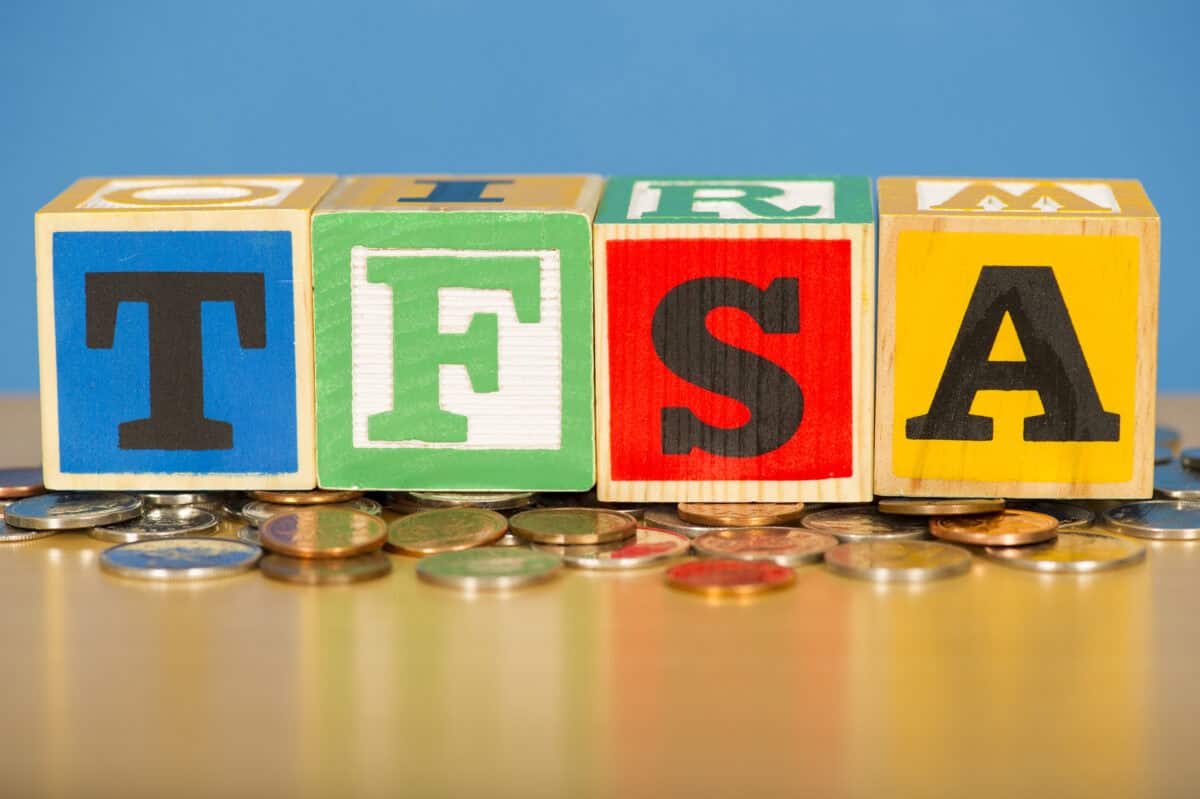
For simplicity, EIT.UN is best held inside a Tax-Free Savings Account (TFSA), where you don’t have to worry about the tax character of payouts or report anything to the CRA.
How much you’d earn
With $7,000 in a TFSA and the fund trading at $15.47 per unit, you could buy about 452 shares. At $0.10 per share per month, that position would generate roughly $45.20 in monthly income, which is completely tax-free inside a TFSA.
The Foolish takeaway
If you’re just reinvesting the monthly distributions, EIT.UN probably isn’t worth it. Growth-oriented ETFs are cheaper, more tax-efficient, and better suited for compounding over the long term.
But if your goal is to actually withdraw the income, EIT.UN automates that process in a reliable way—paying you the same amount every month without having to sell shares yourself.