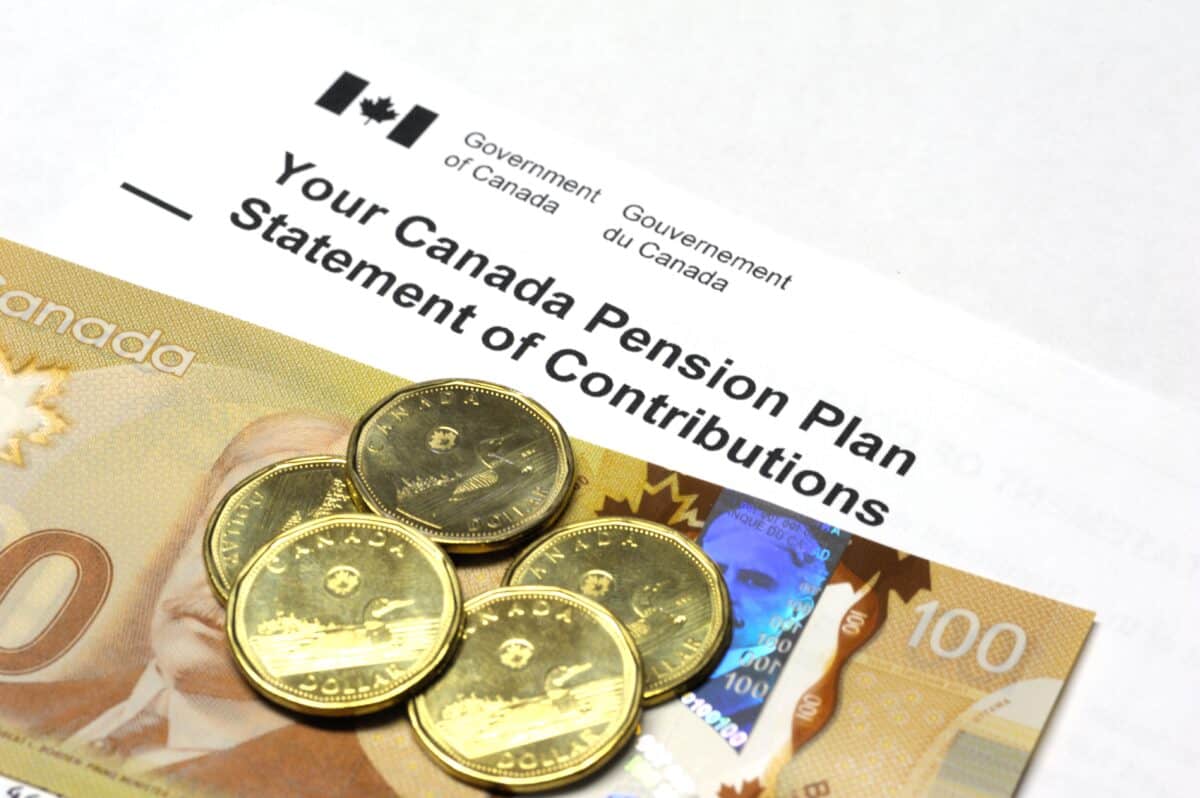
Many advise that the ideal age for collecting the Canada Pension Plan (CPP) payout is 65. But that is not true, as every person’s financial situation is different. Remember, in finance, there is no one-size-fits-all solution, but a customized solution based on situation and need. If you are 60 years old, healthy, working, and at your career peak, you don’t need the CPP payout. It will only add to your taxable income. The ideal scenario that advisors generalize is the CPP payout age being 65.
When could claiming CPP at 60 be the best option?
Scenario 1: Lower life expectancy
If you are ill and may not live long, there is no point waiting, even if you don’t need the money. You may take a permanent 36% reduction in CPP payout, but you will still get a higher overall payout if you expect to live till age 70. Here’s how.
The average CPP payout in 2025 is $542.96 at age 60 and $848.37 at age 65. If you were to get the same amount till age 70, your cumulative CPP payout in 10 years would be $65,154 even after taking a 36% cut, while the five-year payout would be $50,902, excluding the indexation effect. The idea is to show you the payout gap between age 60 and 65.
| Age | Average CPP/month | Total CPP payout in a year | Cumulative CPP payout till age 70 (excluding indexation) |
| 65 | $848.37 | $10,180.44 | $50,902.20 |
| 60 | $542.96 | $6,515.48 | $65,154.82 |
Scenario 2: No CPP contributions
The CPP payout is determined by the best 39 years of your earnings. CPP is deducted from salary or business income. So if you are not contributing to CPP because you are earning a major portion from rent, investments, dividends from your company, or any other source, there is no point holding back the CPP payout. Waiting till age 65 won’t help, as your average earnings will fall.
Note that in both scenarios, you don’t need the money. Yet collecting CPP at 60 makes economic sense. Another common scenario is when you need the money to pay the bills. It is better to collect the payout early than live in debt.
How to achieve financial freedom where your retirement doesn’t depend on CPP
Dependence on CPP alone for retirement is not a good option. Remember, CPP will only cater to 25–30% of your expenses. Achieving financial freedom allows you to choose when to retire. To achieve this kind of freedom, working alone won’t help. You have to put your money to work as well. And you should put your money in the hands of those smarter and more qualified than you. Stocks help you achieve that.
When you buy a share of Power Corporation of Canada (TSX:POW), your money is getting exposure to the brains behind this financial holding company. The company is behind names like Canada Life, Rockefeller, and WealthSimple. You can get a share of the money these companies are earning in the form of dividends and capital appreciation.
Power Corporation of Canada has been growing dividends consistently for the last 11 years at an average annual rate of 7%. It has also created 55% capital appreciation this year by restructuring the business to maximize returns. Exposure to North American and European markets has helped it enhance returns.
Keep earning money and investing your working income in different sectors to benefit from the efforts of brilliant minds working towards growth. Consider artificial intelligence (AI) stocks like Nvidia and bitcoin stocks like Hive Digital Technologies for exponential growth.