It is often adversity that makes nations stronger, resilient, and open to new opportunities. The famous saying, “When the going gets tough, the tough get going,” explains Canada’s situation perfectly. When its trusted trade partner waged a tariff war, Canada learned to reduce its dependence on America. The Made in Canada campaign helped drive Loblaw’s stock price, which surged 53% between February 2025 and February 2026.
Source: Getty Images
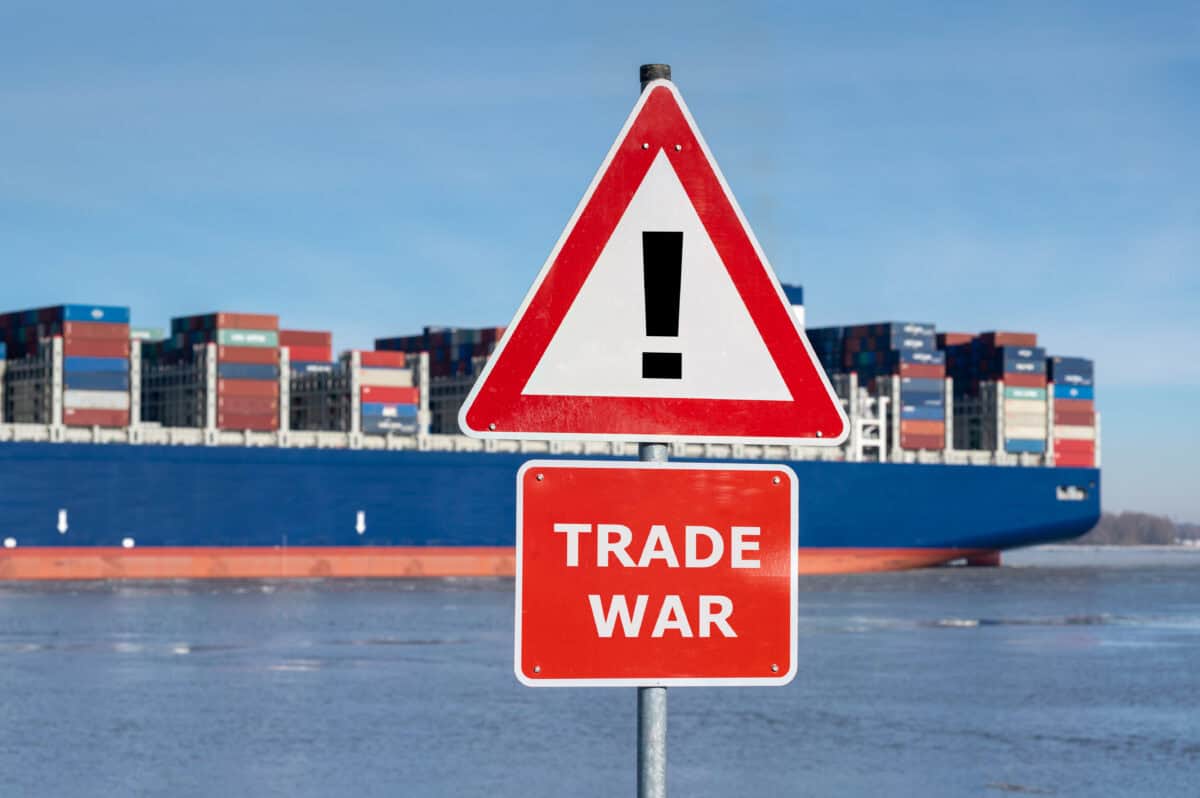
Is the U.S.-Canada tariff war a blessing in disguise?
Canada is now expanding its boundaries. While supplying 99% of its oil to the United States at a 10% tariff in 2025, it has increased its exports to China and is in talks with India and other countries to export its energy resources. The upcoming renewal of the United States-Mexico-Canada Agreement (USMCA) on July 1 could set the tone for the U.S.-Canada trade ties.
However, this opportunity comes at a price of infrastructure development. Most of its reserves are locked in Alberta and Saskatchewan, which are far from the seashore. While supplying 99% of its oil to the United States at a 10% tariff in 2025, Canada simultaneously increased exports to China and began talks with India and other countries to diversify its energy trade. The upcoming renewal of the United States-Mexico-Canada Agreement (USMCA) on July 1 could set the tone for future trade ties.
This opportunity, however, comes at the cost of infrastructure development. Most reserves are locked in Alberta and Saskatchewan, far from seaports. To unlock export potential, Canada has allocated $115 billion over the next five years for transportation, energy, and housing infrastructure. Fast‑tracking construction is now the need of the hour.
TSX Stocks Benefiting From the U.S.-Canada Tariff War
TC Energy
TC Energy (TSX: TRP) spun off its oil pipeline business after delays forced it to cancel the Keystone XL Pipeline project in 2021. The company was plagued with way-over-budget pipelines and decided to spin off its oil pipeline business to focus on North America’s liquefied natural gas (LNG) export opportunity. Its key growth catalyst is the Natural Gas Transmission Line (NGTL) pipeline that connects Alberta and British Columbia to domestic and export markets.
Construction companies
The infrastructure boost triggered by the U.S.-Canada tariff war will revive the order book of Canadian construction giants Bird Construction (TSX: BDT) and Aecon Group (TSX: ARE). They are working on the Darlington New Nuclear Project in Ontario.
Bird saw its order backlog jump 44% from $7.7 billion in 2024 to $11.1 billion in 2025, which is equivalent to three years of its annual revenue. Most of the new orders are high-margin projects, and $1.5 billion is recurring revenue from projects. Bird expects structural demand tailwinds across energy, defence, nuclear, data centres, healthcare, trade, and transportation amidst Canada’s nation-building activities. Its share price has already surged 58% since July 2025, and more upside is likely.
Aecon Group’s share price surged more than 120% since July 2025 as the company secured $9.5 billion worth of new orders in 2025, increasing its order backlog to $10.7 billion. The company increased its revenue by 28% and converted losses into net profit. Aecon’s biggest win was a 50% share in the Scarborough Subway Extension Stations, Rail and Systems project.
Both companies are poised for a strong growth cycle over the next five years, riding Canada’s nation‑building momentum.