One retirement concern that gets a lot of attention south of the border is Social Security. Current projections suggest that the U.S. system’s trust funds could face funding shortfalls in the early 2030s if no changes are made.
Fortunately, Canada’s retirement system is structured differently. Between the Canada Pension Plan (CPP) and Old Age Security (OAS), most Canadians are unlikely to find themselves completely without income in retirement.
These programs provide an important baseline level of support and help ensure retirees can cover many essential expenses. The challenge is that “not starving” and “retiring comfortably” are two very different goals. For many Canadians, filling that gap requires additional sources of retirement income.
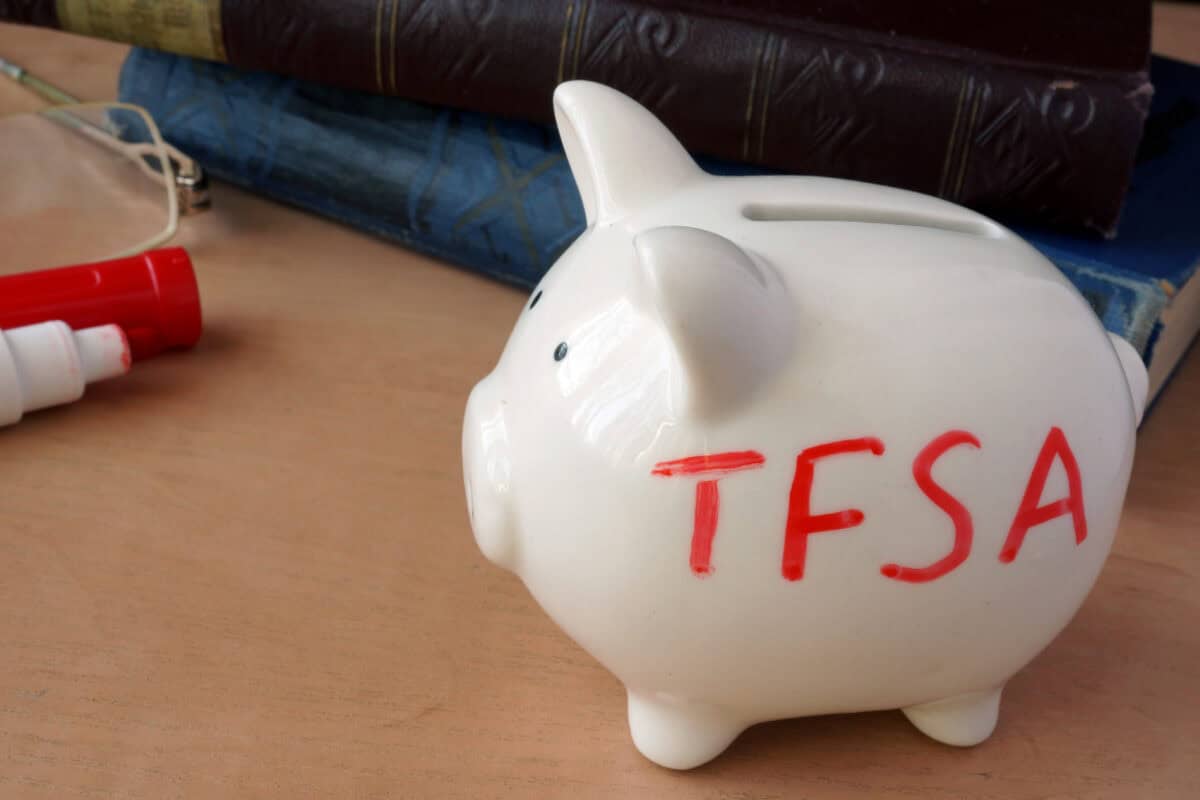
Registered Retirement Savings Plans (RRSPs), which eventually convert into Registered Retirement Income Funds (RRIFs), often play a major role. Workplace pension plans can help too. One retirement account that is frequently underestimated, however, is the Tax-Free Savings Account (TFSA).
Source: Getty Images
Why the TFSA is the star of retirement planning
The biggest advantage of the TFSA is simple: withdrawals are tax free. Unlike RRSP or RRIF withdrawals, money taken from a TFSA does not increase your taxable income. That matters because many government programs use income thresholds to determine eligibility.
For example, high-income retirees can face reductions in Old Age Security benefits through the OAS recovery tax, commonly known as the clawback. Income-tested benefits and tax credits can also be affected by higher taxable income.
So what does a “comfortable” TFSA balance actually look like? Suppose you wanted your TFSA to generate approximately $3,000 per month in retirement income. That works out to $36,000 annually tax-free. Using a traditional 4% withdrawal rate:
That implies a TFSA balance of roughly $900,000. In theory, a portfolio yielding 4% could generate that income without significantly touching principal. While many individual stocks offer yields above 4%, relying on a handful of positions can introduce unnecessary risk. For most investors, diversified exchange-traded funds (ETFs) are likely the safer approach.
How to prepare while you’re still working
If you are young and nowhere near a $900,000 TFSA balance, do not panic. Retirement planning is not about immediately generating income. It is about building the portfolio that can generate income later.
When your time horizon is long, your greatest advantage is compounding. That is why younger investors often benefit from taking appropriately higher levels of risk through broad equity exposure.
Market volatility can feel uncomfortable in the short term, but it also creates the long-term growth necessary to build substantial wealth. One ETF that fits that philosophy is the iShares Core Equity ETF Portfolio (TSX: XEQT).
XEQT maintains a 100% equity allocation spread across Canadian, U.S., international developed, and emerging-market stocks. The result is exposure to thousands of companies around the world through a single investment. The ETF recently saw its management expense ratio reduced to approximately 0.19%, making it an even more attractive long-term holding.
For investors decades away from retirement, the strategy can be remarkably simple: buy regularly, reinvest the distributions, ignore short-term market noise, and let compounding do the heavy lifting.