One of the biggest risks individual stock investors face is idiosyncratic risk. A bad acquisition, accounting scandal, disruptive competitor, or poor management decision can permanently impair shareholder value no matter how well the broader market performs.
The easiest way to eliminate that risk is by owning a globally diversified exchange-traded fund (ETF) spanning multiple countries, sectors, and company sizes. That leaves investors with market risk, which is unavoidable and arguably the price of earning decent returns.
But if I could only own a single stock for the rest of my life, there is one company I would feel comfortable holding through both bull and bear markets. That company is Berkshire Hathaway (NYSE: BRK.B).
Right from the start, Berkshire is more diversified than almost any individual company. It owns dozens of wholly owned operating businesses across industries including insurance, energy, manufacturing, transportation, and consumer products. On top of that, it sits a massive portfolio of publicly traded equities. The diversification is impressive, but it is far from the whole story.
Yes, Warren Buffett stepped down as chief executive officer at the end of 2025. But Berkshire has long evolved beyond being a one-person operation. Its decentralized culture, disciplined capital allocation philosophy, and deep management bench were designed to endure well beyond Buffett’s tenure. With Greg Abel now leading the company, I believe those principles remain firmly in place.

Source: Getty Images
A balance sheet almost no company can match
One of Berkshire’s greatest strengths is its enormous cash position. The company currently holds just under $400 billion in cash and short-term investments. To be fair, not all of that cash is freely available. A significant portion supports Berkshire’s insurance operations and represents an insurance float that must remain available to meet future claims.
Even after accounting for that, Berkshire still possesses extraordinary financial flexibility. That cash gives management the ability to acquire entire companies when attractive opportunities arise or provide financing to businesses during periods of market stress.
We saw this playbook during the financial crisis, when Berkshire was able to write multibillion-dollar cheques to struggling financial institutions at exceptionally favourable terms because few others had the capital available.
Having that level of dry powder is a competitive advantage very few companies can replicate, especially going into a volatile market environment where valuations are stretched.
Why buybacks matter
Another reason I like Berkshire is its disciplined approach to share repurchases. In March 2026, Greg Abel resumed Berkshire’s buyback program after a period of limited activity.
Share buybacks are only valuable when executed at sensible prices. Repurchasing overvalued shares can destroy value, while buying undervalued shares increases each remaining shareholder’s ownership stake.
Historically, Berkshire has approached buybacks conservatively, preferring to repurchase shares only when management believes they trade below intrinsic value based on book value.
When Berkshire trades at a reasonable multiple relative to its underlying business value, buybacks can steadily increase each shareholder’s ownership percentage without requiring them to invest another dollar.
No dividend is actually a strength
Many investors criticize Berkshire because it does not pay a dividend, but I view that as a positive. Instead of distributing cash every quarter, Berkshire retains earnings and reinvests them throughout the business.
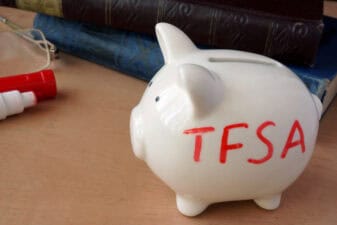
That approach is also highly tax efficient. Inside a Tax-Free Savings Account (TFSA), there are no U.S. dividend payments to trigger foreign withholding tax. In a non-registered account, investors also avoid the annual tax drag associated with taxable dividend income because value compounds primarily through the share price rather than cash distributions.
For long-term investors, allowing capital to compound internally can often be more efficient than receiving dividends and deciding what to do with them afterward. Personally, I trust Greg Abel to make better investments than myself!