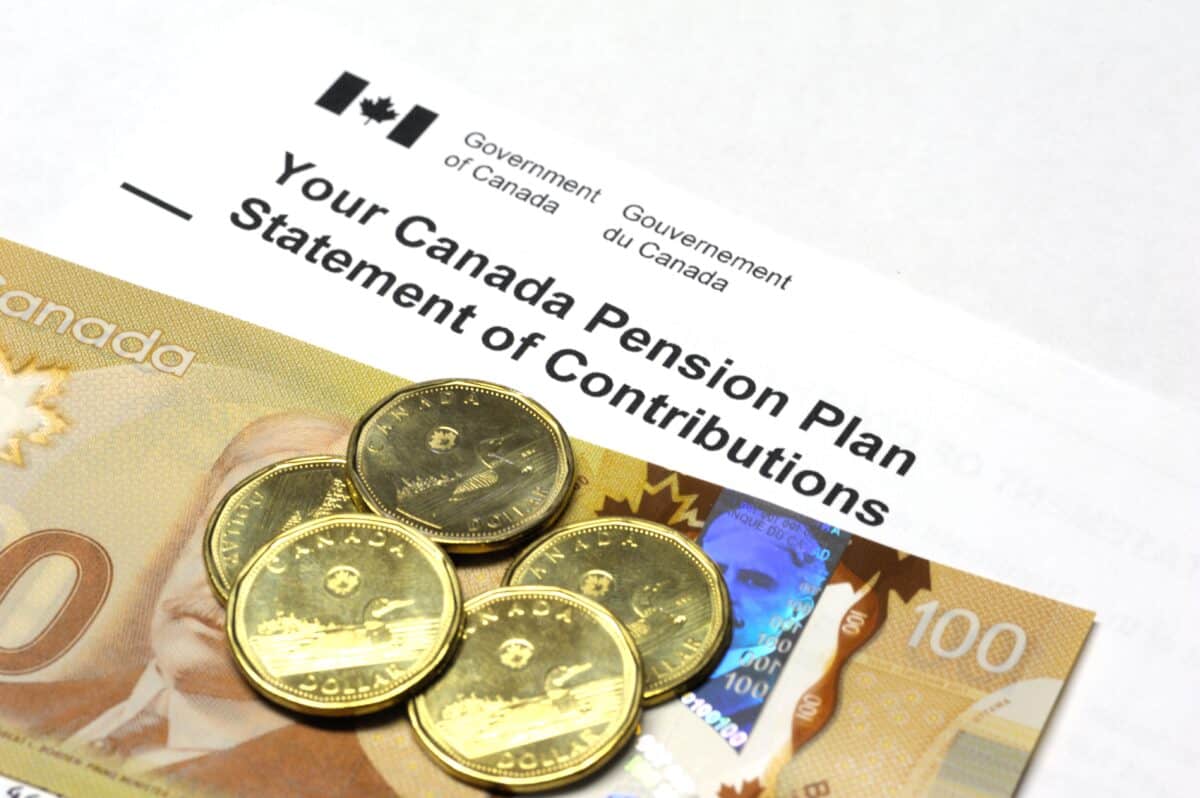
The average new Canada Pension Plan (CPP) recipient at age 65 received $877.01 per month in April 2026. Useful? Absolutely. Enough to fund the retirement most Canadians picture? That depends on whether the picture includes groceries, electricity, and occasionally leaving the house.
Dividend stocks can help fill that gap by producing income from assets the investor continues to own. Unlike a defined-benefit pension, however, the payments aren’t guaranteed. Share prices fluctuate, companies can cut dividends, and a portfolio requires more supervision than simply checking the mailbox.
Source: Getty Images
Getting started
Start by estimating annual expenses, then subtract expected CPP, Old Age Security (OAS), workplace pensions, and other reliable income. The remaining amount becomes the target for a personal dividend pension. A $12,000 annual shortfall, for example, would require approximately $300,000 at a 4% portfolio yield.
Investors should then reinvest dividends while working, diversify across industries, and enter retirement with enough cash to avoid selling during a downturn. Payment frequency matters less than coverage because quarterly dividends can be collected in cash and turned into a monthly withdrawal. Holding the portfolio inside a Tax-Free Savings Account (TFSA) can also prevent withdrawals from affecting federal income-tested benefits. So now the question becomes, where to invest?
H
Hydro One (TSX:H) would provide the portfolio’s dependable core. The company operates Ontario’s electricity transmission and distribution networks, earning regulated revenue from infrastructure that people tend to notice rather quickly when it stops working.
First-quarter earnings per share (EPS) increased from $0.60 to $0.65. Management also raised the quarterly dividend by 6% to $0.35 as grid upgrades, electrification, and new transmission projects expanded its investment runway.
At $59.08, the shares yield approximately 2.4% and trade near 26 times trailing earnings. That valuation is rich, while regulation, construction costs, debt, and storm damage remain risks. Hydro One’s job isn’t producing the loudest yield. It’s keeping part of the income remarkably boring.
POW
Power Corporation of Canada (TSX:POW) adds insurance, retirement services, and wealth management through holdings including Great-West Lifeco and IGM Financial. It also owns interests in Wealthsimple and several alternative investment platforms.
First-quarter adjusted EPS climbed 17% to $1.43, while management raised the quarterly dividend by 9% to $0.67. At $92.12, the stock yields approximately 2.9% and trades around 22.4 times earnings at the time of writing.
A market downturn could reduce assets, fees, insurance earnings, and private-investment values. Still, rising earnings and dividends give this portion of the portfolio the best chance of outrunning inflation over a long retirement.
REI
Finally, RioCan Real Estate Investment Trust (TSX:REI.UN) completes the plan with monthly cash. RioCan stock owns 167 primarily necessity-based retail properties, where grocers, pharmacies, restaurants, and other tenants pay rent for locations in Canada’s largest markets.
First-quarter commercial same-property net operating income (NOI) grew 4.7%, while the distribution consumed 74.8% of core funds from operations (FFO). At writing, the $0.10 monthly payment comes to $1.16 annually and provides a 5.1% yield. Meanwhile, RioCan shares trade at about 27.7 times earnings at the time of writing.
Debt, refinancing costs, tenant failures, and weaker consumer spending could pressure results. RioCan stock, therefore, belongs beside other Canadian dividend stocks, not alone wearing a tiny pension-manager hat.
Bottom line
If you were to put $10,000 into each of these stocks, that could provide strong income for your long-term pension. The portfolio would produce an average of approximately $85.90 per month, although the cash wouldn’t arrive evenly. Reinvestment and regular contributions could steadily enlarge that paycheque before retirement begins.
| COMPANY | RECENT PRICE | NUMBER OF SHARES | ANNUAL DIVIDEND | ANNUAL TOTAL PAYOUT | FREQUENCY | TOTAL INVESTMENT |
|---|---|---|---|---|---|---|
| H | $59.08 | 169 | $1.41 | $238.70 | Quarterly | $9,984.52 |
| POW | $92.12 | 108 | $2.67 | $288.36 | Quarterly | $9,948.96 |
| REI.UN | $22.94 | 435 | $1.16 | $503.73 | Monthly | $9,978.90 |
| TOTAL | — | — | — | $1,030.79 | Mixed | $29,912.38 |
No three stocks create a complete pension alone. Retirees may still need bonds, cash, additional sectors, and a withdrawal plan matched to their circumstances. Yet decades of growing dividends could turn today’s modest deposits into an increasingly useful source of income long after employment income has made its graceful exit.