President Donald Trump told Americans to stop buying Bombardier (TSX: BBD.B) aircraft. In a post on Truth Social, he claimed the company’s products “aren’t good enough” and accused Canada of blocking American banks and Gulfstream Aerospace from doing business north of the border.
He closed with a blunt line: “If they want our Market, they must build here.”
Bombardier stock is down 7% in early-market trading following the news. However, the TSX stock has returned more than 500% over the last five years.
Roughly half of Bombardier’s revenue originates from the United States, so a presidential call to boycott the company could impact near-term sales.
Source: Getty Images
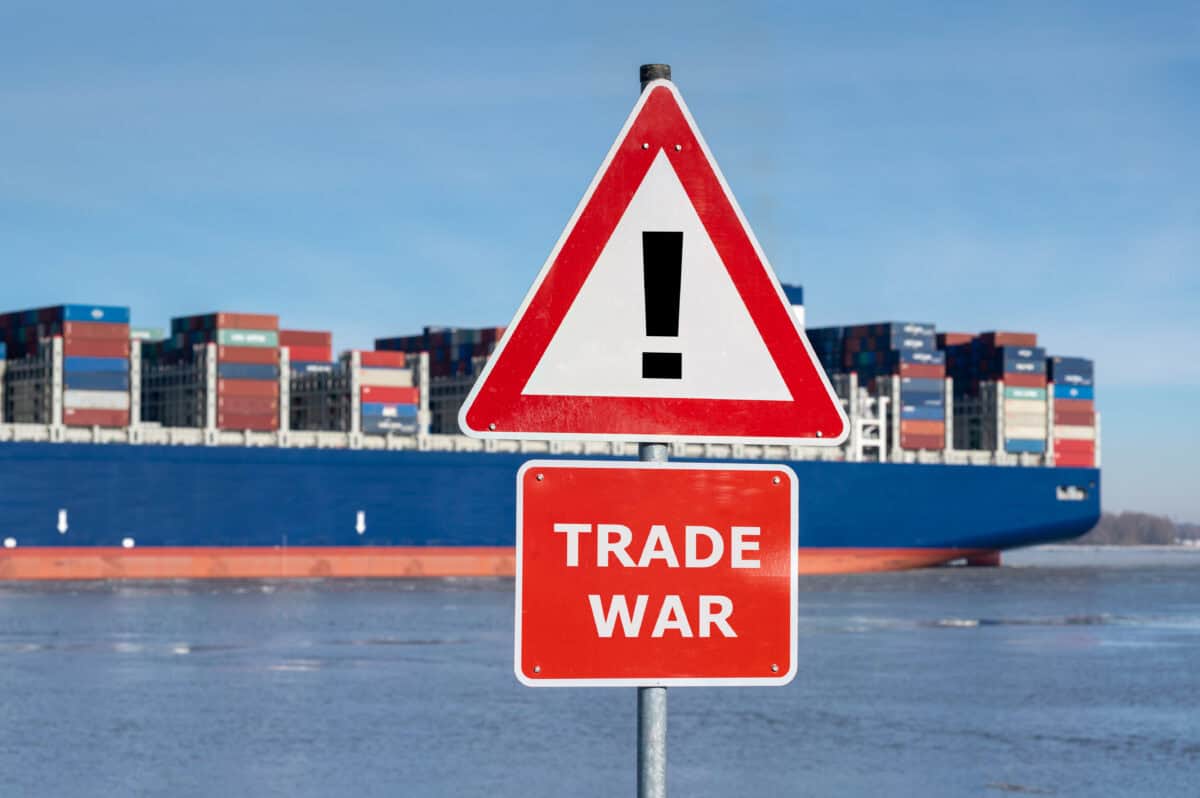
Bombardier’s response to Trump’s trade war threat
Bombardier pushed back quickly with a company statement that leaned heavily on jobs. The aircraft maker said it employs workers across more than 20 U.S. states, including Kansas, Texas, Arizona, Florida and California, and works with about 2,800 American suppliers spread across 47 states.
The company emphasized it spends over US$2.5 billion a year with those suppliers. The statement also pointed out that key parts of Bombardier’s newest jet, the Global 8000, are built in the United States.
The wings come from a facility in Red Oak, Texas, and flight control components are made near Los Angeles. A new facility is set to open later this year in Fort Wayne, Indiana.
In other words, Bombardier’s pitch is that it already builds a large chunk of its aircraft on American soil and supports American jobs doing it. Whether this message changes the political conversation is unclear.
Bombardier remains a top TSX stock
In Q2 2026, Bombardier reported revenue of US$2.2 billion, an increase of 6% year over year. It grew adjusted EBITDA (earnings before interest, tax, depreciation, and amortization) by 9% to US$325 million, while free cash flow stood at US$228 million.
The company’s backlog, essentially future work already booked, grew to US$28.8 billion, up more than US$4 billion since the start of the year.
CEO Eric Martel described demand as broad-based and stated:
When I look at every day, we’re asking the question, are we missing something, but all the fundamentals are strong and the wealth creation is actually the biggest driver behind all of this.
Demand is spread across business jet buyers, fleet operators, and a fast-growing defence segment tied to programs in Canada, NATO, and South Korea.
Net debt fell by more than US$350 million in the quarter, and the company now has no debt due before November 2030. Its net debt-to-EBITDA ratio sits at 1.6 times, down from higher levels in past years.
On September 1, Bombardier announced plans to acquire the assets of Mitsubishi Heavy Industries Canada Aerospace, a Mississauga-based manufacturer with about 750 employees. The deal adds aerostructure manufacturing capability that reduces Bombardier’s reliance on outside suppliers, a useful hedge if trade tensions impact cross-border parts flow.
Executive Vice President David Murray called it a step that strengthens “critical capabilities” and supports the flexibility Bombardier needs to meet growing customer demand.
It is a small deal in dollar terms, but it fits the pattern of a company using its improved cash position to invest rather than just paying down debt.
The Foolish takeaway
The Trump post is a risk worth watching, since political pressure shapes trade policy and procurement decisions.
But nothing in the transcript or company statement suggests customers are walking away. Backlog is growing, margins are improving, and the balance sheet is the strongest it has been in years.
Investors who want exposure to aerospace and defence growth, without waiting on a political outcome that may never materialize into real business impact, may want to keep Bombardier on their radar today.