Stephen Harper came to the Canada Investment Summit with a message investors have heard before. The difference is that Canada may finally have a reason to act on it.
“As I said repeatedly when I was Canada’s prime minister, Canada should be an energy superpower,” Harper told the room. “Whatever the energy mix of the future, Canada should be a major and a global supplier.”
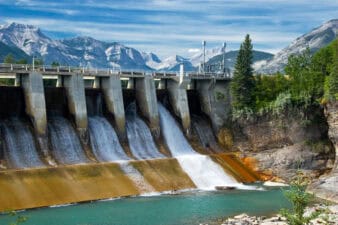
That includes oil and natural gas, but also hydroelectricity, uranium, nuclear power and emerging energy technologies. Harper’s larger argument was about something even more timely. Canada can’t remain overwhelmingly dependent on one customer.
“Thus, to maintain that sovereignty, we must pursue diminished reliance upon the United States.”
For investors, that could translate into something much less philosophical. More pipelines, LNG terminals, power infrastructure, and export capacity. And the Canadian stock I’d want owning the barrels moving through that new system is Suncor Energy (TSX: SU).

Source: Getty Images
The importance behind the argument
Canada already produces enormous amounts of energy. The bottleneck has often been getting it somewhere other than the United States.
Harper argued that regulatory reform needs to give investors a clear, science-based decision “within a fixed and reasonable time frame.” He also said Canada’s resource endowment remains a special comparative advantage.
The summit suggests Ottawa is thinking along similar lines. Prime Minister Mark Carney is pushing new energy corridors, LNG exports, nuclear investment, and a potential pipeline carrying at least one million barrels of Alberta oil per day toward Asian markets.
That doesn’t mean every project will happen. Pipelines have an irritating habit of being much easier to announce than build. Still, greater export capacity could be particularly valuable to large, long-life Canadian producers. That’s where Suncor gets interesting.
Why I’d buy Suncor
Suncor is one of Canada’s largest integrated energy companies. It produces oil sands crude, upgrades bitumen, operates refineries, and sells fuel through Petro-Canada. That integrated model gives investors more than a simple bet on oil prices.
Suncor produced a record 860,000 barrels per day in 2025, and management now expects another 100,000 barrels per day of upstream production growth by 2028. It also wants to generate an additional $2 billion in normalized free funds flow by then.
The latest results showed second-quarter free funds flow reached a record $3.38 per share, helped by strong refinery performance. That cash can fund expansion, dividends and share repurchases rather than leaving shareholders waiting around for the next pipeline announcement.
Investors hunting for Canadian energy stocks should also remember that more export routes could improve the strategic value of the enormous reserves Suncor already owns.
The risk
Investors have noticed. Suncor recently traded around $96, close to its 52-week high above $100. Yet at roughly 11 times forward earnings, the valuation still isn’t outrageous for a business throwing off this much cash.
The obvious risk is oil. A major drop in crude prices would hit cash flow regardless of how enthusiastic Ottawa becomes about infrastructure. New Canadian pipelines and export projects can also take years to approve and construct.
Bottom line
So, I wouldn’t buy Suncor because Harper delivered a good speech. Anyone buying stocks in Canada needs an underlying business capable of working without the politicians cooperating.
Suncor already has that.
Harper’s argument simply adds another possibility. If Canada finally decides being an energy superpower requires actually selling more energy to the world, Suncor could have considerably more places to send its barrels.