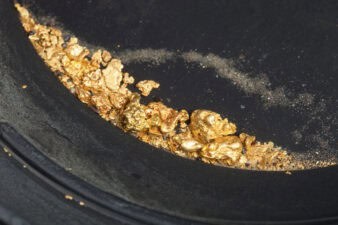
I still remember checking gold prices back in January when it was over US$5,500 an ounce. Today, the yellow metal is down almost 25% from all-time highs, at US$4,200 an ounce.
Last week, the Federal Reserve hiked interest rates by 0.25 basis points, which could drag gold prices lower, given their inverse relationship. The ongoing drawdown could benefit long-term Canadian investors looking to invest in gold mining stocks right now.
Gold is still trading about 16% higher than it was last September. Notably, central banks bought a record 289 tonnes of the metal in Q2 of 2026, while the SPDR Gold Shares ETF (exchange-traded fund) attracted over US$2 billion in fund flows in the last week of August.
Several Canadian gold stocks have pulled back significantly from 52-week highs amid underlying volatility, creating opportunities to buy the dip.
Two Canadian mining stocks stand out for anyone thinking about buying into this weakness: Agnico Eagle Mines (TSX: AEM) and Kinross Gold (TSX: K).
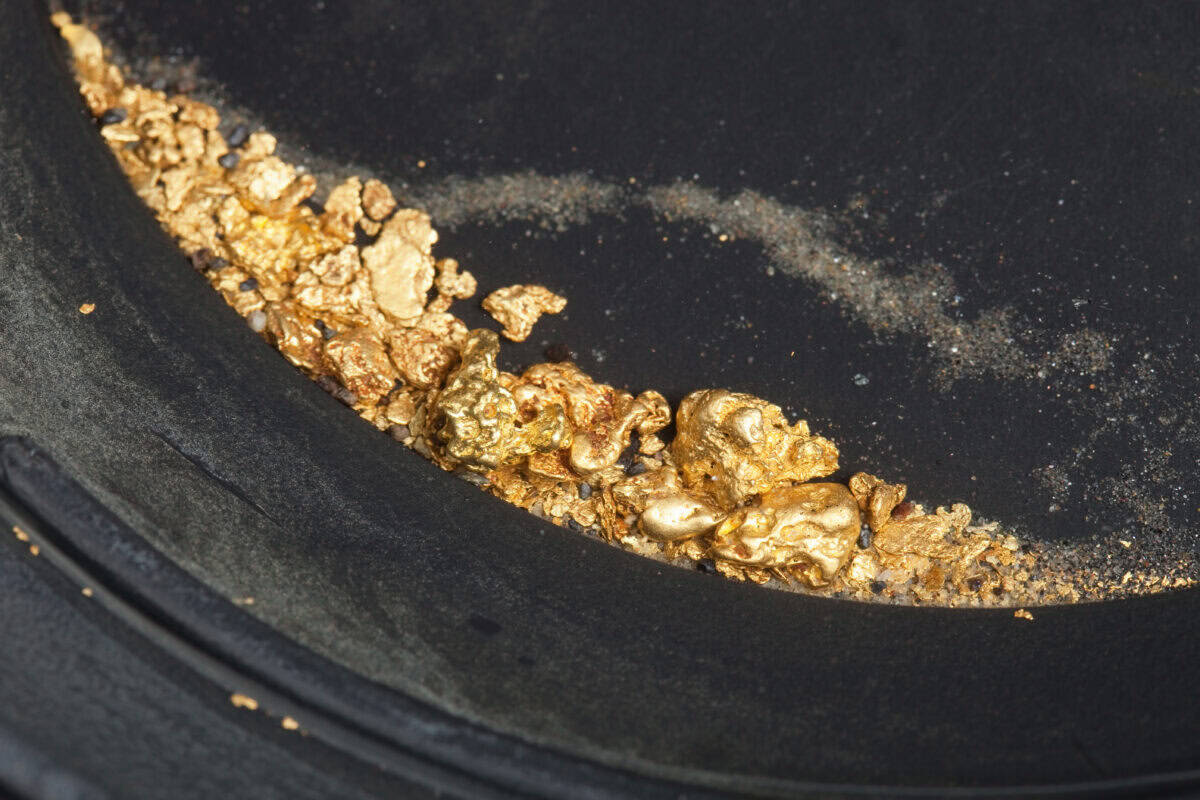
Source: Getty Images
The bull case for this TSX gold stock
Agnico Eagle delivered one of the strongest quarters in its history. The company produced 856,000 ounces of gold in Q2, above estimates for the second straight quarter, while keeping its all-in sustaining cost at US$1,459 an ounce, well below the industry average. Notably, it generated US$1.3 billion in free cash flow in Q2 and is on track to end the year with US$4.6 billion in FCF.
It returned a record US$625 million to shareholders through dividends and buybacks in the quarter, invested over US$800 million into its growth pipeline, and still closed a roughly US$600 million acquisition in Finland, all while growing its cash pile to US$3.3 billion.
CEO Ammar Al Joundi summed up the position well on the company’s second-quarter call.
“We’re in a gold price environment where, with strong operating performance and with good cost control, we’re able to do it all,” he told analysts.
Agnico is a company funding growth, rewarding shareholders, and building a fortress balance sheet at the same time, something few miners can pull off in any commodity cycle.
Kinross Gold offers a cheaper way to play the same trend
Kinross Gold posted equally impressive numbers. The company generated free cash flow of over US$725 million in the second quarter and over US$1.5 billion through the first half of the year. It ended the quarter with a record US$2.7 billion in cash and US$1.9 billion in net cash, all while returning capital to shareholders through buybacks and its dividend.
Its Great Bear and Lobo Marte projects in Canada and Chile are expected to eventually add around 850,000 ounces of high-grade, low-cost production a year to the company’s future output. Both projects are advancing through permitting, with first production targeted for the late 2020s and early 2030s.
For investors who want gold exposure without paying the premium valuation that sometimes comes with the sector’s biggest names, Kinross offers a compelling combination of current cash flow and future growth.
Should you buy the dip?
A Fed that keeps rising can pressure gold prices in the near term. Higher rates make a non-yielding asset less attractive, and they tend to support the U.S. dollar.
But record central bank buying and steady ETF inflows suggest demand is robust amid a challenging macro environment.
For long-term investors, building a position gradually in profitable, well-run miners like these two is a sensible way to ride out the volatility rather than try to time the exact bottom.
j