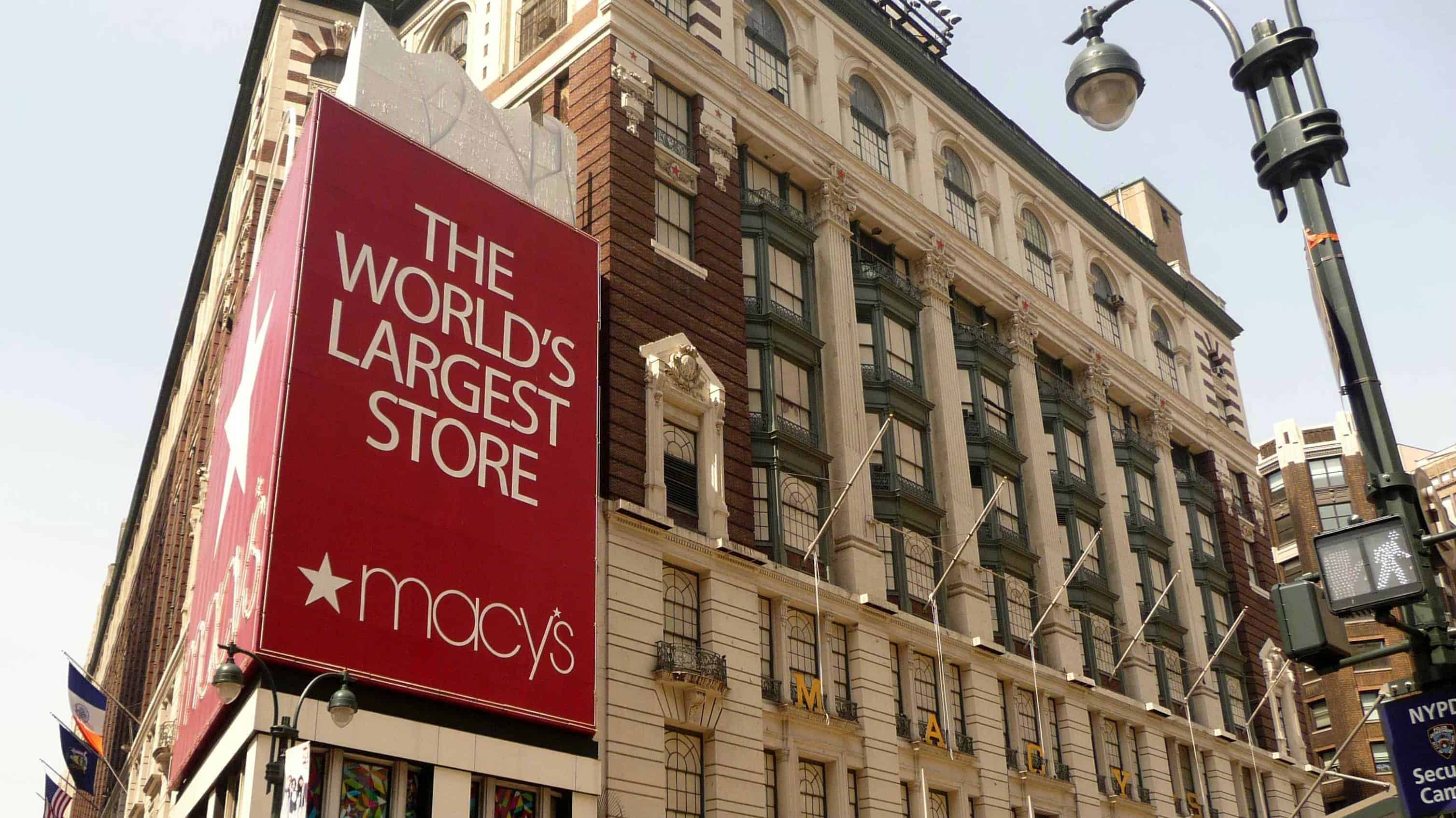
Since speculation hit the newswires February 3 that Hudson’s Bay Co. (TSX:HBC) was possibly in discussions to buy Macy’s Inc. (NYSE:M), HBC stock is up 10% as investors weigh in on the pros and cons of making such an overreaching acquisition.
Whether you’re a money manager, a retail pundit, or someone who just likes stocks, this is one of the most interesting tie-ups in recent Canadian memory. It blows the $12.7 billion purchase in 2014 of Shoppers Drug Mart by Loblaw Companies Limited out of the water.
Here, you have one department store operator with an enterprise value of $6.5 billion trying to buy another one valued at US$16.6 billion, or 2.5 times its size in a segment of retail that’s not exactly lighting it up.
“Beyond the financial engineering, what are you left with?” said John Stephenson, president and CEO of Stephenson & Company, in an interview with BNN. “Is there anything that innovative that can happen from a retail stand point? I think the answer to that is no.”
Yes, the HBC interest in Macy’s looks suspiciously like financial engineering, but here’s what Stephenson’s missing about the potential combination.
History
This type of deal has been tried before. By a Canadian.
In 1986, Robert Campeau acquired Allied Stores for US$3.6 billion. The retail conglomerate owned regional department stores such as Jordan Marsh and Maas Brothers as well as specialty retailers such as Brooks Brothers and Ann Taylor.
Two years later, Campeau bet the farm, acquiring Federated Department Stores for U$6.6 billion by outbidding none other than R.H. Macy & Company. Together, the two companies had US$15 billion in sales; Bloomingdales was its star brand.
Unfortunately, the timing couldn’t have been worse because the U.S. was in the middle of a recession. Not helping Campeau was US$5.3 billion in debt used to buy the two firms. Federated and Allied filed for Chapter 11 bankruptcy protection in January 1990.
I would hazard a guess that HBC executive chairman Richard Baker knows this piece of history better than most.
Competition
Hudson’s Bay already owns Saks and Lord & Taylor.
As we’ve seen by its most recent sales report of the important nine-week holiday season between the end of October and the end of December, Saks didn’t fare that well with a constant currency comparable sales decline of 0.5%; however, its department store group, which includes Hudson’s Bay, Lord & Taylor, and Home Outfitters, saw comparable sales increase 1.2%.
The real sore spot for the company was the performance of its Off Price business which includes Saks OFF 5th. It saw a 5.2% decrease.
Taking out one of its major competitors would allow the three chains to operate in some of the best retail locations in the country. It’s addition by subtraction in a big way.
Real estate partners
Here in Canada, HBC has real estate partnerships with both RioCan Real Estate Investment Trust (TSX:REI.UN) and Simon Property Group Inc. (NYSE:SPG).
Recently, investors might have noticed that Simon, along with its biggest U.S. competitor, GGP Inc., acquired teen retailer Aeropostale out of bankruptcy for US$243 million. Of the 400 stores to remain open, 50% are in malls owned by the two mall owners.
Simon needs tenants for its malls. Partnering with HBC on a deal like this ensures that these stores will be run by experienced retailers who already understand the U.S. retail marketplace. It’s a case of you scratch my back, I’ll scratch yours.
Given Simon’s massive size (US$79.4 billion), you can bet Richard Baker’s not making any moves without them.
Interest rates
When Robert Campeau made his ill-fated buying spree, interest rates were between 8% and 10%, and department stores weren’t in nearly as dire a situation, despite being in a recession. Today, interest rates sit below 1% with very little chance of hitting 8% in the near future. With Macy’s and others closing stores across the U.S., it’s becoming a game of musical chairs, and Macy’s CEO Terry Lundgren knows it.
Hudson’s Bay would be the white knight if there ever were one.
Bottom line
It might look like Hudson’s Bay is driving down a dead end, but people thought the same thing when Richard Baker acquired the company in 2008. If anyone can pull a rabbit out of a hat, it’s Baker.
From where I sit, buying Macy’s makes sense.