So, you think you’re financially literate? If you’re reading this website, odds are you may well be, since the Fool community tends to be smarter than the average bear. But if you’re an average Canadian investor, not so much.
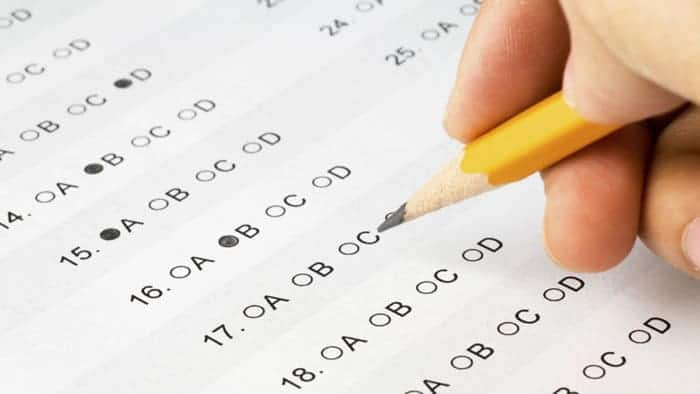
That, at any rate, is what an Ipsos survey just released on behalf of LowestRates.ca concluded. When it submitted a 15-question survey on basic financial literacy (“finlit” henceforth) to online users, 57% failed (a “pass” was defined as successfully answering at least eight of the 15 questions.)
Furthermore, despite the advantages of modern technology, which theoretically puts the answer to any personal finance question literally at your fingertips, younger people tended to perform worse in the test. Only 31% of Canadian Millennials passed compared to 45% of Generation Xers and 52% of Baby Boomers. There was also a gender affect: 48% of males passed versus only 39% of women.
Overrating our financial literacy tends to be widespread, and we all know how overconfidence can be hazardous to our investing lives. Again, Millennials tend to be the most overconfident about their finlit prowess; of all age groups, they tended to rate their financial literacy as “excellent” (18% self-rated themselves that way), “yet they failed the quiz more than any other generational cohort [69% flunked] … Despite being the most digitally savvy generation, their knowledge of financial literacy has a long way to go,” the survey concluded.
So, how do they define financial literacy? Ipsos defines finlit as “one’s ability to understand how money works in the world.” Here, Millennials aren’t alone in their overly high self-assessment; 78% of Canadians of all ages believe they’re financially literate, 14% rate their knowledge as “excellent,” and another 64% as “good.”
There seems to be a bit of disconnect here, doesn’t there? It calls to mind the frequent finding that a majority of car drivers consider themselves “above average” in driving skill, despite the statistical impossibility. If you remember the “bell curve” about your grades in high school, you’ll know that, by definition, C is average, and there should be a B for every D. Despite widespread grade inflation, not everyone can have an A.
Now, before we get too down on ourselves, I should point out that the 15 questions were not that simple; they were more sophisticated ones that Ipsos considers “intermediate,” as opposed to “basic.” In fact, while I myself “passed” the test, even I only got 12 of the 15 correct. Some of the questions really amount to a coin flip, and we all know what happens when you do that! Sometimes you’re right, and sometimes you’re wrong.
Here’s an example that I got wrong myself, as did almost two-thirds of respondents. Cover the answer below before proceeding and see if you can do better. The statement is, “You never have to report interest and profits gained in your TFSA when filing taxes.” True or false? Write it down and no peeking!
A majority—36%—thought this a true statement, but only 35% correctly answered false, while another 28% flat out didn’t know. Not so easy, was it? I believe that, most years, most of us don’t need to worry about reporting TFSA gains, but Ottawa has cracked down on frequent traders with outsized gains, so you can’t say “never.” Never is a long time!
Here’s another. True or False? Applying for a credit card can negatively affect your credit score. It’s true, but 36% thought this to be false and 17% didn’t know.
Now here’s one for us Foolish stock investors. It’s a bit of a trick question, so read it carefully. True or False? You need to be licensed to buy stocks in Canada. This one most did well on: 55% correctly answered this to be false (you need credentials to SELL stocks, but not to buy them!), but even then, 11% incorrectly thought this to be true and another 34% didn’t know.
Now, if you are a young person feeling badly about this test, don’t. As Millennial personal finance expert Desirae Odjick (of halfbanked.com) says in an accompanying analysis (there’s one from me, too!), “Of course people who have more experience with buying and using financial products over the years would have greater knowledge of how those products work—even if it just means learning from their mistakes.”
That’s something any Foolish investor can relate to; when it comes to picking stocks, even the best of us are lucky to get six or seven out of 10 right, but normally that’s enough to make money, assuming you adhere to the usual rules of diversification and avoid overconcentration. And it underlines the fact that whether it’s about picking individual stocks or the broader field of personal finance, most of us can use a little help—whether by hiring a financial advisor or subscribing to investment newsletters written by professional investors.
In either case, being overconfident about your skills and eschewing such advice can be hazardous to your pocket book. As LowestRates.ca founder and CEO Justin Thouin says, “The less we understand how personal finance works, the more financial institutions will be able to take advantage of our ignorance, saddling us with high fees and inflated interest rates.”
In other words, an uninformed consumer is someone who can be taken advantage of. As they say, knowledge is power. This survey suggests Canadians need to redouble their efforts to learn more about personal finance and investing, thereby empowering themselves.